
 English
 Français
 Español
 Árabe
 Deutsch
 简体中文
 Português
 Русский
 日本語
 한국어
 हिंदी
 Prancis
 Türkçe
 Tiếng Việt
 Italiano
 ไทย

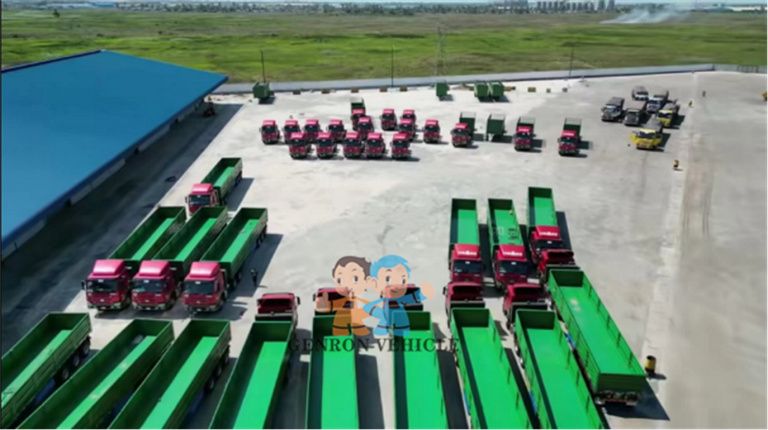
The shipping method for a semi trailer should be discussed before its final delivery configuration is frozen. An assembled trailer, a deliberately prepared knock-down package and several trailers shipped as an engineered combination are different cargoes. Their dimensions, handling needs, documentation and arrival work can differ substantially even when the road vehicles ultimately supplied are similar.
This guide explains how to compare a RoRo proposal with flat-rack or other carrier-approved special-cargo arrangements. It does not recommend one method for every route, provide a sea-fastening design or quote freight rates. Carrier acceptance, port facilities and the actual packed configuration determine the available choices. The buyer should compare complete delivered scope, not an isolated ocean-freight number.
Define what is being shipped
Start with the number of trailers, exact models and condition in which each will be presented to the carrier. Identify components that remain installed, components packed separately and any planned assembly work at destination. Keep the final road specification separate from the cargo’s shipping configuration so that neither is mistaken for the other.
Use one packing reference for each distinct configuration. If a shipment includes loose wheels, ramps, side panels or accessories, list them explicitly. A description such as three flatbeds is insufficient if the carrier will actually receive a combined package with different dimensions and support points. The booking should describe the cargo that terminal staff will handle, not the vehicle name on the sales invoice alone.
Obtain packed dimensions rather than brochure dimensions
Ask the manufacturer for the final shipping length, width, height and gross mass, with the relevant drawing revision. Include packing materials, supports and other projections that the carrier requires in the declared envelope. Do not reduce a booking dimension because a removable item might be repositioned later unless that arrangement has been agreed and documented.
Hapag-Lloyd’s flat-rack guidance highlights accurate out-of-gauge measurements and the need to consider securing equipment in the declared dimensions. Use the current requirements of the actual carrier and service. A brochure length or a nominal container size is not confirmation that a completed package will be accepted, and an earlier shipment is not automatic acceptance for a revised configuration. Hapag-Lloyd: loading and lashing cargo on flat racks
Understand what a RoRo proposal covers
RoRo is a handling method, not a universal promise that a particular trailer can travel unchanged. Ask the carrier or forwarder how the actual unit will be received, moved and secured, and what equipment and preparation it requires. A road semi trailer may depend on terminal handling equipment rather than behave like a self-propelled vehicle.
Wallenius Wilhelmsen’s cargo information illustrates the use of specialist equipment for high, heavy and breakbulk cargo. Its receiving instructions also distinguish acceptable cargo condition and handling requirements. These are carrier-specific references, not permission for a GENRON unit on an unconfirmed sailing. Obtain acceptance for the actual route, package and condition instead of relying on a general description of RoRo capability. Wallenius Wilhelmsen: receiving cargo instructions
Treat a flat rack as transport equipment with its own limits
A flat rack provides a different cargo-handling interface from the trailer’s road operation. Its marked maximum payload does not establish acceptance of every concentrated load, supporting position or out-of-gauge package. Ask the carrier and competent packing specialists to review the proposed support and securing arrangement for the actual equipment.
Keep the responsibilities for cargo preparation, packing design, loading and certification clear. This article provides no lashing quantities, support calculations or instructions to alter carrier equipment. A trailer manufacturer’s statement that a vehicle can be prepared for shipment does not replace the carrier’s acceptance or the specialist assessment needed for the packed cargo to be handled and carried as proposed.
Compare assembled and knock-down scope carefully
Removing components may change the shipping envelope, but it also changes the work required before the road trailer is ready for use. Ask which components will be removed, how they are identified and protected, and what instructions and equipment accompany the package. Do not assume every structural or mechanical component can be dismantled as a routine freight-saving measure.
Record the responsible destination assembler and the required inspection or commissioning arrangements. If the buyer does not have those facilities, an apparently attractive shipping option may shift unplanned work into the receiving country. Compare the complete arrival condition and support requirements rather than present knock-down shipping as a guaranteed saving without considering the actual reassembly scope.
Do not infer a stacking arrangement from a photograph
Photographs of trailers stacked for dispatch can illustrate a specific shipment, but they do not establish a general packing design. The supported components, contact points, combined mass and securing provisions need an appropriate assessment. A different axle arrangement, body or accessory package may change the shipping configuration materially.
If combined shipment is proposed, request its drawing, component list and responsibility matrix. Establish who prepares and accepts the package and which carrier requirements apply. Keep the packed arrangement distinct from the vehicle’s road payload rating. A trailer designed to carry cargo on its deck has not thereby been approved to support another trailer at arbitrary contact points during sea transport.
Match the route to actual port facilities
Identify the proposed origin and destination ports and ask how the cargo will be handled at both ends. Include inland movements where they form part of the offered scope. A technically possible ocean arrangement may still depend on equipment, appointments or assembly services that have not been confirmed at the receiving port.
Record alternatives as alternatives, not as interchangeable bookings. A change of port can affect handling, onward transport and arrival work even where the ocean distance appears similar. Ask the forwarder to explain which assumptions underpin the quoted service. Keep missing confirmations visible before choosing a method that depends on facilities the buyer has not arranged or the receiving agent cannot provide.
Compare freight quotations using the same cargo description
Give each forwarder the same packed dimensions, mass, number of units, route and requested service boundaries. Ask for assumptions and exclusions in writing. Quotes based on different cargo descriptions cannot be compared fairly, even where both headings say semi-trailer freight.
List the services included at origin, on the ocean leg and at destination. Identify handling, packing, specialist review, inland movement, storage allowances and arrival assembly where relevant. Do not invent a standard percentage saving for RoRo or flat-rack transport. The commercial comparison should use real offers for the same cargo and scope, with the relevant time limits and conditions understood by the parties making the decision.
Use an envelope example without turning it into approval
Suppose a hypothetical road trailer is listed as 12.5 metres long, while its accepted shipping package is measured at 12.8 metres after packing projections are included. The booking needs the accepted cargo measurements, not the shorter number selected from a brochure. Neither value in this example describes a GENRON model or proves compatibility with a flat rack.
Use a dimension register to show road configuration, shipping configuration and carrier-accepted booking data separately. If a component is repositioned during preparation, update the relevant drawing and declaration. The purpose is traceability, not finding the smallest number available. Accurate declarations reduce avoidable disputes about what was offered, prepared and presented at the terminal.
Preserve vehicle identity through packing
Connect trailer identification, packing references and loose-part labels before dispatch. The receiving team should be able to determine which component belongs to which unit without relying on memory or an informal photograph sequence. Where similar trailers have different equipment, those differences need to remain visible throughout shipment and assembly.
Prepare a packing list that records quantities and package identities consistently with the commercial documents. Identify the location of required manuals and component records. If documents travel separately from the cargo, specify how the receiving party will obtain them. A physically complete delivery can still be difficult to put into service if identification and configuration information are missing or inconsistent.
Agree protection and condition evidence
Ask the manufacturer and shipping specialists to identify the protection required for the actual cargo, route and handling plan. Include exposed components and separately packed accessories. Do not assume that a vehicle’s normal road finish eliminates the need to review its condition during storage, terminal handling and sea transport.
Agree a photograph and inspection record at defined transfer points. Capture the shipment identity, overall package, accessible condition and any recorded exceptions. Photographs support communication but do not replace the agreed packing assessment or prove that hidden parts are undamaged. Make the evidence requirements practical and assign responsibility so that each handover produces records the buyer can actually reconcile.
Plan the destination handover before departure
Confirm who receives the shipment, checks quantities, reports discrepancies and coordinates any assembly work. Identify the expected road-ready condition and the checks required before the trailer enters service. A cargo release at a port is not the same milestone as acceptance of an assembled vehicle by the fleet.
Where the order includes three-axle flatbed trailer or rear dump semi trailer, connect the destination process to that exact configuration and its supplied accessories. The product links are references for the vehicle scope, not confirmation of a shipping method. Ask GENRON and the appointed logistics parties to agree how the accepted road specification will be reconstructed and verified after the selected transport arrangement is completed.
Review changes before the booking is finalised
Production changes can affect the shipping envelope after an initial freight enquiry. An added toolbox, different ramp, cover mechanism or altered loose-parts package may change the declared dimensions or handling assumptions. Establish a process for reviewing those changes with the forwarder and carrier before dispatch.
Keep a booking version linked to the final packing drawing. If the intended route or service changes, reconfirm acceptance rather than assume that another operator will apply identical requirements. A clear change record helps the parties distinguish a price update, a cargo-description change and an operational limitation. This is particularly important when several organisations handle different parts of the move.
A practical shipping-method decision record
Create one comparison sheet with the actual cargo description, accepted dimensions and mass, carrier/service confirmation, packing scope, destination work and complete commercial inclusions. Record open questions beside the decision they affect. Do not label a method selected while a critical port or packing assumption remains unconfirmed.
The strongest shipping proposal is the one that connects a defined vehicle order with a feasible, accepted cargo arrangement and a clear receiving process. It need not be the proposal with the lowest isolated ocean charge. Ask the responsible parties to explain the complete delivered outcome, including who resolves exceptions, so that the fleet receives the agreed trailers rather than an unexpectedly complicated assembly project.
Separate delivery milestones in the schedule
Record the milestones the parties actually control: manufacturing completion, cargo preparation, terminal acceptance, vessel departure, arrival release and road-ready handover. Do not use one estimated shipping date to describe all of them. A vehicle can be complete at the factory while its packing or carrier acceptance remains outstanding, and port arrival can precede the work needed for fleet use.
Ask each provider which milestone its timing statement refers to and which conditions can change it. Keep estimates distinct from confirmed arrangements in the buyer’s project record. This makes it easier to compare shipping proposals without presenting a sailing estimate as a guaranteed date for a fully assembled, inspected trailer to start work at the customer’s depot.
FAQ: Shipping semi trailers by RoRo or flat rack
Is RoRo always cheaper than flat-rack shipping?
No universal price comparison is reliable. Obtain offers for the same cargo, route, dates and service boundaries. Include packing, handling, inland movements and destination work where applicable. A lower ocean charge can exclude activities another quote includes, so compare the complete offered scope rather than assume one shipping method always saves money.
Can I book using the road trailer’s brochure dimensions?
Use the accepted shipping-package dimensions and mass requested by the carrier. Packing supports, separate components and securing arrangements can change the cargo envelope. Keep the road specification and booking description distinct. Where final measurements are pending, identify them as provisional instead of allowing a preliminary figure to become an inaccurate declaration.
Can several trailers be stacked together for shipment?
Only through an appropriately assessed and accepted packing arrangement. A photograph of another shipment is not a design or carrier approval. Request the combined package drawing, component list, support assessment and responsibilities. The road payload rating of one trailer does not establish arbitrary support positions for another trailer during sea transport.
Does knock-down shipping mean the trailer is ready to use on arrival?
No. Identify the assembly, inspection and any commissioning work needed to restore the accepted vehicle configuration. Confirm the receiving facilities, instructions, equipment and responsible personnel before choosing that scope. The shipping package and the road-ready trailer are different delivery conditions and should be described separately in the order.
What happens if equipment is added after the freight quote?
Review its effect on the cargo dimensions, mass, packing, handling and carrier acceptance. Update the relevant drawing and declaration before finalising the booking. Even an accessory that appears small can alter an important projection or access condition. Do not assume the original freight assumptions automatically cover a revised shipping configuration.
What should the buyer retain after dispatch?
Keep the accepted packing drawing, booking description, vehicle and package identities, loose-parts list, condition evidence and destination responsibilities. Retain the relevant revisions and changes. These records help the receiving team connect the cargo delivered at the port with the trailers and equipment the fleet ordered, without relying on informal messages alone.
Product Options to Discuss
Product pages identify layouts to discuss, not acceptance of a specific load or proof that every optional component is included. Confirm the order-specific configuration with the responsible suppliers.
Related Reading
Semi Trailer Pre-Delivery Inspection: Drawings, Photos and Handover Records
Semi Trailer Quotation Checklist: Cargo, Tractor and Configuration Details
Planning a Semi Trailer Spare Parts Kit for the First Year of Fleet Operation


