
 English
 Français
 Español
 Árabe
 Deutsch
 简体中文
 Português
 Русский
 日本語
 한국어
 हिंदी
 Prancis
 Türkçe
 Tiếng Việt
 Italiano
 ไทย

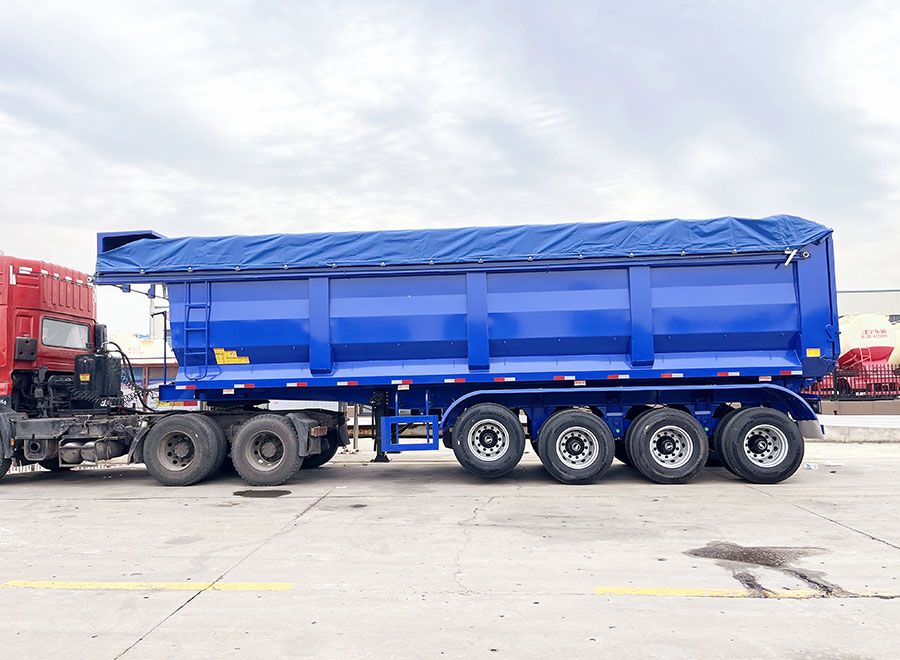
An electric tarpaulin option can look like a small line on a dump-trailer quotation, yet its fit and operating space depend on the complete body and the material-handling environment. A buyer should identify the cover mechanism, body geometry, load envelope and site interfaces before assuming the system is ready for every job.
This guide explains the information needed to specify a cover for a rear dump semi trailer. It is not an electrical installation guide, a maintenance procedure or an operating sequence for tipping and sheeting. The body and cover manufacturers’ instructions govern the supplied arrangement. The purchasing objective is to define what is included and which operating cases the complete equipment is intended to cover.
Identify the cover system rather than the label
Ask the supplier to name the offered mechanism and provide the configuration-specific information for the trailer. The phrase electric tarpaulin does not identify every moving component, fabric, mounting arrangement or control feature. Several systems can serve similar purposes while requiring different installation space and service provisions.
Transcover, for example, publishes distinct tipper sheeting systems with model-specific application information. That illustrates the need to identify the actual system; it does not mean a Transcover product is fitted to a GENRON order. Obtain the proposed manufacturer and model, supplied scope and relevant documents before comparing the option with another supplier’s cover package. Transcover: model-specific tipper sheeting systems
Define what the cover is intended to do
State the actual cargo and the objective of the cover arrangement. Weather protection, containment expectations and site requirements need to be described accurately. Do not assume that a fitted tarpaulin makes a body watertight, suitable for every fine material or accepted under every applicable transport requirement.
Ask the responsible suppliers to state the intended function and limitations of the proposed equipment. Keep the body’s structural duty, rear-gate arrangement and load-securing questions separate from the cover. A sheet is not a substitute for a correctly specified body or an accepted loading condition. The final order should make clear which requirements are addressed by each part of the complete trailer.
Give the supplier the finished body geometry
Provide the final body length, width, top-edge geometry and relevant front and rear arrangements. Include rails, extensions and accessories that affect installation or movement. A nominal body volume is not enough to establish cover fit, and a quoted body length may not describe the full mechanism envelope.
Ask for the cover layout on the accepted trailer drawing. If the body specification changes during the order, review the effect on the cover rather than treat the two options independently. A revised front structure, tailgate detail or side extension can affect a previously discussed arrangement. The supplier should identify which body revision its equipment proposal covers so that production and purchasing teams share the same reference.
Establish the accepted cargo envelope
Describe how the cargo will be presented within the body and provide the information the manufacturer needs to assess the cover duty. Do not assume that a mechanism clears any material profile that stays somewhere below a visually estimated height. Irregular pieces, projections and a different loading pattern can change the relevant conditions.
The accepted operating and loading requirements should come from the responsible manufacturers and site procedures. This guide does not prescribe a loading height or authorise operating the cover over an unidentified load. The buyer should instead ensure that the supplier has the actual cargo description and states the conditions covered by its proposal, rather than rely on a general promise that the sheet fits the body.
Review movement space around the complete system
Ask the cover supplier to identify the movement envelope and the space needed by the actual mechanism. Consider the relationship with the tractor, body fittings, loading equipment and the relevant site environment. A system can fit within its final closed position yet require additional space while moving.
Provide collection and receiving-site information where it affects that review. Overhead structures and adjacent equipment should not be assessed from a single vehicle photograph. Keep any unresolved clearance assumptions visible in the order. The objective is to understand the supplied system’s requirements before routine use, not to invent a clearance value or an operating workaround from a generic description of electric sheeting.
Compare cover-equipped trailer layouts
GENRON’s four-axle rear dump trailer and rear dump trailer with an electric cover option provide rear-dump configurations with cover-related descriptions for an enquiry. Confirm the exact body, cover mechanism and controls included in the actual offer. A product title does not establish that all pictured accessories or every optional feature are supplied on every order.
Compare complete drawings rather than isolated cover prices. Identify mounting positions, occupied space, access and the equipment delivered with the trailer. Where one option includes a different body or rear-gate arrangement, record that difference before attributing the price change to the cover alone. A meaningful quotation comparison keeps vehicle configuration and accessory scope connected to the same intended cargo duty.
Clarify the power and control scope
Ask the responsible supplier to identify the required power source, vehicle interface and complete supplied controls for the exact configuration. Do not assume that an electric mechanism automatically matches every tractor or that a control device shown in a brochure is included in the quoted package.
Keep installation and integration responsibilities explicit. This article gives no wiring instructions, protection settings or advice to alter control functions. The buyer needs the manufacturer’s documentation and a defined scope for the relevant work, including any activity expected after delivery. A mechanism-only quotation should not be mistaken for a complete installed and accepted system ready for the fleet’s chosen tractor and operating conditions.
Keep tailgate and tipping interfaces identifiable
Ask how the proposed cover arrangement relates to the supplied rear gate, body geometry and other installed equipment. The manufacturers’ documents should define the relevant interfaces and operating requirements for the completed trailer. Do not derive a sequence from a photograph or assume that equipment from separate quotations has been reviewed together.
The procurement record should identify who accepts the complete arrangement and what information accompanies it. This avoids an equipment boundary where the body supplier assumes the cover supplier has resolved an interface and the cover supplier assumes the opposite. The buyer’s task is to close that documentation gap through the responsible parties, not to improvise control changes or mechanical modifications at handover.
Include stowage and access when the cover is open
Identify where the sheet and mechanism sit in the relevant manufacturer-defined positions. Ask how that affects access to the body and other trailer equipment. The open configuration can be important for the loading operation even though sales photographs often emphasise the neat appearance of the closed cover.
Provide the intended loading method and equipment information requested by the supplier. A system selected for one loading arrangement should not automatically be assumed suitable for a materially different operation. Keep any restrictions clear enough for site and fleet staff to recognise them. Cover hardware should not become an undocumented obstruction that operators discover only after the vehicle is assigned to a new material-handling task.
Specify the fabric and replaceable components clearly
Ask for the actual sheet material and relevant manufacturer identification, with the service conditions the proposal covers. Colour and visible thickness are not adequate substitutes for a defined specification. If alternative fabrics are offered, compare their documented intended applications rather than assume the most substantial-looking sheet is universally better.
Identify replaceable items, component references and the support information supplied. A fleet should be able to obtain an approved replacement without measuring a damaged sheet and guessing at material or attachment details. Do not specify an improvised patching or replacement method in a general procurement guide. Retain the manufacturer’s instructions and service arrangements for the exact system installed on the trailer.
Review maintenance access before purchase
Ask where inspection and service activities are performed and what documentation and support accompany the package. Consider whether the fleet’s facilities can support the supplied arrangement through the appropriate authorised process. A compact installation is not automatically a good option if routine access or component identification has been neglected.
This guide does not prescribe service intervals or methods for work around moving, raised or energised equipment. Those requirements belong to the manufacturer’s instructions and the responsible maintenance programme. The purchasing comparison should instead make the expected support requirements visible, so that an accessory selected for convenience does not become a poorly documented system that workshops are expected to repair from appearance alone.
Use a scope comparison rather than a feature count
Compare offers using the same final body drawing and cargo brief. Identify the mechanism, fabric, mounting, controls, vehicle interface, documentation, acceptance work and service support included. Mark exclusions and any information still needed. The word automatic should not be accepted as a complete description of function or safety features.
For a hypothetical comparison, Offer A might include an installed system with identified controls, while Offer B supplies a mechanism but leaves integration to the buyer. Neither description alone determines the better commercial choice. The important point is to compare the additional work, responsibilities and final accepted condition before treating the prices as offers for equivalent complete equipment.
Document acceptance without testing from a generic checklist
Agree how the supplied body and cover equipment will be reconciled with the accepted specification. Identify the relevant drawings, component records, manufacturer instructions and commissioning responsibilities. Any functional checks must follow the correct instructions and be performed by the appropriate people for the actual system.
A purchasing checklist should verify that the agreed scope and evidence are present, not replace a specialist operating or maintenance procedure. If a discrepancy is found, record it and obtain the responsible supplier’s resolution. Do not allow a brief demonstration to become an undocumented guarantee that every load profile, site condition or vehicle interface the fleet encounters has been assessed and accepted.
Keep later body changes connected to the cover record
After purchase, retain the trailer identity, body revision, cover model, component information and relevant instructions together. Review proposed changes to body extensions, gate arrangements, controls or associated equipment through the responsible manufacturers. A change intended to improve one operation can affect a movement or installation assumption elsewhere.
Use field feedback to refine future enquiries. Record recurring access issues, the actual material duties and the support arrangements the fleet uses. Avoid inventing a universal labour saving or service-life improvement from a single successful installation. A well-specified cover is valuable because it addresses a defined operation with clear equipment and support scope, not because every electric option automatically performs the same task in the same way.
Give each accessory a clear place in the order
Where a cover proposal includes additional brackets, guards, storage or control accessories, list them with their intended function. Avoid one undifferentiated allowance for complete equipment. The buyer should be able to reconcile the parts delivered with the accepted configuration and distinguish installed items from components supplied loose for later work.
Use the same equipment schedule at inspection and handover. If an accessory is substituted, record the responsible supplier’s acceptance and any documentation update. This does not require judging technical equivalence from appearance. It makes the commercial and configuration record clear enough for the appropriate specialists to confirm what changed, while preventing a useful accessory from becoming an untraceable addition to the completed trailer.
FAQ: Electric tarpaulins for rear dump trailers
Does an electric tarpaulin make the trailer watertight?
Do not assume so. Ask the supplier to state the intended protection function and limitations for the actual system, body and cargo. A fitted sheet is not proof of a sealed body or acceptance for every material. The cover should be evaluated as part of the complete specified operation, not as a universal protection claim.
Can a cover be selected from body volume alone?
No. Provide the finished body geometry, relevant fittings, cargo description and movement-space information requested by the manufacturer. Two bodies with similar volume can have different lengths, widths and interfaces. The proposal should identify the drawing revision and operating cases it covers rather than rely on a capacity label.
Is the closed cover position enough to check clearance?
No. Obtain the actual mechanism’s movement envelope and relevant installation requirements. Site structures, loading equipment and other vehicle components may matter while the system moves or is stowed open. This guide does not supply a universal clearance allowance; the responsible suppliers must assess the stated configuration and environment.
Does a quoted electric mechanism include all power and control equipment?
Not necessarily. Ask for the complete installed scope, required vehicle interface, supplied controls and any work left to the buyer. Do not infer inclusions from a brochure photograph. Integration and acceptance responsibilities should be explicit before comparing a mechanism-only offer with a complete documented package.
Can the body be extended after the cover is installed?
A proposed change needs review by the responsible manufacturers. It can affect fit, movement, mounting or other relevant assumptions. Retain the accepted body and cover revisions together and obtain the appropriate updated documentation. A cover that physically closes after a change has not thereby been accepted for the revised configuration.
What should the fleet receive at handover?
Retain the accepted layout, exact cover identification, component and fabric references, relevant manufacturer instructions, supplied-equipment list and commissioning records within the agreed scope. Keep restrictions and unresolved items visible. These records support correct operation and service through the responsible process without forcing staff to infer system details from appearance.
Product Options to Discuss
Product pages identify layouts to discuss, not acceptance of a specific load or proof that every optional component is included. Confirm the order-specific configuration with the responsible suppliers.
Related Reading
U-Shape vs Box-Body Rear Dump Trailers: Choosing a Body for Your Material
Rear Dump Trailer Hydraulic System: Cylinder Geometry, Power Supply and Quote Scope
Dump Trailer Body Volume vs Payload: A Bulk-Density Worksheet for Buyers


