
 English
 Français
 Español
 Árabe
 Deutsch
 简体中文
 Português
 Русский
 日本語
 한국어
 हिंदी
 Prancis
 Türkçe
 Tiếng Việt
 Italiano
 ไทย

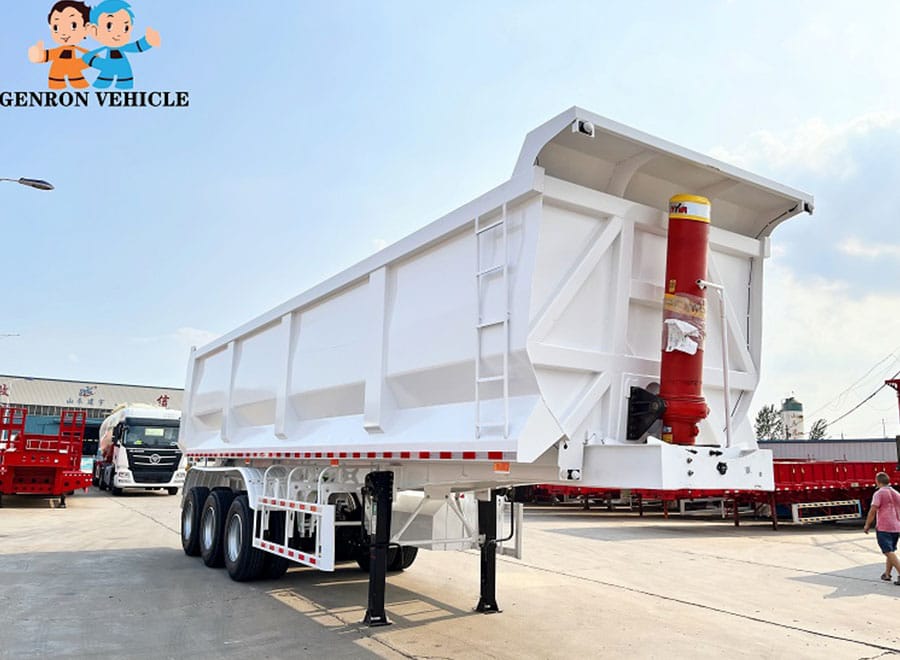
A rear dump trailer's body shape affects how the cargo occupies the body and how the body must be specified. It does not, on its own, determine payload, wear life or unloading performance. A useful comparison connects the internal shape with the material, loading method and receiving site.
Ask for a body cross-section and a material description before deciding between a U-shape and a box-body proposal. Exterior photographs are helpful for identifying the vehicle, but they may not show the floor profile, internal transitions or the complete rear opening.
Describe the Material in the Condition It Is Carried
Give the supplier more than a commodity name. Record the expected range of particle sizes, the largest pieces, moisture conditions and the loading method. Dry aggregate, wet soil and irregular rock can place different demands on the body even when the journey and nominal cargo mass are similar.
Include the usual material and any occasional cargo. If the operation changes with the season or quarry source, describe that variation. Photographs of representative cargo and information from the material supplier are useful. The aim is to identify which properties need attention in the body proposal, not to claim that one body shape suits every material in a broad mining or construction category.
Compare the Internal Cross-Sections
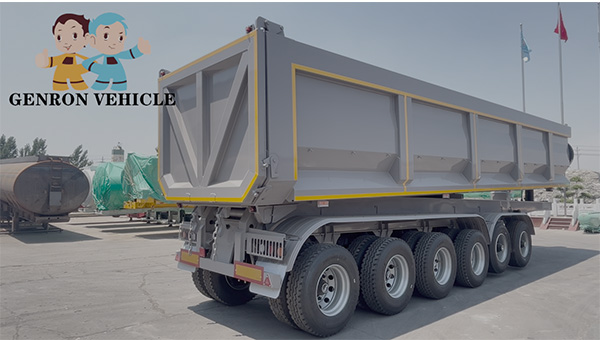
A U-shape body typically uses a rounded or curved lower profile, while a box-body description generally indicates a more rectangular internal arrangement. The exact transitions, floor and side construction vary between designs. Request the dimensions and cross-section for the bodies being quoted rather than relying on these labels alone.
Rounded transitions can reduce sharp internal corners, but the complete discharge behavior also depends on the material, surface, rear opening and vehicle design. A rectangular arrangement may provide a different usable volume and loading boundary. Neither shape should be advertised as guaranteeing a clean discharge for wet or cohesive cargo. Ask the supplier to explain the intended material application of the specific design.
A Practical Body Comparison
| Review item | U-shape proposal | Box-body proposal |
|---|---|---|
| Internal geometry | Confirm the curved profile and usable cross-section. | Confirm the floor, walls and internal corner arrangement. |
| Material behavior | Discuss the actual cargo and the complete discharge arrangement. | Discuss the actual cargo and the complete discharge arrangement. |
| Usable volume | Request the calculation basis for the quoted volume. | Request the calculation basis for the quoted volume. |
| Wear construction | Identify floor and wall materials, thicknesses and any specified liners. | Identify floor and wall materials, thicknesses and any specified liners. |
| Rear opening | Check the gate and opening relevant to the expected material. | Check the gate and opening relevant to the expected material. |
Specify Wear and Impact Requirements Separately
Body shape is not a steel grade or an impact rating. Identify the plate specification, thickness and construction relevant to the cargo and loading method. A body used for fine material delivered gently by one loading system may face different conditions from a body receiving large irregular pieces from another system.
Ask the supplier to explain the proposed floor, side walls and any liners as a complete construction. Compare those details across quotations. A thicker-looking plate or a named steel grade does not establish the suitability of the whole body, including joints and supporting structure. Record approved alternatives clearly so a material change cannot be mistaken for an identical offer.
Keep Body Volume Separate From Cargo Mass
Volume describes space; mass describes the amount of weight carried. For a preliminary calculation, material volume multiplied by the stated bulk density gives an estimated cargo mass. The estimate is only as dependable as the density and volume assumptions used, and it does not establish an allowable payload for the vehicle.
As an arithmetic illustration, 20 cubic meters at an assumed bulk density of 1.5 tonnes per cubic meter represents 30 tonnes. The same volume at an assumed density of 2 tonnes per cubic meter represents 40 tonnes. These are hypothetical values, not recommended loads or standard densities for a named material. Obtain the actual material information and assess the complete vehicle combination and route limits separately.
Review the Rear Gate and Receiving Area
The body cross-section and rear gate need to be considered together. Request the usable opening, gate arrangement and the applicable material restrictions for the quoted design. If large pieces are expected, tell the supplier about their size rather than assuming that a tall body will necessarily provide a suitable discharge opening.
Describe the receiving area, including ground conditions, available space and overhead restrictions. The operator needs the correct site assessment and approved tipping instructions for the vehicle. Material that sticks in a body is not a reason to improvise vehicle movements or exceed the equipment's limits. Any difficulty during discharge should be managed through the applicable procedures and trained personnel.
Compare the Complete Body and Tipping Package
A quotation should connect the selected body with its hinges, chassis mounting and hydraulic system. Ask for the body drawing and the equipment list used in the proposal. A body change can require a corresponding review of the tipping system; it should not be treated as a purely cosmetic option.
Also compare covering equipment, access arrangements, documentation and the supplied support information where these are relevant to the operation. Keep optional features separate from the basic specification. The buyer should be able to see whether a price difference reflects body construction, hydraulic equipment or a different supplied scope, rather than discovering those differences after the trailer arrives.
Use a Material Schedule to Compare the Offers
Prepare a short schedule showing the normal cargo, occasional cargo, loading equipment and receiving sites. For each proposal, ask the supplier to identify the intended material applications and any limitations that affect the schedule. This gives the fleet a clear record of what has been considered.
For example, a fleet carrying dry aggregate most days but wet soil on some contracts should make both requirements explicit. A proposal reviewed only for the dry material leaves the second job unanswered. The schedule can help the buyer decide whether one body is suitable for the regular work or whether the occasional cargo needs a different transport arrangement.
Representative material photographs and the expected size range.
Available bulk-density and moisture information, with its source identified.
Loading equipment and relevant impact conditions.
Body cross-section, volume basis and rear-opening details.
Floor, wall and liner specifications.
The proposed tipping package and its supporting documentation.
Body Selection Questions
Will a U-shape body always unload faster?
No universal unloading-time claim should be made from the shape alone. Material condition, internal geometry, rear opening and the complete tipping arrangement all affect the result.
Does a larger body mean a higher permitted payload?
No. A larger volume provides more space. The allowable load still depends on the vehicle combination, the actual material mass and the applicable operating requirements.
Useful Products and Further Reading
Request a material-based dump body proposal. Send GENRON the cargo schedule, loading method and receiving-site details. Ask for the internal body drawing, construction specification and complete tipping equipment list.


