
 English
 Français
 Español
 Árabe
 Deutsch
 简体中文
 Português
 Русский
 日本語
 한국어
 हिंदी
 Prancis
 Türkçe
 Tiếng Việt
 Italiano
 ไทย

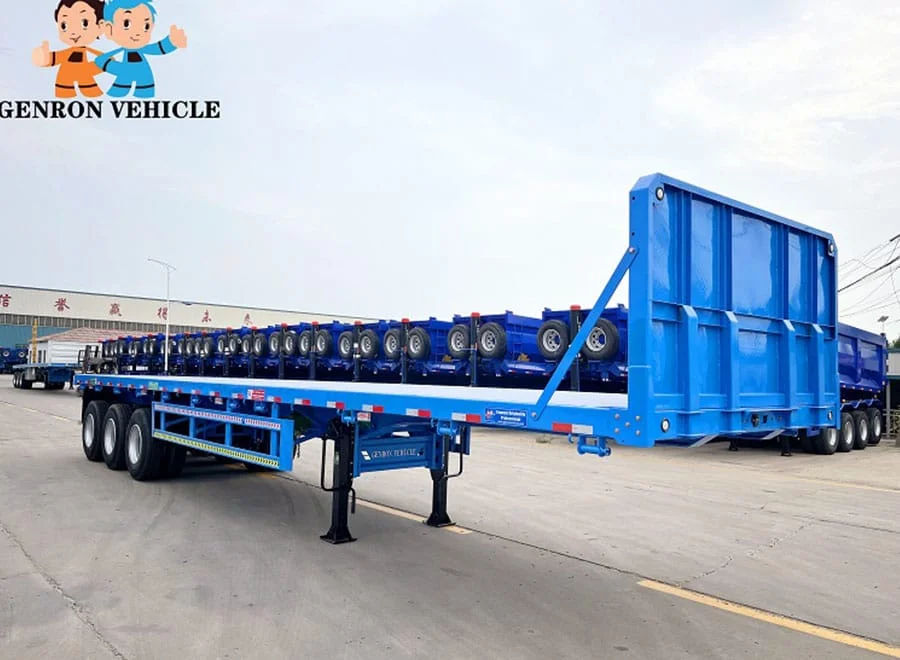
Cable drums make a flatbed trailer look deceptively simple to specify. The deck is open, the cargo has a clear outline, and a packing list may show only a few large items. Yet each drum has a rolling direction, a particular support arrangement and a package that can be damaged without obvious damage to the cable. A useful purchase enquiry therefore starts with the loaded drums and the planned handling operation, rather than a request for the largest advertised trailer capacity.
This guide explains what buyers should collect before comparing flatbed trailers for cable drum transport. It is a procurement checklist, not a restraint calculation or an instruction to load a particular drum. The cable manufacturer, packaging supplier and competent transport planner must agree on the support and securing method for the actual consignment. The trailer quotation should then describe the equipment that this agreed method needs.
Record the complete drum, not just the cable weight
Ask the cable supplier for a packing schedule showing each drum identifier, gross mass, overall diameter and overall width. Gross mass should include the drum, cable and transport packaging. A cable weight taken from a technical catalogue is not an adequate substitute. Request the information in the condition in which the drums will travel, including projecting battens, protective covers and any separate support frame. A clear photograph with a visible identifier helps connect the physical package to the correct line on the schedule.
The schedule should distinguish between drums that look similar but contain different cable lengths or constructions. If a mass is estimated, label it as estimated and state how it will be confirmed before loading. Explain whether the order consists of one repeatable drum size or an assortment that changes between journeys. A trailer arranged around the largest diameter may still have an unsuitable support layout for the smallest drum, while a plan based on average mass can hide a much heavier individual item.
Obtain the manufacturer's handling instructions early
Prysmian's published drum guide emphasises keeping its drums upright and explains that handling damage to the drum may also damage the cable. That is a useful reminder to obtain the instructions for the actual cable and package, rather than treating every circular object as interchangeable. Read the Prysmian drum handling guide as background, then obtain the instructions applicable to your shipment. Instructions for another manufacturer's drum, another drum construction or a different cable product should not quietly become the loading specification for this order.
Ask who is authorised to clarify missing markings and approve any proposed support arrangement. The buyer should not resolve a conflict between a drum label and a generic handling leaflet by choosing whichever instruction appears easier. Send the conflict to the cable supplier before a vehicle is dispatched. Retain the response with the transport order so that the loading team, carrier and receiving site all work from the same version, particularly when procurement and dispatch are handled by different companies.
Describe how each drum will meet the deck
The trailer supplier needs to understand the proposed contact between cargo supports and deck. Show the support locations, the space occupied by the complete support assembly and the areas through which the load will be transferred. A gross payload figure alone does not answer this question. Ask for a review of the deck and supporting structure against the intended loading arrangement, including any concentrated reactions identified by the responsible engineer. Do not assume that a large platform automatically accepts every arrangement of heavy drums.
The support designer should also state what must remain accessible for inspection. A cradle or blocking assembly can conceal a contact area once the drum is in place. The procurement drawing should therefore show how the loading team will confirm correct seating without entering an unsafe position. If the planned supports require deck attachments, make those attachments an explicit engineering item. Do not leave the carrier to drill, weld or otherwise modify a newly delivered trailer without an approved design and the manufacturer's agreement.
Separate roll prevention from the full securing plan
A drum can need measures against rolling as well as measures addressing other movement. The buyer's role is to ensure that the responsible transport specialist considers the complete load and vehicle combination. A support shown in a sales photograph is not evidence that it is suitable for the proposed drum, journey or legal requirements. Request a documented arrangement that identifies the actual equipment, its attachment locations and any restrictions on drum position, rather than a general promise that restraints will be supplied.
This distinction should appear in the quotation. State who supplies cradles or blocking, who provides restraints and protective interfaces, and who checks that their arrangement is compatible with both drum and trailer. A package restraint and a trailer attachment may belong to different contracts, but their interfaces cannot be left between contracts. Any claimed lashing point capacity should be supported by the trailer documentation. The number of visible points is not a reliable measure of the securing capability available in the intended positions.
Build a position drawing before choosing axle configuration
Prepare a proposed deck layout with individual drum identifiers and gross masses. The layout should show the tractor connection, trailer axle group and support locations, not merely a row of circles drawn inside the deck outline. Have the proposed load distribution checked using the actual vehicle configuration and applicable limits. Include the mass of removable supports, stored equipment and other items carried on the trailer. This allows suppliers to discuss a real operating case instead of comparing nominal trailer payloads in isolation.
GENRON's three-axle flatbed trailer can be included in an initial flatbed comparison, while the four-axle flatbed layout provides another configuration to discuss where the assessed operation calls for it. Neither product listing is a substitute for a configuration review. Ask the supplier to identify the exact model, axle arrangement and structural scope being offered for your drawing. Adding axles may change the commercial proposal, but it does not by itself establish legal payload, resolve a poor drum arrangement or confirm access to the receiving site.
Check crane and forklift access at both ends
Confirm how the drums will be loaded and unloaded, using the drum supplier's approved handling method. Identify the lifting equipment, the complete handling attachment and the access it requires around the load. The trailer specification should leave the necessary working space without forcing the handler to improvise around headboards, toolboxes or stored supports. Ask the loading contractor to review a dimensioned arrangement before the final deck and accessory layout is approved, especially when large flanges restrict access to the intended lifting points.
Do the same exercise at the receiving site. A dispatch yard with a suitable crane does not prove that a project site can receive the consignment. Record the available equipment, standing area, approach and planned landing location. Check who supplies and retains the handling accessories. Where different contractors load and unload, exchange the package instructions with both. A transport order is incomplete if it describes how the drum gets onto the deck but leaves its safe removal to be decided on arrival.
Consider weather protection without hiding the package
Ask the cable supplier what protection is required during the expected journey and any intermediate waiting period. The answer may depend on the cable, drum construction, existing packaging and storage arrangements. Record whether a cover is supplied by the cable producer or by the carrier, and how it will be fitted without damaging package components. A generic request for a waterproof tarpaulin does not establish whether the complete protection arrangement is appropriate or whether the cable ends remain protected as required.
Keep identification and inspection practical. If covers hide drum markings, agree how the carrier will identify individual drums without unnecessarily disturbing the packaging. Protection should not obstruct the inspection points specified in the approved transport plan. When an onward shipment includes a port or terminal, ask how the covers and supports will be dealt with during transfer and waiting. Specify responsibility for replacement if packaging is disturbed, rather than assuming that the next contractor will reconstruct the original arrangement from photographs.
Plan partial deliveries and the return journey
For a journey with several unloading points, create a separate load state for each stage. Removing one drum changes the remaining cargo arrangement and can change vehicle loading. The transport planner should assess those stages before the journey is booked, rather than approving only the fully loaded departure condition. Delivery order should follow the operating plan, not whichever drum is easiest to reach first. If a site cannot accept its scheduled drum, the carrier needs a clear procedure for seeking a revised plan.
Empty drums and unused supports also need a defined return arrangement. Their mass, footprint and handling requirements differ from those of the outward consignment. State whether drums remain assembled, whether supports return with the trailer and who accepts any damaged packaging. If another cargo will be carried on the return journey, assess that cargo separately. A trailer suitable for outward cable drums is not automatically ready for a different return load merely because the deck is clear after unloading.
Turn the approved arrangement into a purchase record
Before placing an order, bring the vehicle quotation, cargo schedule and approved support drawing together. Identify exclusions in plain language: cargo supports, securing equipment, lifting attachments, covers and route approvals should each have a named owner. Ask for relevant inspection records and operating documentation with the delivered trailer. Changes in drum dimensions or cargo mix after order confirmation should trigger a fresh review of affected items rather than being treated as minor dispatch details with no effect on the vehicle.
At collection, compare the actual trailer with the agreed drawing and equipment schedule. Photograph identifiers and interfaces that help demonstrate what was supplied, without treating photographs as a replacement for rated documentation. Record any difference before the first loading operation. For repeat business, retain the approved cargo cases and review them when a different cable supplier or drum design is introduced. A reusable, accurate procurement record is more valuable than repeatedly asking for a trailer suitable for cables with no supporting information.
Frequently asked questions
Is total payload the main specification for cable drums?
It is one important input, but it is not the complete specification. The review also needs individual drum masses, dimensions, support reactions, position on the vehicle and the equipment used to handle and secure each package. Several arrangements can have the same total mass while loading the deck and axle groups differently. Ask the supplier to assess the particular arrangement you intend to use. Where the cargo details are still provisional, request a conditional proposal that makes those assumptions visible instead of presenting an unqualified suitability claim.
Can the trailer be ordered before the drum supplier is selected?
An initial comparison is possible, but the purchase should define an agreed range of cargo cases. Provide the expected maximum and minimum package dimensions, mass range and handling methods, then identify what must be confirmed later. A supplier cannot meaningfully guarantee compatibility with every future drum simply from the word cable. If the final drums fall outside the agreed cases, review the vehicle and its associated equipment before dispatch. This approach preserves useful progress without disguising an unresolved cargo interface as a completed technical decision.
Should cable drums travel on a flatbed or a low bed?
The answer depends on the complete loaded dimensions, mass distribution, access and handling arrangement. A lower deck may be worth assessing for a particular tall drum, but it introduces its own dimensional and operating considerations. Compare the actual loaded vehicle cases rather than choosing by trailer category alone. Include support height and every projecting package component when calculating the transport envelope. The cable supplier and transport planner should confirm the package arrangement, while the vehicle supplier checks the proposed structure and configuration against that arrangement.
Can one support design serve every drum in a mixed load?
Only if its designer has checked the relevant range and documented the conditions of use. Similar outside diameters do not establish identical mass, flange construction or permissible contact areas. Give the designer the complete drum schedule and obtain a clear answer for each case. If different supports are needed, label them so that they can be matched to the right package during loading. Store the instructions with the shipment record. Do not let a familiar support become the default merely because it was used successfully on another consignment.
What evidence should accompany a quote for securing equipment?
Ask for identification of the proposed equipment, applicable rated information, attachment requirements and the cargo cases for which the arrangement has been reviewed. The quote should explain whether it includes only trailer attachment points or also the separate cargo securing components. Confirm which party is responsible for the complete plan and for checking the assembled arrangement before departure. A photograph of a loaded trailer can help explain the layout, but it does not establish ratings, condition or suitability. Keep commercial descriptions and technical acceptance documents clearly connected.
What should change when the receiving site changes?
Recheck access, standing conditions, handling equipment, unloading sequence and the location where the drum will be placed. Confirm whether the new site has received the correct package instructions and can identify the arriving drum. A different receiving site may also alter the route and the time that cargo spends outside, so revisit the relevant protection and transport assumptions. Tell the carrier about the change before the vehicle arrives. The objective is to resolve the changed interfaces in advance, not to transfer an unplanned handling problem to the driver.
Product Options to Discuss
Related Reading
Flatbed Trailer Floor Specification for Pallets and Loading Equipment
How to Choose the Right Flatbed Semi Trailer for Container and General Cargo Transportation
Semi Trailer Pre-Delivery Inspection: Drawings, Photos and Handover Records


