
 English
 Français
 Español
 Árabe
 Deutsch
 简体中文
 Português
 Русский
 日本語
 한국어
 हिंदी
 Prancis
 Türkçe
 Tiếng Việt
 Italiano
 ไทย

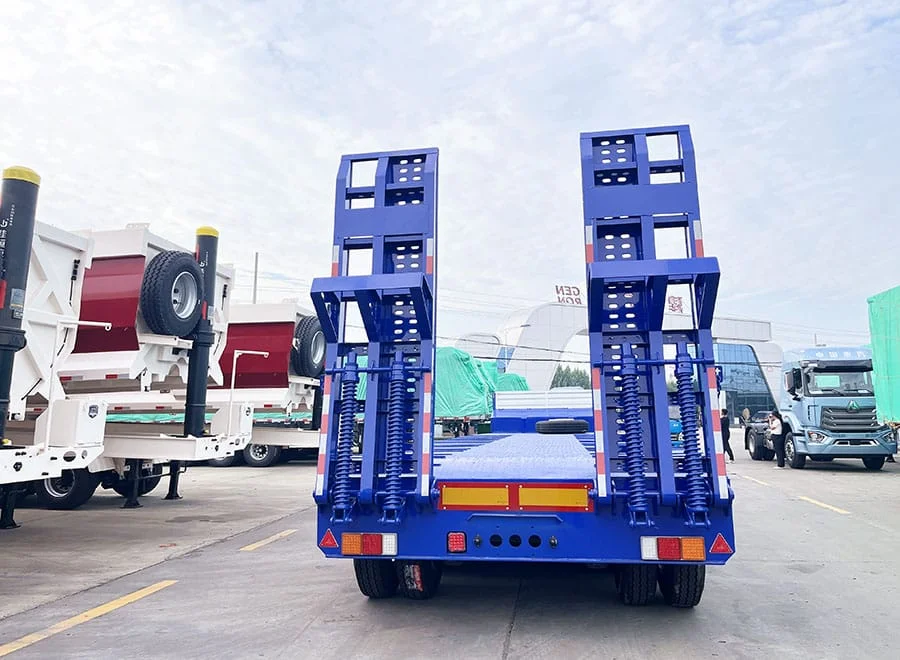
A mobile crusher may move between sites frequently, but its working configuration is not necessarily its road-transport configuration. Conveyors, screens, hopper extensions and other options can change the load substantially. A low-bed enquiry that names only the crusher model risks comparing trailers against different versions of the machine without anyone noticing.
The starting point is a configuration record agreed with the machine owner. From there, the buyer can establish what remains attached, what travels separately and how each item reaches the destination. This guide focuses on the information needed for that purchasing decision. It is not a loading, dismantling or securing instruction for a particular crushing plant.
Identify the complete plant rather than the crusher chamber
Record the machine manufacturer, full model, identification and current options. Distinguish the complete mobile plant from the crusher chamber inside it. Feed capacity, chamber dimensions and engine power are production specifications, not substitutes for transport mass or a dimensioned outline. A machine's sales category also says little about how its supporting tracks will sit on a particular trailer.
Ask the owner to confirm the fitted plant, including conveyors, screening equipment, magnets, walkways and added accessories. Use photographs to support a written equipment record, not replace it. If an attachment has been changed since the machine was supplied, identify the change and obtain the information needed to include it in the transport review.
Resolve the conveyor arrangement before choosing a deck
Conveyor configuration can distinguish two otherwise similar transport enquiries. KLEEMANN's MR 110(i) EVO2 technical document identifies rigid side-conveyor options that require disassembly for transport and a folding side-conveyor option that remains attached. That distinction is specific to the described equipment, but it illustrates why the fitted option matters more than a general statement that conveyors fold. KLEEMANN MR 110(i) EVO2: technical data and option-specific transport arrangements
Obtain the corresponding instructions for the actual plant. Record each conveyor's agreed transport condition and any required support, restraint or removed components. Do not assume that a conveyor shown folded in a photograph is ready for travel, or that the same preparation applies to another configuration. The machine owner should resolve that question before a final load drawing is accepted.
Reconcile base weight with fitted transport mass
A published base-plant weight may be useful for an early discussion, but it is not automatically the weight of the machine being collected. Establish the mass associated with the agreed configuration, including retained options and any items carried elsewhere on the same trailer. State the evidence, its date and any remaining uncertainty.
Keep removed equipment separate in the record even if it will join the same shipment. Removing an attachment from the crusher does not remove its mass from the trailer if it is then placed beside the tracks. Ask the supplier and carrier to assess the complete proposed load, with its actual distribution, rather than treating each component as an isolated capacity check.
Use transport dimensions with their conditions attached
Working height and operating length can be very different from the dimensions of the prepared plant. Submit a drawing of the actual transport configuration, identifying the highest point, widest projections and front and rear overhangs. Include items that are easily omitted from a simple box outline, such as a retained walkway or conveyor head.
Every dimension should relate to a stated condition. If a component needs removal to achieve an envelope, identify who removes it and where it will travel. If information is provisional, mark it accordingly. A quotation based on the smallest published outline should not be treated as acceptance of the largest optioned machine merely because both appear in one brochure.
Show the crawler contacts and supporting structure
For a tracked plant, provide track width, spacing and the relevant contact geometry. The trailer supplier must assess where those contacts load the proposed structure. The overall plant width does not establish the track-support width, and a visually wide platform does not by itself identify which parts are intended to support machinery.
Ask for the accepted track positions to be shown on the trailer drawing. Clarify the intended duty of extensions, removable pieces or other support accessories. Where the plant has special transport support requirements, include the manufacturer's information. Resolve the arrangement before manufacture rather than leaving site staff to interpret spare deck space as permission to improvise additional supporting surfaces.
Review the transitions as well as the final position
The plant's underside profile, projections and crawler geometry need to be considered along the complete loading path. Provide a side view showing relevant low components and overhangs. The accepted parked position is only one stage; the approach and changes in slope may introduce different clearance or loading conditions.
Describe the surfaces and working room available at collection and delivery. A plan based on an unobstructed prepared area should not be assumed suitable for a narrow quarry access or uneven loading location. Ask the parties responsible for the assessment to identify their assumptions. Neither a general ramp-angle claim nor unused nominal payload establishes that the actual plant can follow the proposed path.
Compare low-bed proposals without relying on axle count
GENRON's four-axle low-bed layout and five-axle lowboy layout offer different machinery-trailer configurations for an initial discussion. Their product descriptions are not approval for a named crusher. Send the actual plant record so that the proposed deck, running gear, support positions and loading arrangement can be considered together.
An additional axle is not a complete explanation of suitability. The selected tractor, trailer design, load position and route requirements all matter. Ask each supplier to state the specific configuration being offered and the application reviewed. Compare proposals against the same machine and operating conditions so that differences in price or trailer dimensions have a meaningful basis.
Allocate dismantling and reinstatement work
If transport requires removing a screen or conveyor, the purchasing scope must identify the work at both ends. Establish who provides the manufacturer's procedures, qualified personnel, lifting arrangements, preparation area and necessary equipment. Include the handling of retained hardware and the protection of connections or other exposed components as part of the agreed machine-preparation scope.
Avoid a quotation that assumes removal while the machine owner assumes the plant will travel intact. The resulting gap can affect the trailer selection, freight arrangement and commissioning schedule. A clear commercial exclusion is better than an unspoken dependency, provided the buyer has arranged the excluded work and understands its cost and timing.
Give detached equipment its own transport identity
Create a packing record for separate conveyors, screen units and accessory packages. State their dimensions, mass, support requirements and approved handling points where applicable. Decide whether they travel with the main plant or on another vehicle. The available space on a trailer should not determine that decision without a load-distribution and support review.
Use identifiers that allow the destination team to reconcile every item with the plant. Record which vehicle carries each package and who receives it. A missing support or mounting component can delay the return to service even when the main crusher arrives on time. The transport purchase therefore needs a complete delivery scope rather than a single headline plant movement.
Define cleanliness and the condition for collection
Ask the owner and carrier to agree the required collection condition, including removal of retained process material and management of any loose items. A crusher recently working in a quarry or recycling operation may not match the empty condition used in its transport documents. Do not make an arbitrary allowance for unknown retained material and call the result a confirmed mass.
The required preparation should follow the actual machine instructions and site procedures. Transport planning is not a reason for a driver to enter machinery or perform unplanned cleaning. Identify who prepares and checks the plant, what evidence the carrier needs and how a discrepancy is handled before loading begins.
Establish whether the machine can move as expected
Confirm the plant's ability to start, travel and respond to its controls in the intended collection condition. Disclose damage, hydraulic faults, electrical problems or other limitations that could affect movement. A mobile machine that was operational when purchased may not be ready for loading after storage or repair work.
If it cannot move as assumed, arrange a separate specialist assessment and loading plan. The presence of ramps or a nominally adequate trailer is not a recovery method. Identify responsibility for additional equipment, revised site arrangements and any change to the transport configuration. Resolving this before dispatch protects the agreed schedule from an avoidable collection-day surprise.
Assess the loaded combination and actual route
Ask for the prepared plant to be shown in its agreed position on the proposed trailer. The combination drawing should identify loaded dimensions and relevant overhangs, with provisional values clearly marked. Machine transport height alone is not the complete road height, and the trailer's empty dimensions are not the loaded vehicle envelope.
Give the carrier the route, collection access and destination requirements early enough for review. The journey may involve separate permissions or restrictions that a trailer quotation does not address. Keep responsibility for that work explicit. A supplier's general machinery application statement cannot replace the carrier's assessment of the actual combination and the route it will use.
Compare the cost of a complete site transfer
Ask competing offers to use the same boundary for the movement. One may price only the main plant, while another includes detached equipment, specialist preparation and destination reinstatement. Separate vehicle supply from those services, then identify where the buyer must arrange work independently. Otherwise a lower transport figure can conceal a materially different scope.
Consider the planned frequency of moves without claiming that one configuration will always be cheapest. A contractor relocating regularly may value a different division of preparation work from an owner making a single transfer. Describe the actual operating pattern and ask for the assumptions behind the proposal, rather than converting an attractive brochure feature into an unsupported cost-saving promise.
Specify evidence for the order and handover
The accepted order should link the proposed trailer to the machine information used in the review. Retain the approved drawing, equipment scope and stated assumptions. Identify the inspection evidence required before shipment, especially where support accessories or attachment features are important to the proposed plant arrangement.
At handover, compare the supplied trailer and accessories with that record. A photograph of a different crusher on a similar trailer is not equivalent evidence. If a supervised demonstration forms part of the contract, define its plant configuration, site and acceptance process in advance. The purpose is to verify an agreed arrangement, not to test an unknown loading method informally.
Manage future moves as configuration-controlled work
A trailer bought for repeated crusher transfers needs records that remain usable after the first journey. Keep the accepted plant configuration, separate-package list and trailer arrangement together. When a new screen, conveyor or other option is installed, review whether the transport record still describes the machine.
The same discipline applies if the trailer will move several plants. Submit the relevant machine schedule and ask for clearly stated coverage, rather than assuming that every machine below a nominal weight is included. A defined set of reviewed applications gives dispatch staff a practical way to recognise substitutions and seek advice before an unfamiliar plant is sent for collection.
Frequently asked questions
Can the crusher's production capacity help me choose trailer capacity?
Not as a substitute for transport information. Production capacity describes the processing task and does not establish the mass, dimensions or supporting contacts of the complete plant. Obtain a current transport record for the actual configuration. Include retained options and separate equipment carried on the same vehicle. The trailer and carrier assessments then need to use that load, its position and the intended combination rather than a crushing-output figure.
Can I assume that every conveyor folds for transport?
No. Conveyor arrangements differ between machines and options, and some components may require removal. Identify the fitted equipment and obtain the applicable manufacturer instructions. Record the condition used for the transport drawing, any required supports or removed items, and who performs the preparation. A folded appearance in a sales photograph does not establish that the actual machine has completed all the steps required for travel.
Does removing a screen mean I can use a smaller trailer?
It may change the main plant's mass and outline, but the complete movement still needs assessment. The detached screen requires its own handling, support and transport arrangements. If it travels on the same trailer, its mass and position remain part of that load case. Compare the full prepared configuration and all packages with the proposed trailer instead of assuming that removal automatically creates an acceptable combination.
What information is needed about the crawler tracks?
Provide the relevant track dimensions, spacing and supporting-contact geometry, together with machine transport information. The supplier needs to establish how the plant loads the proposed trailer structure and where the tracks should be positioned. Overall plant width is not an adequate substitute. Any proposed extensions or removable support pieces need an identified duty and an accepted arrangement, not just a visually continuous deck in a drawing.
Who should organise removal and reassembly of accessories?
Assign those responsibilities in the contract and collection plan. They may sit with the owner, machinery specialist or another agreed contractor, but should not be left implicit in a trailer purchase. Establish procedures, personnel, equipment, package identification and destination work before collection. A trailer supplier's price may legitimately exclude machine dismantling; the buyer still needs to account for the excluded work when comparing complete delivery proposals.
What should change when the plant receives another attachment?
Update the transport configuration record and request review of the affected mass, dimensions, contact arrangement and separate packages. Notify the trailer supplier and carrier before scheduling the next move. Even an attachment that appears small may change an assumption in the accepted plan. Keep the revised drawing and scope with the dispatch documents so that the transport team works from the machine's current condition rather than its original catalogue configuration.
Product Options to Discuss
Related Reading
Low Bed Trailer for Excavators: A Dimension and Ramp Checklist
Low Bed Trailer Width Extensions: Deck Support, Machine Fit and Route Planning
Semi Trailer Pre-Delivery Inspection: Drawings, Photos and Handover Records


