
 English
 Français
 Español
 Árabe
 Deutsch
 简体中文
 Português
 Русский
 日本語
 한국어
 हिंदी
 Prancis
 Türkçe
 Tiếng Việt
 Italiano
 ไทย

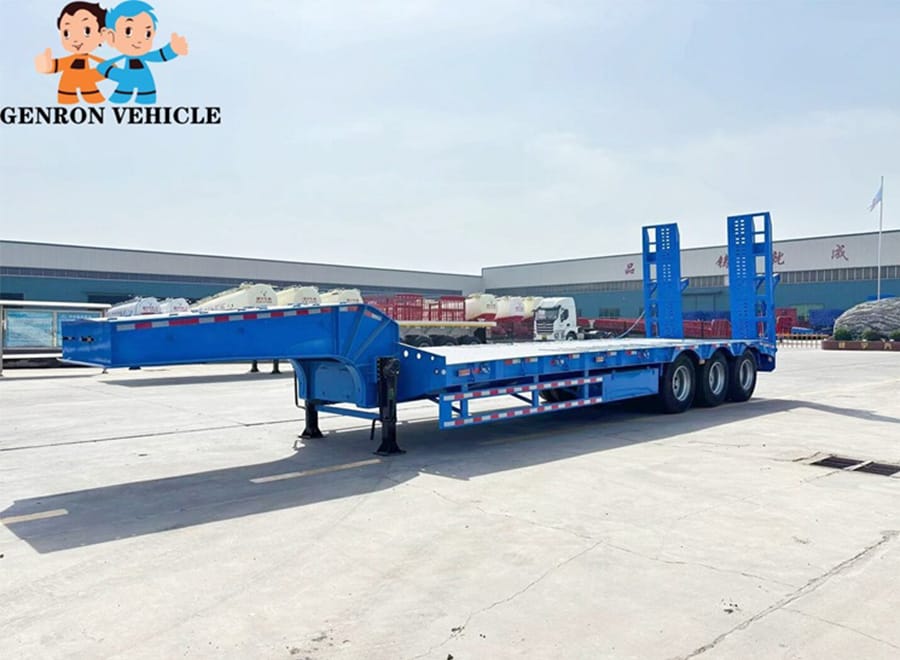
Choosing a low bed trailer for an excavator starts with the machine in its intended transport configuration. The model name and a nominal weight are useful references, but neither tells the supplier whether the tracks fit the deck, whether the machine can pass over the loading transitions or how high the loaded combination will be.
Prepare a short measurement record before requesting a quotation. It should distinguish machine dimensions from trailer dimensions and transport planning from the operator's loading procedure. That separation makes the supplier's response much easier to assess.
Record the Machine as It Will Travel
Use the excavator manufacturer's transport information for the actual model and installed equipment. Record whether the boom, bucket, blade, counterweight or other attachments remain fitted. A machine's published operating dimensions may describe a different position from the one approved for transport. Where parts are removed, list them as separate cargo rather than silently excluding their weight.
Add photographs from the side, front and rear. Mark which dimensions come from the manufacturer's documents and which have been measured on the specific machine. This is important when a fleet has machines with different track widths, buckets or protective structures under the same broad model description. Keep the measurement record tied to the machine identification.
Separate Track Width From Overall Width
The tracks provide the main contact with the deck, while the upper structure or an attachment may determine the widest part of the load. Record both the outer track width and the overall transport width. Also provide the track contact length and any relevant information about the machine's weight distribution.
The trailer drawing should show where the tracks will sit and which members support them. A deck that is wide enough at its outer edges does not automatically provide adequate support at every possible track position. Ask the supplier to assess the proposed placement using the specific deck structure and its permitted loading conditions. Do not treat an unsupported overhang as usable deck width.
A Measurement Sheet for the Quotation
| Record | What the entry should describe |
|---|---|
| Transport length | The complete machine in its approved travel position, including projecting equipment. |
| Transport width | Overall width and outer track width, recorded separately. |
| Transport height | The highest point above the machine's supporting surface in that position. |
| Machine weight | The documented weight for the fitted configuration, plus separately carried attachments. |
| Track contact | Track contact length, width and intended position on the deck. |
| Access constraints | The loading yard, receiving yard and the route restrictions already identified. |
Compare Ramp Ratings With the Actual Contact Loads
The trailer's payload description is not the ramp rating. The ramps, their supporting arrangement and their connections need their own specifications. Ask whether the stated ramp capacity applies to a pair or to one ramp, and what loading conditions the manufacturer uses for that rating.
Manufacturer catalogues illustrate why this distinction matters. Faymonville, for example, lists different ramp arrangements, widths, coverings and load-bearing specifications for its own products. A distributed-load rating and a wheel-load rating describe different conditions. Do not transfer those catalogue values to a GENRON ramp. Request the rating and approved application for the ramp supplied with your quotation, including whether it suits the excavator's tracks.
Look at the Whole Loading Profile
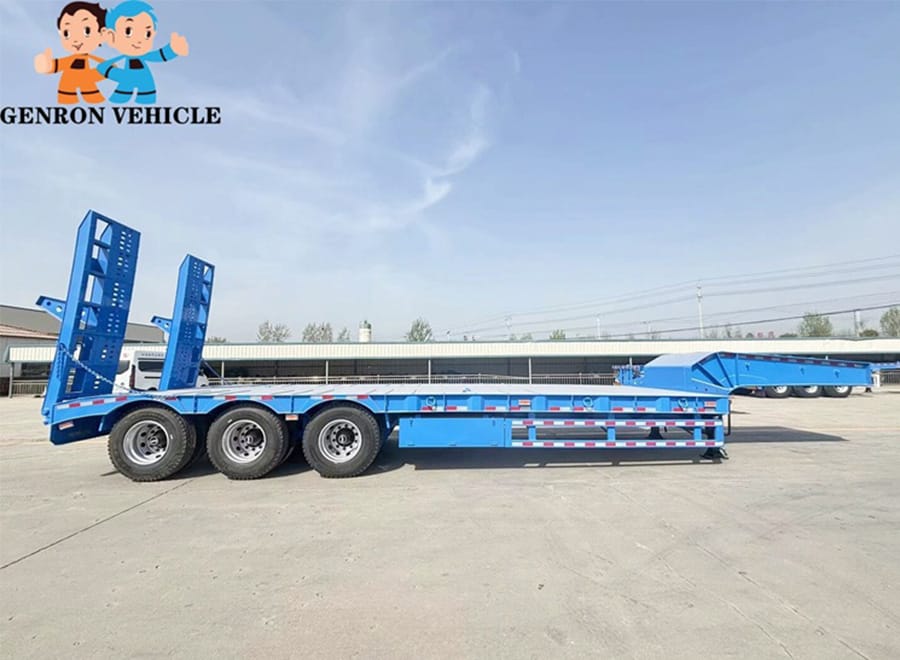
Ramp length alone does not describe the complete path onto the trailer. The transition from the ground to the ramp, the change at the rear platform and the step down to the lower deck can each affect machine clearance. A side-profile drawing is therefore more useful than a photograph of raised ramps.
Ask the equipment manufacturer and the trailer supplier to review the machine's ground clearance and the relevant transitions. Describe the ground conditions and available approach space at both sites. This article does not prescribe ramp angles, machine movements or a loading sequence; those belong to the approved equipment instructions and the competent personnel responsible for the operation.
Check Loaded Height and the Remaining Deck Space
For preliminary planning, the height of a machine above its supporting surface and the deck height at that location are separate inputs. The supplier should assess the loaded arrangement, including any supports or packing materials. A low deck may help with height, but it does not remove route-clearance, load-distribution or permit requirements.
Show buckets, attachments and other loose equipment on the same deck sketch as the excavator. Identify their separate support and securing needs. The area occupied by the machine's tracks is not the same as the area available for every other item. A sketch also reveals whether a spare attachment would obstruct designated securing points or interfere with the proposed loading access.
Turn a General Enquiry Into a Defined Job
Consider a planning example in which a contractor moves an excavator with one fitted bucket and carries a second bucket separately. A quotation based only on the excavator model could omit the second bucket, use the wrong transport dimensions or leave its position undecided. Supplying a machine record and a deck sketch makes those questions visible before a vehicle is selected.
If several machines will use the same trailer, submit a separate record for each one. The heaviest machine may not be the widest or tallest, and the machine with the lowest ground clearance may present a different loading problem. Ask the supplier to identify which arrangements have been assessed rather than treating the largest advertised payload as approval for the whole fleet.
Copyable Excavator Transport Enquiry
Machine manufacturer / model / identification:
Transport configuration and attached equipment:
Documented machine weight for that configuration:
Overall transport length / width / height:
Outer track width and track contact dimensions:
Separately carried attachments and their weights:
Proposed deck arrangement:
Loading and receiving site details:
Tractor information:
Route and locally confirmed restrictions:
Ramp specification and drawing requested:
Items requiring further confirmation:
Two Common Fit Questions
Can I choose the trailer using the excavator's operating weight alone?
No. The fitted configuration, track support, transport dimensions, loading access and vehicle combination also need assessment. Confirm what the published weight includes before using it in an enquiry.
Are longer ramps always the better choice?
Not necessarily. Ramp length is one part of the loading profile. Capacity, width, surface, connections, ground conditions and the machine's clearance also matter.
Useful Products and Further Reading
Technical References
The manufacturer reference illustrates ramp specification categories. Obtain the actual machine instructions and the approved information for the trailer and ramps being supplied.
Ask GENRON to review your excavator dimensions. Attach the completed measurement sheet, machine photographs and a deck sketch. Request a proposed drawing with the ramp specification and any unresolved fit questions identified.


