
 English
 Français
 Español
 Árabe
 Deutsch
 简体中文
 Português
 Русский
 日本語
 한국어
 हिंदी
 Prancis
 Türkçe
 Tiếng Việt
 Italiano
 ไทย

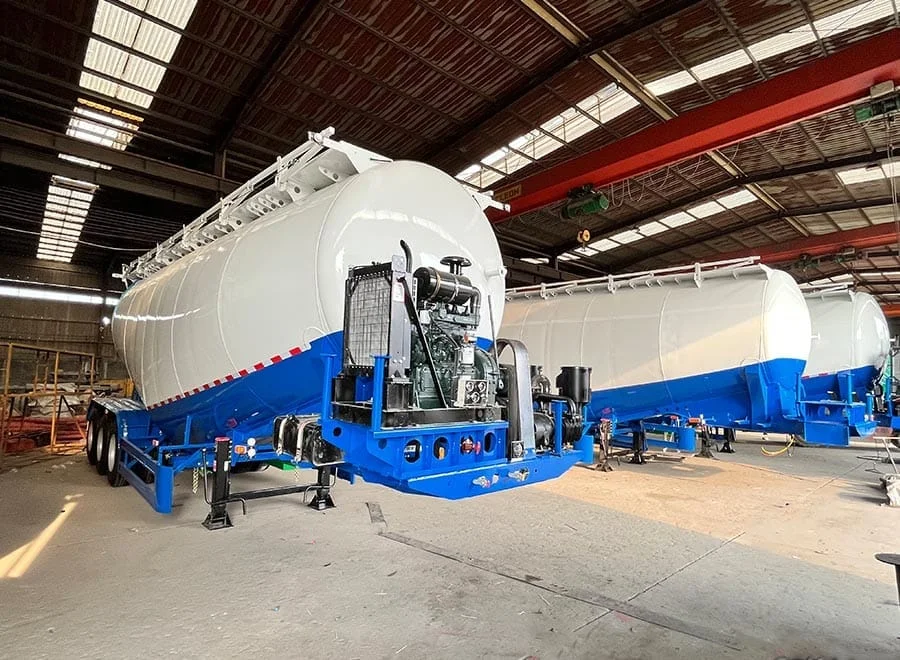
A trailer described as a cement tanker is not automatically accepted for every fly-ash movement. The name identifies a vehicle family, not a verified match between a powder, a pneumatic system and a receiving plant. Before comparing tank volumes or prices, the buyer needs to establish what material will be carried and what the customer will accept.
The strongest enquiry connects the powder producer, tanker supplier, carrier and receiver through one defined duty. It identifies material information, cargo history, delivery conditions and the complete equipment scope. This guide explains how to assemble that brief without treating all fly ash as identical or promising a discharge result from tank volume alone.
Identify the actual fly-ash supply
Start with the producer, product designation, source, intended use and receiving customer's specification. Ask for the current technical information, safety data sheet and relevant shipment documents. A broad description such as fly ash for concrete is not enough to establish the material accepted by a particular plant or the information needed for equipment selection.
Separate the customer's product requirements from the vehicle requirements. The producer establishes what is supplied; the receiver establishes its acceptance conditions; the equipment parties assess the proposed transport duty. A trailer quotation cannot certify the quality of an unidentified powder. Keep product approval and vehicle selection connected, but do not use one as a substitute for the other.
Read the documents for the supplied material
A fly-ash safety data sheet hosted by Holcim UK, issued in November 2017, describes a fine powder and calls for bulk storage that is dry, clean and protected from contamination. It provides a relevant example of material-specific handling information, not proof that every ash source has the same composition or classification. Obtain the current document for the actual supply and the destination market. Fly-ash safety data sheet, November 2017, hosted by Holcim UK
Do not copy a hazard classification or a property value from another producer into a tanker order. Where information is missing, ask the material supplier to resolve it. The carrier and sites need the applicable handling requirements, while equipment selection may need additional material information that a safety data sheet does not provide.
Ask which material data the equipment assessment needs
Give the tanker and discharge-equipment suppliers the powder data available from the producer, and ask them to identify any gaps relevant to the proposed duty. Those may concern bulk condition, handling behaviour, temperature or other characteristics needed for the assessment. State the basis of each value and distinguish a measured result from an estimate.
Do not invent a universal acceptable moisture content, bulk density or particle-size limit for all fly ash. The point of the enquiry is to match the actual product with a documented equipment proposal. If testing or further technical review is needed, define who arranges it, what material is represented and how the result will be used in the purchasing decision.
Keep tank volume and permissible load separate
Tank volume describes space. The proposed cargo quantity also depends on the material condition, permitted operating limits and the actual tractor and trailer combination. A large tank does not establish that it can legally be filled with any powder to the same level. Likewise, a nameplate capacity does not demonstrate the receiver's accepted delivery quantity.
Ask the supplier and carrier to show the basis for the proposed load, including the vehicle configuration and relevant mass information. If the material data are provisional, make the load assumption provisional too. This is more useful than converting an internet density value into a confident payload promise for an unidentified fly-ash supply and route.
Treat cargo history as part of product acceptance
Ask the receiving customer which previous cargoes are acceptable and what evidence it requires. A tanker described as empty may still have an unresolved cargo-history issue. Conversely, a vehicle previously used for a different powder should not be accepted or rejected solely on the buyer's assumption about how similar the two materials look.
Record the agreed history requirements for the tank and any shared delivery equipment. Include the relevant hoses, fittings and other components within that discussion rather than focusing only on the visible tank shell. Where the receiver requires dedicated equipment, define the scope of dedication and the records expected. Do not assume that the word dedicated answers every question about previous use.
A useful acceptance record links the tanker identifier, relevant previous cargoes, cleaning or inspection evidence and any shared hose identifiers to a named receiving customer's requirements. Record who reviewed the evidence, the decision and its scope. An unresolved history entry should remain visible to dispatch. A blank space on the form is not the same as confirmation that the receiver accepts the vehicle for this product.
Agree cleaning requirements before planning a mixed fleet
If the business model involves changing between cement and fly ash, obtain the producer's and receiver's acceptance conditions before assuming the fleet can alternate freely. Identify any required cleaning, inspection or release evidence, who performs the work and who has authority to accept the vehicle for the next load.
This is not a universal cleaning procedure. Methods must suit the equipment, material and applicable site rules, and any entry or maintenance work requires appropriate controls. The purchasing task is to establish an accepted process and its commercial consequences. Cleaning time, specialist services and lost operating availability belong in the comparison if the proposed work requires them.
Compare complete tanker proposals
GENRON's three-axle bulk cement tanker and four-axle cement-tanker layout provide vehicle configurations to discuss against a defined powder duty. Their classification as cement tankers does not, by itself, confirm suitability for a particular fly ash. Send the material and receiving-site information with the enquiry and ask what further review is required before a final scope can be agreed.
Compare the tank, discharge arrangement, running gear, proposed load and supplied accessories as one quotation. Different axle configurations should be assessed within the actual combination and route requirements, not ranked by axle count alone. Ask the supplier to identify the application covered by its response and to separate confirmed scope from options or assumptions still awaiting information.
Confirm loading-station acceptance as well
The receiving plant is not the only site that must accept the vehicle. Give the loading station the proposed tanker configuration and ask it to identify relevant access, connection, identification and loading requirements. Establish who confirms that the product and vehicle are ready for the scheduled collection. Do not assume that approval at the destination resolves the source's conditions.
Include any required loading equipment or documentation in the responsibility schedule. If the operation uses several sources, obtain the relevant information for each rather than treating them as interchangeable. This can reveal an interface or administrative gap while the purchase scope can still be changed, instead of after the new tanker arrives for its first assignment.
Keep the delivery interface in a separate, connected record
The material-acceptance review still needs a defined delivery system. Record who provides conveying air, its reviewed duty and power interface, the receiver's designated inlet and the complete hose and coupling assemblies. Identify equipment owners and the person authorised to confirm site readiness. Physical connection alone does not establish permission to transfer the product, and a spare adapter does not resolve an unreviewed system.
Keep the detailed connection layout on a receiving-interface sheet linked to the material and cargo-history records. That allows a changed hose or compressor to trigger the relevant equipment review without obscuring the separate question of whether the powder is accepted. Ask the equipment suppliers and receiver to resolve open interfaces before scheduling the duty; do not promise a discharge result from one airflow figure or a nominal hose length.
Work through a hypothetical source change
Consider a hypothetical buyer who has an accepted delivery arrangement for fly ash from Source A. A purchasing team then receives a lower-priced proposal from Source B. The proposed tanker and receiving inlet are unchanged, and Source B supplies a safety data sheet. Those facts do not complete the change review. The material's identity, supporting product documents and the receiver's approval for the new source remain separate questions. This example describes a purchasing decision, not a GENRON customer case or a material specification.
The buyer sends Source B's documents to the receiver and asks the equipment parties whether their existing assessment covers the new product information. Suppose the receiver requests an additional product report that has not yet arrived. Record the request and keep the new-source assignment on hold under the agreed dispatch process; do not relabel it as Source A or use the existing approval as a substitute. When the missing report arrives, the authorised reviewers decide whether their requirements are met and record any conditions. Receiving the report alone is not the release decision.
Define what a delivery-time requirement includes
A buyer may want a shorter unloading visit, but the required measure needs a clear start and finish. Site arrival, permission to begin, connection, product transfer, completion checks and departure are not interchangeable time periods. State which period matters commercially and what conditions the proposal assumes.
If a performance demonstration or acceptance trial is required, agree the actual product, quantity basis, equipment configuration and receiving arrangement beforehand. Also define how results will be recorded and how deviations are handled. Do not turn a favourable example from another material or site into a promised fly-ash discharge time for the proposed operation.
Make delivery identity and records practical
Agree how the driver and receiver will identify the product, vehicle, destination and load. The delivery record should support the customer's acceptance process and distinguish this shipment from another powder or source. Decide which documents travel with the vehicle and which are supplied through the customer's normal administrative system.
Where samples, seals or other controls form part of the agreed process, establish their ownership and recording requirements with the relevant parties. Do not add a generic sampling instruction that conflicts with the producer's procedure or the receiver's quality system. The useful purchase specification makes the required process possible without pretending that the trailer itself supplies product-quality assurance.
Prepare a clear response to rejected or incomplete deliveries
Ask how the operation will handle a receiver refusing a load or a delivery ending with material still on the vehicle. Identify the responsible commercial and technical contacts, the records needed and the authorised next steps. A driver should not be expected to resolve a product-acceptance dispute by choosing another destination without approval.
The fleet plan should also consider how an incomplete delivery affects the next assignment. Residual cargo, equipment condition and customer acceptance may need review before another product is loaded. Define the decision process and responsibilities in advance rather than assuming that a tanker leaving a site is ready for any subsequent powder movement.
Include support and acceptance evidence in the order
Request a final equipment list, accepted drawings, component documentation and the inspection evidence agreed for the supplied configuration. Identify spare and service items through actual component records, not just the general tanker model. This helps the operating team order suitable replacements and retain a traceable description of its equipment.
Before purchase approval, review the open issues with the supplier, material producer and receiver. A useful offer states what it covers, what it excludes and what information remains necessary. Ask GENRON to quote against that defined duty. This produces a more reliable comparison than selecting a tanker from volume and price while leaving powder acceptance and the delivery system unresolved.
Frequently asked questions
Can a cement tanker carry fly ash without modification?
That cannot be confirmed from the vehicle family name alone. Identify the actual fly ash, the tanker and its complete discharge equipment, previous cargo history and the receiving plant's requirements. Ask the responsible suppliers to assess the duty and identify any changes or further information needed. Product acceptance and equipment suitability are separate decisions; neither should be assumed merely because the same fleet carries other dry construction powders.
Is a safety data sheet enough to choose the tanker?
No. It is important for the supplied material's handling information, but it may not contain all the data needed for equipment selection or the receiver's quality requirements. Obtain the relevant product documents and ask the equipment parties what further information they need. Use the current documents for the actual source rather than transferring values or classifications from an unrelated producer's fly-ash sheet.
Should I dedicate a tanker to fly ash?
Decide this with the producer, receiver and operating team rather than from a general rule. Their requirements may define acceptable cargo history, cleaning, inspection or dedicated equipment. If dedication is required, clarify whether it covers the tank alone or also shared hoses and other delivery components. Compare the resulting operating availability and costs with the intended fleet schedule before assuming that regular product changes are acceptable.
Will a larger tank provide a larger useful load?
Not automatically. The useful load depends on the actual vehicle combination, applicable operating limits and the material condition used in the assessment. Tank volume is only one input. Ask for the proposed load basis and keep uncertain material data visible. Also check the receiver's delivery requirements; extra tank space has little value if the proposed operation cannot use it within the agreed constraints.
Can the supplier guarantee one discharge time for all sites?
A meaningful commitment needs a defined duty and measurement method. Actual product, quantity, equipment and receiving arrangement must be stated, and the parties should agree whether the requirement concerns transfer time or the whole site visit. If a trial is needed, specify its conditions and records. A result achieved with another powder or receiving system does not establish performance for every fly-ash delivery.
Can I load from a new source while the receiver reviews its documents?
Do not treat approval of the previous source or receipt of a safety data sheet as acceptance of the new supply. Follow the dispatch and acceptance process agreed with the relevant parties. Identify the missing decision, who can make it and whether the equipment assessment also needs updating. If the assignment is on hold, retain that status until an authorised decision and any conditions are recorded. The same rule applies when a previously rejected document is replaced: a new file does not automatically resolve the reason for rejection.
Product Options to Discuss
Related Reading
Changing Products in a Cement Tanker: Residue, Moisture and Acceptance Checks
Bulk Cement Delivery Weight Checks: Weighbridge Records, Residue and Reconciliation
Bulk Cement Tanker Air Supply: Compressor Matching and Discharge-Site Questions


