
 English
 Français
 Español
 Árabe
 Deutsch
 简体中文
 Português
 Русский
 日本語
 한국어
 हिंदी
 Prancis
 Türkçe
 Tiếng Việt
 Italiano
 ไทย

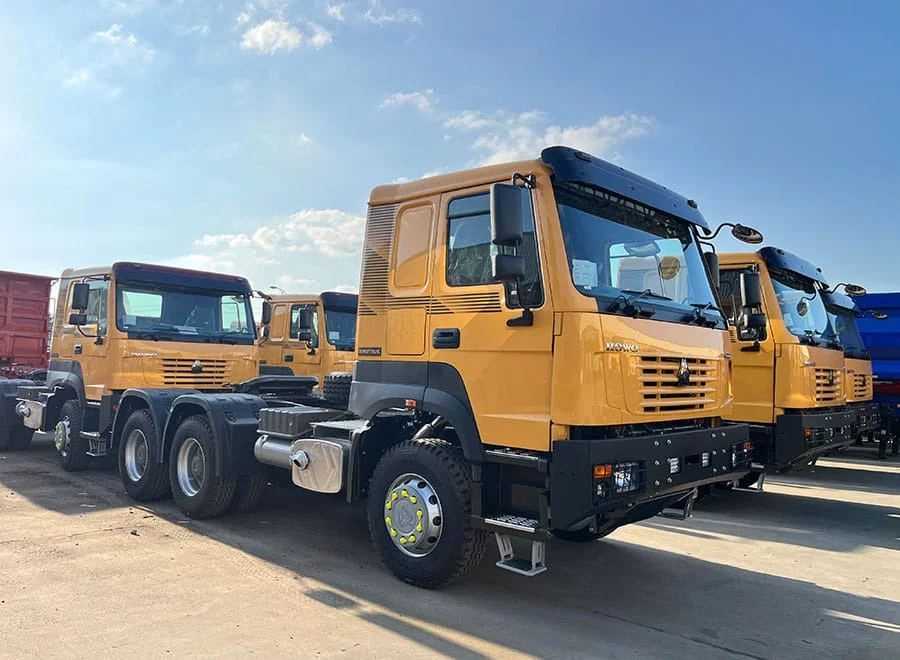
Choosing a HOWO tractor wheelbase is not simply a choice between easy turning and a longer chassis. The truck must work with a particular semi trailer, an accepted fifth-wheel position, the equipment behind the cab and the sites the combination will actually visit. A wheelbase number alone cannot describe all of those relationships.
The most useful buying brief connects vehicle drawings with real manoeuvring tasks. It distinguishes the tractor's own dimensions from the swept path and clearance requirements of the complete combination. This guide explains what information to assemble before an order is fixed. It does not prescribe a universal wheelbase or replace the vehicle manufacturers' compatibility assessment and the operator's route planning.
Identify the exact tractor configuration first
Start with the proposed model and its dimensional drawing, not an unrelated photograph of a HOWO truck. Ask the supplier to identify the cab, axle arrangement, suspension, tyres and factory options represented by the drawing. If several configurations share a sales description, establish which one is being quoted. An extra digit in a model reference can matter more than a familiar grille design.
For a multi-axle tractor, ask how wheelbase is expressed in the specification. An axle-spacing description should be interpreted against the drawing rather than compared as though every offer used one identical convention. Record the individual axle positions and relevant reference points. This avoids selecting an apparently shorter vehicle when two suppliers were actually presenting their dimensions in different ways.
Describe the manoeuvre, not just the entrance width
A gate measurement is only one part of an access assessment. Describe the approach road, available turning space, kerbs, walls, parked vehicles and the position the trailer must reach. Include the departure manoeuvre as well as arrival. A combination that can enter a site may still be unable to align with the loading position or leave without an unacceptable movement.
Provide a scaled plan where possible, with recent photographs that help reviewers understand the surroundings. Mark which dimensions were measured and which were estimated. Keep fixed obstacles separate from movable obstructions and areas the operator does not have permission to use. A plan that assumes neighbouring land is available can make an unsuitable truck appear workable on paper.
Use the complete tractor and trailer geometry
The buyer should provide the trailer's relevant dimensional drawing together with the tractor drawing. Identify the kingpin location, front overhang, front corner geometry, landing-gear position and other projections that could interact with the truck. The trailer's axle positions and overall envelope are also needed for a proper swept-path review. Nominal trailer length is not a complete geometry description.
If the fleet intends to interchange trailers, identify the actual range instead of presenting one convenient example. A flatbed with a modest headboard, a tanker with equipment near its front and a low bed with a particular gooseneck can create different interface questions. Group genuinely equivalent cases, but keep a difficult exception visible. Compatibility with one trailer is not evidence of compatibility with every trailer in the yard.
Review fifth-wheel position with wheelbase
Wheelbase and fifth-wheel position are related purchasing decisions, but they are not interchangeable dimensions. Ask the vehicle supplier to show the proposed coupling position and the basis for its selection. Moving a coupling position may affect load distribution, clearances and overall combination geometry. A salesperson's assurance that it can be moved later is not a substitute for reviewing the ordered arrangement.
Keep any adjustment range tied to the exact approved mounting system. Do not assume that every tractor has a slider or that every slider position is acceptable for every load and trailer. The purchase drawing should identify the intended working configuration. Where several positions are to be used, ask the responsible technical parties to explain the accepted cases and how the operator will identify them.
Look beyond the gap visible when parked straight
A photograph of the combination parked in a straight line can conceal the closest approach during articulation. Ask the compatibility reviewer to consider the trailer's front corners and all relevant equipment behind the cab through the required movement. Cab accessories, tanks, exhaust equipment, racks and protective structures should be shown where they affect the envelope.
The review also needs to consider vertical relationships, not just a plan view. Uneven approaches and changes in gradient can create interference that is absent on a level drawing. SAE's information report on tractor and semi-trailer interchange dimensions explicitly recognises additional application care around interference and trailer swing clearance on grades. Its published example dimensions should not be copied as universal HOWO acceptance limits. SAE International: tractor and semi-trailer interchange coupling dimensions
Account for coupling height and the loaded condition
Record the proposed fifth-wheel height and the condition in which that height is stated. Ask how the tractor and trailer suspension arrangements affect the relevant geometry in the accepted operating cases. An unloaded display vehicle and the intended loaded combination may not present the same clearances. The supplier should identify the conditions used in its assessment rather than rely on an unexplained brochure dimension.
JOST's mounting information explains that different mounting and coupling heights are available to match trailer systems, and that both coupling and vehicle manufacturer instructions apply to mounting or conversion. This supports a specific interface review, not a recommendation to modify a HOWO chassis informally. Identify the actual coupling and mounting arrangement offered and obtain the appropriate assessment before any alteration is agreed. JOST: fifth-wheel coupling mounting and vehicle interface guidance
Separate turning capability from an operating plan
A quoted turning-circle figure can help describe a tractor, provided its definition and test conditions are clear. It does not, on its own, show the complete semi trailer passing through a particular yard. Ask whether a number refers to a specified measurement convention and vehicle configuration. Avoid comparing values that describe different things and calling the smaller number a proven site solution.
For constrained sites, request a competent swept-path assessment using the actual combination and the intended movements. The review should identify assumptions, required space and any remaining site restrictions. Do not turn a drawing into a promise that drivers can use an extreme articulation angle in daily service. A practical operating plan must also consider visibility, other site users and the operator's accepted manoeuvring procedures.
Include gradients, ramps and surface transitions
Describe loading ramps, drainage channels, raised thresholds and changes in level along the actual route through the site. These features can affect more than ground clearance beneath the tractor. They may change the relative position of truck and trailer at the coupling and around the trailer's front and underside. A flat plan cannot show every relevant interaction.
Where the surface is irregular, have the responsible reviewer identify what additional survey information is needed. Do not convert one photograph into an assumed gradient or conclude that a similar truck once passed, so the proposed combination must work. Record whether the previous vehicle had the same wheelbase, coupling arrangement, trailer and load case. Otherwise, that observation is useful context rather than technical acceptance.
Check the space occupied by service connections
Include air and electrical connections in the interface discussion. Their installed locations, support arrangements and movement space need to suit the actual tractor and trailer. A combination can have adequate visible metalwork clearance while a connection is poorly positioned for the intended articulation. Ask for an assessment of the complete arrangement, not just a line representing the cab and trailer.
The purchase scope should state which connection equipment is included and what integration work remains. If an existing trailer fleet has different connector locations, provide that information early. Do not assume that a longer cable or hose is automatically an acceptable remedy for a layout problem. Selection and routing require the relevant equipment instructions and a review of the actual installation.
Keep load distribution in the decision
A tractor selected solely for an access preference may create another problem in the planned loading case. Ask the supplier for the relevant load-distribution assessment using the trailer kingpin load and the proposed coupling position. The fleet's intended cargo cases should be identified rather than replaced with one maximum-tonnage label. Actual axle and combination limits require their own destination-specific review.
This is especially important when one tractor will work with several trailers. State which cases are frequent, which are occasional and which should be excluded from the order's intended scope. The aim is not to force every possible task onto one chassis. It is to identify a workable equipment allocation and prevent a rarely used assumption from undermining the configuration chosen for everyday work.
Include tractor-mounted equipment in the layout
Fuel tanks, tool storage, a spare wheel, hydraulic equipment and other ordered items may compete for space on the tractor. Ask the supplier to show the final arrangement instead of adding accessories after the dimensional review is complete. The location of an item can be as important as whether it appears in the equipment list.
If the operation needs trailer hydraulics or other additional systems, identify them in the initial enquiry. Ask who is responsible for the installed layout and any resulting compatibility assessment. Avoid selecting wheelbase from a bare chassis drawing and then assuming the fully equipped truck will preserve every clearance. Keep a revision history so the final accepted drawing matches the vehicle being manufactured.
Build a useful enquiry for GENRON
The HOWO 6×4 tractor truck is a starting point for discussing the required truck configuration. Send the actual trailer drawings, site information and operating cases with the enquiry. Ask GENRON to identify the offered wheelbase, axle spacings, coupling position, coupling height and behind-cab equipment arrangement. None of those details should be inferred solely from the product photograph.
Describe the priority of each site and whether alternative access arrangements genuinely exist. A critical daily delivery to a confined plant deserves a different decision process from a speculative future route. Ask the supplier to list unanswered questions and required technical reviews. An explicit open point is more useful than an unconditional statement that a truck is suitable for all African roads or every semi trailer.
Compare the final drawings before acceptance
Review the final tractor configuration against the agreed brief rather than checking only that the wheelbase number has not changed. Confirm the equipment positions, coupling arrangement and trailer references used in the assessment. Where something has changed, ask whether the earlier clearance and load-distribution conclusions still apply. Small layout changes should not disappear inside a general revised specification sheet.
At handover, preserve the final drawings and the applicable instructions with the vehicle records. A documented physical compatibility check may be part of the agreed acceptance plan, but it should be performed by responsible personnel under an appropriate controlled procedure. Do not ask a driver to discover an interference limit by deliberately turning until components touch. Procurement should resolve uncertainties before ordinary service begins.
Record the assumptions behind the chosen configuration
Keep a short decision record explaining which truck and trailer drawings were reviewed, which sites determined the choice and which equipment layout was accepted. This is more useful than storing only the final wheelbase number. A replacement buyer or fleet engineer should be able to understand why the configuration was selected without reconstructing months of conversations from photographs and messages.
Include the date and source of important site dimensions. If a customer later moves its gate, adds a weighbridge or changes the loading position, the operator can identify which original assumptions need review. The same applies when a trailer receives a different headboard or front-mounted equipment. A documented decision does not eliminate future changes, but it makes those changes visible before they become an unexpected compatibility problem.
Frequently asked questions
Is the shortest HOWO wheelbase always best for a tight site?
No. Wheelbase is only one part of the complete geometry and equipment layout. The tractor must also match the trailer, coupling position, load distribution and space behind the cab. Assess the actual arrival, loading and departure movements using the proposed combination. An apparently convenient short configuration should not be accepted if the necessary coupling or equipment arrangement introduces another unresolved problem.
Can a turning-circle figure prove that my trailer will enter a yard?
Not by itself. First establish exactly what the figure measures and which tractor configuration it represents. The semi trailer follows its own path and has a different envelope from the tractor alone. A constrained site requires assessment of the complete combination and the intended manoeuvre. Provide a measured site plan and actual trailer geometry instead of asking the supplier to infer access from the gate width.
Why does the trailer front matter when the straight-line gap looks large?
During articulation, the position of the trailer front relative to the cab and equipment changes. Relative vertical movement can also matter on uneven ground. A straight parked photograph cannot demonstrate clearance throughout the required envelope. Ask the responsible reviewer to identify the relevant trailer front geometry, truck obstructions and operating conditions, and to document the compatibility basis rather than relying on a visual guess.
Can the fifth wheel simply be relocated after delivery?
Do not assume that relocation is available or acceptable. The exact coupling, mounting arrangement, vehicle instructions, structural considerations and load-distribution consequences require review. Any proposed change should be handled through the responsible suppliers and documented for the actual truck. A later modification is not a reliable substitute for specifying the intended coupling position and reviewing it with the trailer before the order is fixed.
What if the same tractor will pull different semi trailers?
Provide the drawings and operating cases for the actual fleet. Identify differences in kingpin position, front overhang, coupling height, landing gear and equipment. The responsible reviewer can then establish which cases are covered and which require separate treatment. Do not declare every trailer compatible because one empty flatbed connects successfully. The accepted scope should be understandable to the staff assigning trucks to work.
What should accompany a wheelbase enquiry?
Send the intended truck configuration, actual trailer drawings, critical site plans, significant gradients, cargo cases and required tractor-mounted equipment. Explain which dimensions are measured and which remain unknown. Ask for a coordinated response covering wheelbase, axle spacings, coupling layout and compatibility dependencies. This gives the supplier a real task to assess and helps the buyer compare configurations without confusing a catalogue number with a proven operating solution.
Product Options to Discuss
Related Reading
Matching a Container Chassis to a Tractor: Coupling Height, Clearance and Connections
6x2 vs 6x4 Tractor Trucks: Route Conditions, Traction and Quote Comparison
HOWO Tractor Axle Ratio: Gearbox, Tire Size and Route-Based Comparison


