
 English
 Français
 Español
 Árabe
 Deutsch
 简体中文
 Português
 Русский
 日本語
 한국어
 हिंदी
 Prancis
 Türkçe
 Tiếng Việt
 Italiano
 ไทย

A grain shipment can be sold by tonnes and counted in bags, but the trailer carries the complete packages and any pallets or equipment beneath them. It also passes through collection yards, roads and receiving areas where moisture, contamination and handling arrangements can differ.
For a mill, merchant or transport operator, a useful enquiry therefore combines cargo quantity with package and route information. This guide explains that process for bagged grain. It does not set food-safety acceptance limits or approve a vehicle for a particular commodity; those requirements belong to the responsible cargo and receiving parties.
Define the bags and the condition in which they travel
Record the grain product, bag specification, nominal fill quantity and actual transport package dimensions. State whether bags travel individually, as palletised units or in another defined package. Include any wrapping, pallets and protective materials that form part of the delivered load.
Ask whether the bag dimensions describe an empty sack or a filled package. Flexible packaging can occupy a different footprint after filling and handling. Use the maximum relevant transport dimensions when screening deck space, not only a nominal base size printed in a packaging catalogue.
Identify the destination’s packaging and quality requirements. The receiver may require a particular bag condition, lot identity or previous-load declaration. Obtain these requirements before selecting the trailer and cover arrangement so the quotation does not assume that every grain product accepts the same transport conditions.
Separate bag count, net product and gross vehicle cargo
Bag count is useful for order reconciliation, while net product mass and gross package mass answer different quantity questions. Record which value appears on the commercial order and which value the transport planner uses. Do not treat the label quantity as a complete vehicle-load record without checking its basis.
For a hypothetical arithmetic example, 400 bags each containing 50 kilograms represent 20,000 kilograms of product. Packaging, pallets and other carried items are additional. This calculation illustrates the distinction; it is not a recommended load, proof of actual fill quantity or permitted payload for a particular vehicle.
Establish the actual cargo and combination condition through appropriate records and verification. A trailer’s nominal payload, a convenient bag count and a sales quantity should not be merged into one assumed allowance. The operator still needs the relevant vehicle, axle and route checks for the journey.
Set cleanliness and previous-load acceptance with the cargo owner
Ask the cargo owner and receiver to define the required vehicle condition and any prohibited previous cargoes. A newly painted body or an empty deck does not establish acceptance. Keep the requirement specific to the product and receiving process rather than inventing a universal food-grade claim.
Include product-contact supports, pallets, covers and other equipment in the discussion. Their history and condition may matter as well as the visible deck. If preparation or inspection is required, define its scope, responsible party and release evidence before loading.
Do not improvise chemical cleaning methods or assume a cleaning invoice satisfies the receiver. The relevant parties should agree what preparation is acceptable and how readiness is confirmed. The purchasing role is to make those requirements visible and ensure the body and equipment can support the agreed process.
Bagged-grain enquiry details
| Record | What to establish | Why it matters |
|---|---|---|
| Product and lot | Commodity, package identity and receiver requirements | Connects the physical cargo with acceptance |
| Package geometry | Filled dimensions and pallet arrangement | Defines usable space and access |
| Quantity and mass | Bag count, net product and gross package basis | Avoids confusing order quantity with vehicle loading |
| Vehicle condition | Deck, equipment and previous-load acceptance | Makes cleanliness scope explicit |
| Journey | Stops, weather exposure and unloading equipment | Connects the body and cover to the actual route |
Review the floor and panels for the actual packaging
Inspect the proposed contact surfaces and fittings against the package requirements. Projections, gaps and damaged hardware can create problems for flexible bags or pallets. The accepted vehicle condition should be clear enough that the operator knows what to check when assigning a trailer later.
Describe whether the load is floor-stacked or palletised, and provide the relevant packaging support information. A palletised load introduces its own footprint and handling requirements; individual sacks create a different access discussion. Do not assume the same loading arrangement covers both without review.
Side panels define the body boundary but should not be assumed to provide the complete road-restraint system. Ask the manufacturer about the proposed body’s intended role, then have a competent planner establish the load-specific arrangement. Product protection and road security are connected requirements, not interchangeable ones.
Compare body access before choosing panel height
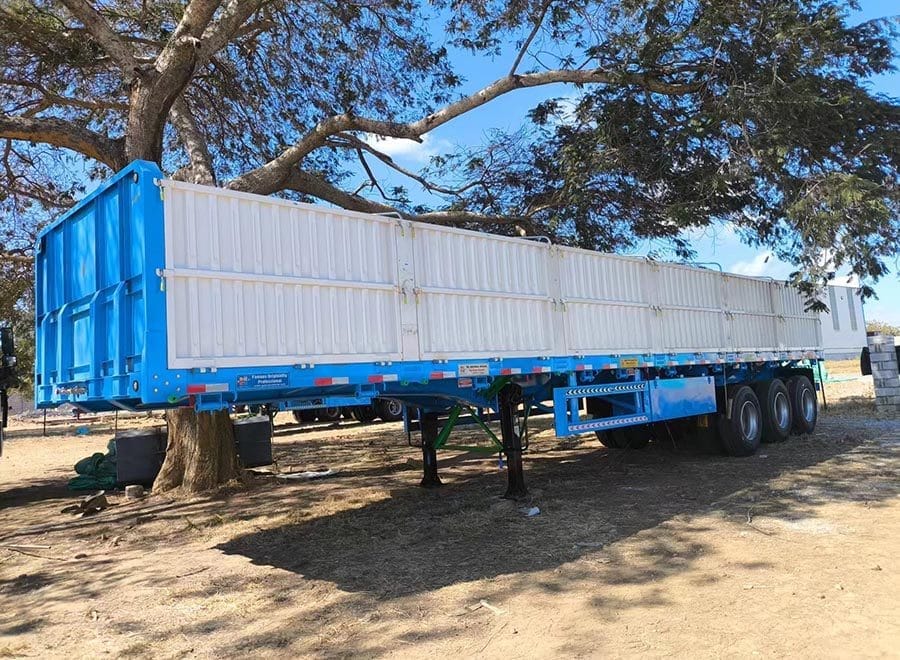
The dropside semi trailer platform is one starting point for discussing a solid-sided layout with GENRON. Where the work calls for a different upper-body arrangement, the three-axle fence trailer layout offers another layout to review. Neither product description certifies food suitability or fixes the permitted bag count.
For each proposal, ask for clear gate openings, fixed posts and the space needed beside the vehicle. A long overall side opening may consist of smaller access sections. The receiver’s handling equipment should be able to reach the intended packages using the agreed method.
Panel height should follow the cargo and operating requirement rather than a wish for the tallest possible body. Taller panels do not increase vehicle ratings and may affect access or cover handling. Compare the actual load and delivery cases, including any packages that would extend above the side boundary.
Specify protection for the journey, not only a cover material
Ask the cargo owner what exposure is acceptable during transport, waiting and unloading. Bags and product condition can be affected differently by rain, contamination and storage delays. The requirement should address the journey the vehicle will make, not only a short dry-weather collection.
FAO’s grain-transport guidance discusses vehicle protection and careful bag handling in the context of avoiding losses. It is useful background, not a universal cover design or a current destination food-safety specification. Use the commodity owner’s requirements to define the actual protection arrangement.
Specify how the cover fits the loaded envelope and how it is managed at stops. Include frames, fastenings and responsibility for the work. A tarpaulin on the equipment list is incomplete if the agreed operation depends on unplanned climbing or if opening it exposes goods that must remain protected.
Source: FAO: Agricultural engineering in development, transport
Account for the receiver’s unloading equipment and working area
Confirm whether the receiver handles palletised units, individual bags or another prepared package. Obtain the approved handling method and equipment envelope from the responsible site. A trailer that is convenient at the mill may be awkward at a warehouse with restricted access.
Keep manual-handling decisions with the employer’s assessment and trained personnel. This article does not prescribe a safe bag weight or a lifting technique. From a procurement perspective, the important point is to identify the intended method early enough to provide suitable openings, access and equipment.
Describe the vehicle standing area and how deliveries are controlled around people and other traffic. If the route includes several different depots, list their constraints separately. Do not assume that the largest site’s equipment is available at every delivery point.
Build a load plan around the delivery order
Allocate identifiable packages to each stop and show the required access. A full departure load should not conceal the fact that the first customer’s bags are behind goods for a later delivery. Resolve the order with the cargo and receiving parties before dispatch.
Include the intermediate conditions after each delivery in the support and restraint planning. Pallets, covers and unused equipment may change position or become separate carried items as goods are removed. The remaining load still needs an appropriate arrangement even though its total mass is lower.
If one vehicle carries different product lots or customer orders, keep their identities and acceptance records distinct. The physical plan and the paperwork should tell the same story. That is more useful than a general instruction to load neatly when the receiver needs a particular package or lot first.
Reconcile dispatch and receipt without inventing a loss tolerance
Agree what is recorded at dispatch and receipt: package count, mass evidence, lot identity, visible condition and exceptions. Use consistent units and identify whether weights concern product, package or the complete vehicle. Differences cannot be interpreted sensibly when the two records measure different things.
Do not invent an allowable shortage or moisture-loss percentage for every grain journey. Commercial terms and the responsible quality process should define how discrepancies are investigated. A difference in records is a reason to reconcile their basis, not immediate proof of loss, fraud or a trailer defect.
For a multi-stop route, record delivered and remaining quantities at each stage. If a package is damaged or substituted, identify it rather than changing only the final total. An accurate sequence of records helps the parties establish where an issue arose without promising perfect measurement or zero cargo damage.
Define the return cargo as a separate acceptance question
A different return load can change the next outward journey’s cleanliness and equipment requirements. Describe both directions to the cargo owner and operator. Do not assume that a trailer suitable for grain today remains acceptable after any convenient backhaul.
Include the condition of pallets, covers and supports that return with the vehicle. Agree how equipment is identified, stored and released for another grain load where required. If dedicated equipment is necessary, make that part of the purchasing and operating scope.
Compare the complete cycle commercially. A return-load opportunity may add preparation, inspection or waiting, and the receiver may reject a proposed previous cargo. Those consequences should be understood before describing a flexible trailer as automatically more economical than dedicated service.
Keep bagged-grain duty separate from loose-grain duty
A trailer carrying sealed bags is not necessarily designed to contain grain poured directly into the body. Loose-product containment, unloading, hygiene and other requirements create a different enquiry. Do not infer that closely fitted side panels make the body an accepted bulk-grain carrier.
If both duties are proposed, request separate written assessments and identify any equipment changes and acceptance conditions. The sales description should distinguish what is supplied for each. A single general phrase such as agricultural cargo does not define the body’s intended use.
This distinction also helps the content remain useful to buyers. The key decision is not whether a trailer can be called a grain trailer, but whether its documented configuration fits the actual package and operating cycle. Clear scope is more valuable than a broad application claim that leaves every important detail for later.
Bagged-grain transport brief
Product, lot and receiving acceptance requirements:
Filled bag dimensions, package method and gross mass:
Bag count and net/gross quantity definitions:
Previous-load, deck and equipment condition requirements:
Gate openings and unloading methods at each stop:
Cover arrangement and exposure conditions:
Intermediate loads and return-cargo proposal:
Dispatch/receipt records and discrepancy process:
Recheck a substituted vehicle before loading
If dispatch assigns a different trailer, compare its body, equipment and accepted condition with the planned arrangement. A similar side-wall height does not establish the same gate access, contact surfaces or cover fit. Reconfirm the relevant cargo-acceptance and vehicle questions through the responsible parties.
Keep the substitute vehicle identity on the shipment record. That connects the cleanliness release, load plan and receipt evidence with the vehicle that actually made the journey, rather than leaving the file tied to a trailer that was never used.
FAQ: Bagged grain on dropside and fence trailers
Does a new trailer automatically meet food-transport requirements?
No. Obtain the cargo owner’s and receiver’s acceptance requirements for the actual commodity and route. A new body, fresh paint or clean appearance is not a food-grade certification. Define contact surfaces, previous-load conditions and release evidence where required.
Can I calculate payload only by multiplying bag count by label weight?
That gives a nominal product quantity, not necessarily the actual gross cargo mass. Include packaging, pallets and other carried items, establish the relevant measurement basis and complete the appropriate vehicle and route checks. Keep estimates clearly labelled during quotation.
Is a fence trailer better than a dropside for grain bags?
There is no universal answer. Compare package support, gate access, cover arrangement, restraint and receiving methods. The right body is the defined configuration that covers the actual work and acceptance requirements, not automatically the one with taller sides.
Can the same vehicle carry grain bags and loose grain?
Do not assume so. Those are different duties with different containment and operating questions. Ask for each use to be assessed and documented separately, including equipment changes and cargo-acceptance conditions.
Does a tarpaulin guarantee the grain stays dry?
No cover should be described as an unconditional guarantee. Agree the required protection, fit, condition and work method with the cargo owner and operator. Consider waiting and unloading as well as road travel.
How should a dispatch and receipt difference be handled?
First reconcile units, quantity definitions, package identities, weighing conditions and exceptions through the agreed process. Do not assume every difference proves product loss or invent one universal tolerance. The contract and responsible quality parties should determine the next action.
Product Options to Discuss
Confirm the actual cargo, vehicle condition and operating requirements before selecting a configuration. No food-grade or loose-grain approval is implied.
Related Reading
References
FAO provides general post-harvest transport background. Product acceptance, hygiene controls and local requirements must be established for the actual grain and journey.


