
 English
 Français
 Español
 Árabe
 Deutsch
 简体中文
 Português
 Русский
 日本語
 한국어
 हिंदी
 Prancis
 Türkçe
 Tiếng Việt
 Italiano
 ไทย

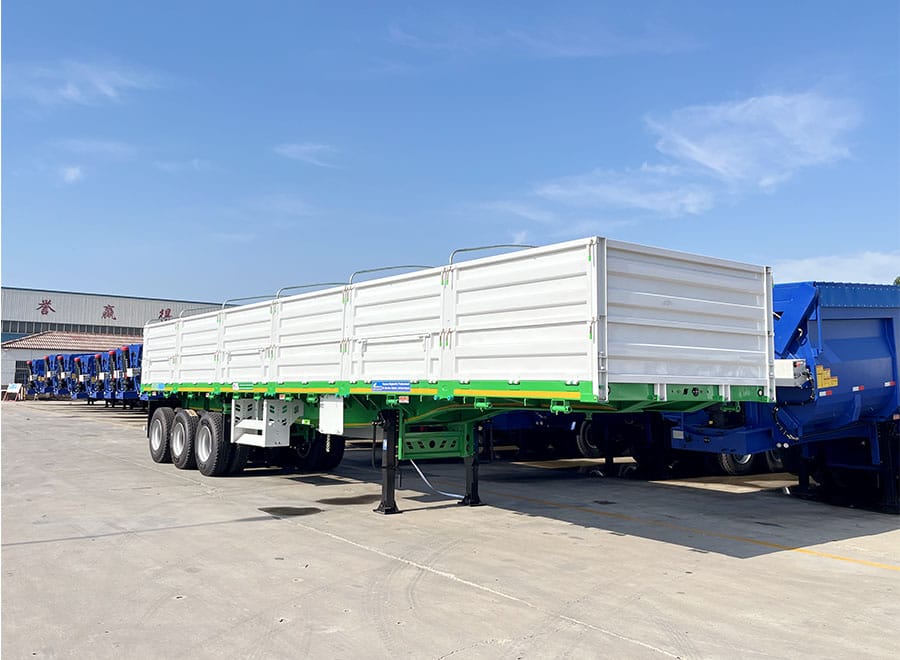
A dropside trailer for a port-to-depot route may need a different body layout from one used for rural multi-stop deliveries. The useful starting point is the journey: what is carried, which tractor pulls it, where it is loaded and what the receiving site can handle. A country name is part of the specification, not a substitute for those details.
Describe the Route in Stages
Separate the main road journey from the last access road and the unloading yard. Record regular surfaces, turning restrictions, gradients and seasonal changes that affect the operation. Yard and access-road photographs are often clearer than the phrase “rough roads”. If the trailer crosses a border, list every operating country and the locally confirmed weight, dimensional and registration requirements. A configuration acceptable in one jurisdiction should not be assumed acceptable in another.
Match Side Access to the Normal Cargo
Give the packed dimensions and weight per package for the goods carried most often. For pallet deliveries, the gate openings and remaining posts matter. For long bundles, side and top access may matter more than a high wall. Include return loads if the trailer will work in both directions. Packaging and a suitable covering arrangement need separate attention for weather-sensitive goods; solid side panels do not turn an open trailer into a dry van.
Review the Tractor and Trailer as One Combination
Provide the tractor model, axle arrangement, fifth wheel details and available technical documents. Trailer axle count, cargo position and connection requirements need to be considered together. Adding axles alone does not establish a usable payload or solve every route restriction. Before comparing offers, make clear which local requirements the buyer’s transport adviser or operator has confirmed and which questions remain open.
Choose Components That the Receiving Workshop Can Support
Record the proposed axle, suspension, brake and wheel equipment by model, not only by brand. Ask the local workshop which parts and service information it can obtain. A component familiar to the receiving fleet may be easier to support than an unfamiliar alternative, but compatibility still needs checking. Discuss suspension choices with the route and workshop capability in mind; there is no single suspension answer based on the continent alone.
Compare the Complete Supply, Not an Axle Count and Price
Use the same written route and cargo description for each quotation. Compare the body drawing, component list, cover, spare wheel arrangement, documentation and any spare parts included. Record proposed alternatives separately. This makes a price difference traceable to equipment and supplied scope instead of leaving the buyer to discover it after delivery.
Route Information That Changes the Discussion
| Operating detail | What the configuration review should address |
|---|---|
| Port and main-road journey | Vehicle combination, load distribution and confirmed route limits. |
| Final access road and yard | Regular surfaces, turning space and unloading position. |
| Multi-stop pallet deliveries | Gate openings, cargo positions and access at each stop. |
| Weather-sensitive packages | Packaging, covering and handling requirements. |
| Receiving workshop | Component identification, available spares and service literature. |
Five Items to Attach to an Export Enquiry
Operating country or countries and a short route description.
Cargo photos, packed dimensions and weight per package.
Tractor details and connection information.
Loading-yard and delivery-access photos.
Required documentation and local workshop contact requirements.
Route and Axle Questions
Does adding axles make a trailer suitable for every route?
No. The vehicle combination, load distribution and applicable route requirements still need review.
What if the return cargo differs from the outward load?
Describe both operations. The trailer body should be reviewed against the access, packaging and securing needs of each.
Related Products and Reading
Request a route-based dropside proposal. Give GENRON the route, cargo mix and tractor information so quotations can be compared against the same operation.


