
 English
 Français
 Español
 Árabe
 Deutsch
 简体中文
 Português
 Русский
 日本語
 한국어
 हिंदी
 Prancis
 Türkçe
 Tiếng Việt
 Italiano
 ไทย

Choose a dropside trailer’s side wall height around the packed cargo and the way it is loaded. Choose its gates around the openings needed to reach that cargo. These are separate decisions: a taller panel does not necessarily make loading easier, and a longer gate does not always give an uninterrupted opening.
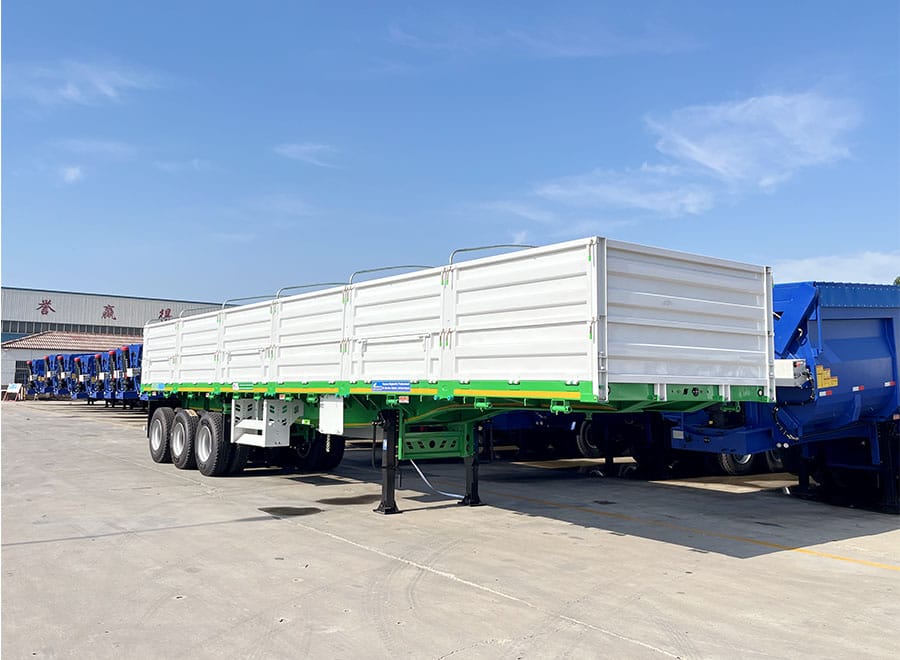
Side Wall Height Is Measured From the Deck
Cargo height should include the pallet, packaging and any supports beneath the goods. Compare that height with the proposed side wall above the deck, not with the trailer’s height from the ground. For a mixed load, identify both the normal package height and the tallest occasional package. This tells the supplier whether the panels are mainly a loading boundary or whether goods will extend above them. Taller panels do not increase the chassis rating, legal payload or the strength of the cargo restraint system.
Check the Opening, Not Just the Gate Length
A gate drawing should show the clear opening with the intended section open. Fixed posts, hinges and projecting locks can reduce usable space. For a pallet loaded from the side, compare the packaged width and the forklift approach with that opening. If a post remains between two gates, opening both gates may still leave two separate access points. This is especially important when an occasional wide package is larger than the normal pallet.
Hinged Panels and Removable Sections Have Different Costs in Use
A hinged panel stays with the trailer, but needs room to swing or lower and an approved way to hold it during loading. A removable section can change access, but creates another item to handle, store and refit. At a depot with limited space beside the vehicle, those handling steps may matter more than the panel’s appearance. Include the operator’s working area in the layout review and identify which posts are actually removable on the specified design.
Review Covers, Locks and Restraint Access Together
A cover frame can add supports above the panels or require extra parts to be moved before loading. Locks also need to remain reachable when the usual cargo is on the deck. Mark the intended restraint points on the drawing and check that the cargo arrangement does not cover them. Side panels help define the body, but should not be assumed to replace the securing equipment required for the load.
Use One Normal Load to Review the Drawing
An illustrated planning example is a trailer carrying pallets for two deliveries. The first delivery needs access to its own pallets without moving the second customer’s goods. Mark those positions, the relevant gates and the forklift approach on a deck sketch. Then review the remaining load’s support and restraint after the first stop. This is a layout exercise, not a recommended loading plan for a particular trailer. It exposes access problems that a request for “high side walls” alone would miss.
What to Measure Before Choosing the Body
| Dimension or feature | Measure or describe |
|---|---|
| Packed cargo height | Include pallet, wrapping and support materials. |
| Usable side opening | Allow for posts, hinges and projecting hardware. |
| Panel handling space | Show the room available beside the trailer at delivery. |
| Cover and restraint access | Mark supports, lock positions and designated anchors. |
A Useful Gate Layout Enquiry
A cargo photograph and packed dimensions.
A deck sketch showing normal and occasional loads.
Side, rear or crane loading requirements.
The gates needed at each delivery and available handling space.
Two Questions About Side Panels
Are higher side walls better for every load?
No. They may change the loading boundary, but can also change access and handling. Match the height to the packed goods and the proposed body layout.
Does opening two gates remove the post between them?
Only if that post is removable on the agreed design. The drawing should identify fixed and removable posts explicitly.
Related Products and Reading
Discuss a dropside gate layout with GENRON. Send your cargo dimensions, deck sketch and loading method so the side wall and opening arrangement can be reviewed together.


