
 English
 Français
 Español
 Árabe
 Deutsch
 简体中文
 Português
 Русский
 日本語
 한국어
 हिंदी
 Prancis
 Türkçe
 Tiếng Việt
 Italiano
 ไทย

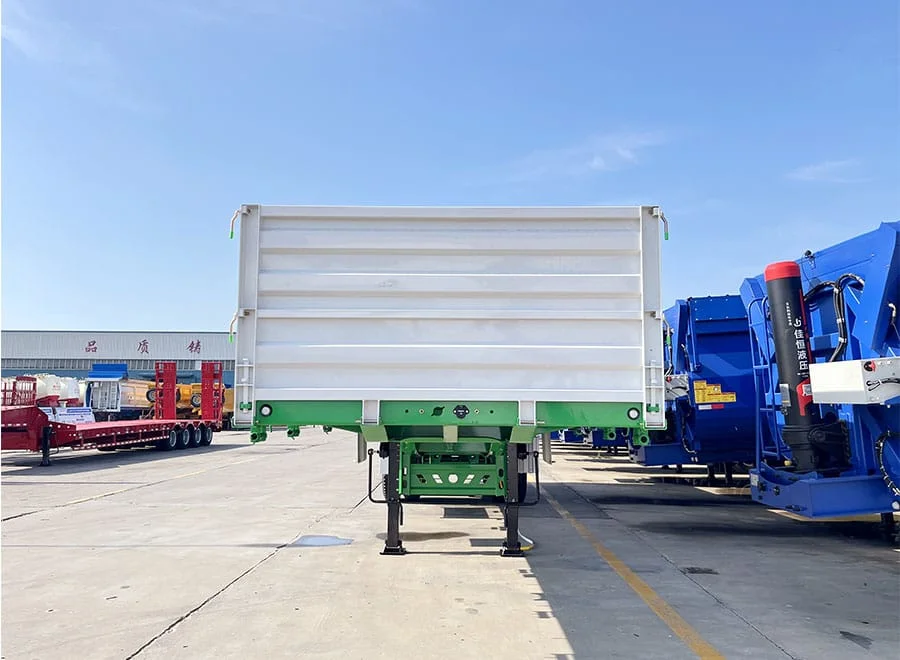
Palletised ceramic tiles combine two concerns that should be considered together when buying a trailer: substantial mass within a compact footprint and packages that can be damaged by unsuitable handling. A request for a general cargo trailer may describe neither concern clearly enough. The useful specification starts with the packed pallets, their supporting bases and the unloading operation, then examines whether dropside or fence construction provides practical access without conflicting with the cargo plan.
This guide concerns boxed ceramic or porcelain tiles on pallets. Large porcelain slabs, loose tiles and specialist transport frames require their own assessment and should not be treated as the same cargo. The aim is to help buyers prepare a complete enquiry for a repeat delivery operation. It is not a universal loading pattern, a restraint calculation or a claim that any particular trailer can carry every tile pallet.
Build the enquiry around the packed pallet
Ask the tile supplier for the gross mass and overall dimensions of each pallet type. Include the pallet itself, cartons, wrapping and protective materials in the gross mass. Record the dimensions of the base as well as the overall package, particularly where cartons overhang or protective parts project beyond it. Request photographs and the producer's handling instructions. A description such as one pallet of floor tiles says little about the actual footprint, support arrangement or handling interface the trailer must accommodate.
Distinguish normal full pallets from mixed orders, part pallets and repacked returns. Their stability and handling characteristics may differ even when the cartons contain the same tile. Ask the supplier who approves repacking and what condition is acceptable for transport. The buyer should not assume that a partly used pallet can travel under the same arrangement as an unopened factory unit. If the dispatch operation regularly builds mixed orders, describe that process in the trailer enquiry rather than presenting only the neatest full-pallet example.
Treat mass distribution as a separate calculation
Calculate the planned consignment from individual gross pallet masses, not only the number of pallet positions on the deck. Then have the distribution reviewed for the actual trailer, tractor and applicable limits. Empty floor positions do not necessarily mean spare legal carrying capacity. Likewise, reaching an advertised trailer payload does not establish that the load is positioned correctly. Identify heavy and light pallet variants so that the loading team can follow the reviewed arrangement without substituting an apparently similar package of a different mass.
The DVSA's published load-securing guidance highlights the need to spread small, heavy loads appropriately and to consider the whole load and vehicle combination. The DVSA guidance on load-securing basics is a useful reference within its stated jurisdiction, not a substitute for local requirements. For procurement, the practical task is to provide enough cargo information for the relevant structural and axle-load reviews. Ask which drawings and load cases support the supplier's proposal rather than accepting a floor plan based solely on how many pallets fit side by side.
Check the pallet base against the trailer floor
The tile load reaches the deck through the pallet base, which may not bear across its entire outline. Show the actual base construction and the intended positions to the trailer supplier. Ask for a review of the floor and underlying structure against the proposed load cases. A description of floor material or thickness on its own does not establish suitability. If a support or load-spreading arrangement is required, identify who designs it and how it remains compatible with the pallet and handling equipment.
Consider the loading operation as well as the stationary cargo. If forklifts are expected to enter the trailer, that use needs a specific review of the vehicle and loading environment. Do not infer permission from the fact that a forklift can reach the deck. If all handling will take place from outside, confirm the required reach and access with the handling contractor. The enquiry should clearly state the intended method so that different suppliers do not price vehicles around different assumptions about how the pallets are moved.
Compare dropside and fence bodies by access
A dropside body may suit an operation that needs defined side openings and clear access once the relevant panels are opened. A fence body offers a different side structure and may be considered for another cargo mix or access arrangement. Compare the actual drawings: panel widths, upright positions, clear opening dimensions and the way each section is operated. The commercial names do not tell the handling team whether its forks can approach the pallet as required or whether a package will catch on a fixed component.
GENRON's dropside semi trailer and fence semi trailer provide relevant starting points for a dropside-versus-fence discussion. Ask for the exact configuration proposed for your pallet layout, including any removable parts and their storage. Do not treat the side structure as an approved restraint simply because it surrounds the load. Its intended function and any relevant capacity must be documented. The cargo securing specialist should assess the complete arrangement; the purchase enquiry should distinguish convenient enclosure from a verified load-restraint function.
Match gate openings to the receiving operation
Give suppliers the forklift approach direction, pallet entry direction and handling clearances needed at typical destinations. Confirm the clear opening after gates or panels are in their working position, not merely the distance between decorative outer edges on a sales image. Include the position of hinges, catches and fixed uprights. For pallets delivered close to a side opening, ask the handling contractor to review whether the proposed vehicle allows the approved movement without contacting either the packaging or the body structure.
The receiving environment matters equally. Record the space available beside the vehicle, the ground conditions that affect the planned handling operation and whether access is available from one side or both. A layout suitable at a large distribution yard may be awkward at a small merchant's premises. If the delivery business serves several recurring site types, include representative cases in the comparison. A slightly different panel arrangement may provide more useful operating value than an accessory selected only because it appears in a standard catalogue photograph.
Separate carton protection from load securing
Ask the tile producer which package surfaces can accept the contact required by the proposed transport arrangement. Carton wrapping and pallet bands should not be assumed to secure the pallet to the trailer. At the same time, applying restraint without considering package construction can damage cartons or their contents. Have the complete method reviewed by the relevant specialist with input from the packer. The buyer's equipment schedule should name the interfaces and protections required by that method rather than prescribing a universal strap count or tension.
The trailer quotation should show the offered attachment provisions and clarify whether any separate securing equipment is included. Obtain the relevant documentation rather than judging points by appearance. Ask how the loading team will access and inspect the arrangement once the gates are closed. If a proposed layout makes inspection or adjustment impractical, resolve that before ordering. Equipment that is difficult to use in the intended operation can become a recurring source of improvised practices, even when every item appeared satisfactory in an isolated catalogue description.
Plan weather protection around the packaging
Tiles intended for particular building applications should not be confused with transport packaging that can withstand any weather. Ask the producer what exposure the cartons, pallet and labels can tolerate during the planned journey and waiting periods. Record the protection required and who supplies it. A product's suitability for wet service after installation does not establish that its packaged consignment may be left unprotected outdoors. Keep claims about the tile product separate from the handling and storage requirements of the shipped package.
If a sheeted dropside or fence trailer is proposed, review the complete cover arrangement and the work needed to fit and remove it. Confirm how water management, package protection, identification and unloading access are addressed for the actual operation. A tarpaulin specification alone does not establish the performance of the assembled system. Ask whether the receiving team can open the required section without disturbing unrelated deliveries. Include expected terminal or yard waiting in the discussion rather than considering only a short period of road travel.
Design the delivery sequence before loading
Merchant and project deliveries often contain several tile references for different customers. Connect each pallet identifier to the correct delivery and record the sequence in the loading plan. The transport planner should assess the vehicle condition after each planned unloading stage, not only at departure. A pallet that is commercially convenient to deliver first may not be the one that can be removed under the approved arrangement. Resolve those conflicts while the schedule can still be changed, before the driver faces a queue at the receiving gate.
Plan for failed deliveries and part returns as well. If a receiver refuses a pallet, the carrier needs an agreed way to obtain a revised plan for the remaining journey. Returning loose cartons or rebuilding a pallet at the roadside is not an automatic extension of the original transport arrangement. Define who accepts returns, who checks their packaging and where they can be handled. These procedures also protect order accuracy by reducing the chance that damaged, opened or mixed packages lose their connection to the original dispatch record.
Make the comparison repeatable at handover
A useful final enquiry connects the cargo schedule, pallet base information, deck layout, handling method and body opening drawing. Ask each supplier to identify the load cases assumed in its offer and any exclusions. Clarify responsibility for package preparation, securing design, loading equipment and weather protection. This makes prices comparable and highlights questions that remain outside the vehicle supplier's scope. A low trailer price has limited meaning if it excludes interfaces that the operation needs on every delivery.
At collection, check the actual gate arrangement, openings, attachment provisions and specified floor against the order. Retain relevant vehicle documentation and record any difference before regular use begins. Review the arrangement when the business introduces a different pallet base, tile format or receiving method. The specification should remain tied to the operation rather than becoming a permanent assumption. A well-documented repeat route can be efficient, but a new dense package still needs a fresh check even when its carton design looks familiar.
Frequently asked questions
Is a fence trailer better than a dropside trailer for tiles?
There is no automatic winner based on cargo name alone. Compare the pallet layout, opening dimensions, handling access, protection arrangement and documented securing interfaces. A fence body may offer features relevant to one operation, while a dropside layout may provide the access another needs. Ask for drawings of the exact offered configurations and have the loading and receiving teams review them. The preferred option is the one that supports the assessed operation. A taller side structure does not by itself establish better protection or a suitable restraint method.
Can the number of pallet spaces determine the order size?
Not on its own. The planned number must also respect the actual gross masses, load distribution, vehicle limits, package instructions and handling arrangement. Dense pallets can use the available carrying capacity before occupying every floor position. Mixed pallet weights can also change the result from one order to another. Build the dispatch plan from an accurate schedule, then have it checked for the vehicle used. Treat the advertised number of pallet positions as dimensional information rather than a promise that every position can carry any tile pallet.
Do the gates remove the need for a securing plan?
No. Ask what function the side structure is designed and documented to perform, and have the complete cargo arrangement assessed accordingly. The presence of panels or fencing does not establish their capacity to restrain a particular pallet load. The plan may need other equipment and interfaces, depending on the assessed operation and applicable rules. Obtain the relevant information from the vehicle supplier and transport specialist. Avoid replacing that review with an assumption that tightly packed cartons or closed gates will prevent every possible movement.
Can part pallets travel with unopened full pallets?
They may be included only after their packaging and position have been reviewed for the proposed journey. A part pallet can differ in height, mass and stability from the original factory unit. Ask the packer what preparation is required, record its actual gross mass and identify it clearly on the loading schedule. Do not silently substitute it into a position approved for another package. If mixed-order deliveries are routine, include representative part-pallet cases when the operation is assessed, rather than treating each one as an unexpected exception.
What changes when large porcelain slabs are added?
Reassess the cargo rather than treating slabs as larger cartons of ordinary tiles. Their packaging, support, handling equipment and transport requirements may be fundamentally different. Obtain the slab producer's instructions and the complete frame or crate details before deciding whether the existing vehicle arrangement is suitable. Keep the slab operation separate in the enquiry until those interfaces are established. A trailer approved for palletised boxed tiles is not automatically approved for another product format simply because both products are described commercially as porcelain.
What should buyers ask GENRON to include in the quote?
Provide the pallet schedule and proposed delivery operation, then request a defined vehicle configuration, relevant drawings, floor specification, opening details and documented attachment provisions. Ask the quote to identify assumptions, exclusions and any cargo information still needed for review. Where associated equipment is proposed, describe its scope separately so that responsibility is clear. The most useful quotation is one that can be checked against the intended operation, not one that relies on a broad claim to carry building materials. Final suitability depends on the completed technical and operating review.
Product Options to Discuss
Related Reading
How to Choose Side Wall Height and Gate Configuration for a Dropside Semi Trailer
Fence Semi Trailer Gate Configuration for Multi-Stop Cargo Deliveries
Flatbed Trailer Floor Specification for Pallets and Loading Equipment


