
 English
 Français
 Español
 Árabe
 Deutsch
 简体中文
 Português
 Русский
 日本語
 한국어
 हिंदी
 Prancis
 Türkçe
 Tiếng Việt
 Italiano
 ไทย

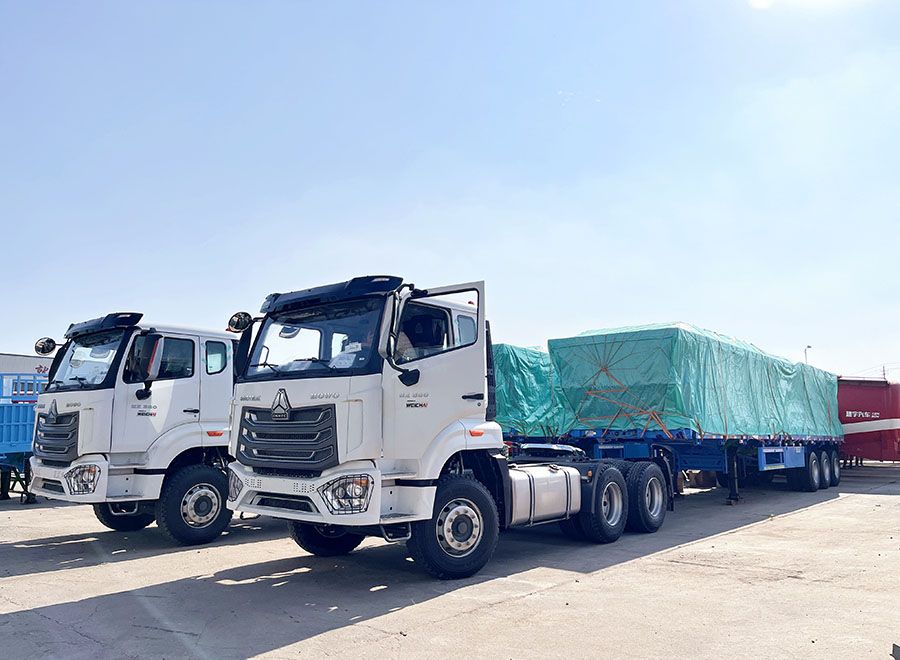
Fuel-tank capacity is easy to compare on a tractor-truck quotation, but the largest number is not automatically the most useful specification. The fleet needs to connect capacity with the route, reliable refuelling opportunities, actual operating consumption and the equipment space available on the truck. A tank-volume figure alone cannot establish working range.
This guide explains how to prepare a fuel-capacity brief for a HOWO tractor without turning an assumed consumption figure into a guaranteed range claim. It is a purchasing and fleet-planning guide, not a tank-modification instruction or advice to carry improvised fuel containers. The final fuel-system configuration should be specified and accepted by the responsible vehicle suppliers for the actual truck.
Start with the refuelling plan, not the maximum distance
Map the regular route and identify where the fleet can reliably obtain the required fuel through its approved purchasing arrangements. Include planned stops, operating hours and realistic access for the complete combination. A filling station shown on a map is not necessarily an accepted refuelling opportunity for the business.
Define the longest planned interval between reliable stops and the process for managing disruptions. Keep routine service requirements separate from exceptional journeys. This gives the supplier a practical brief rather than an undefined request for maximum range. It also helps the fleet avoid paying for additional equipment solely to address a route assumption that could be resolved through better planning or a different confirmed supply arrangement.
Use consumption records from comparable work
Collect operating data that identifies the truck configuration, trailer, cargo duty, route and conditions behind each record. A consumption figure has limited meaning when those details are missing. An unloaded road trip should not automatically represent a loaded combination working on a different route.
Use a credible operating range for planning and explain its basis. Distinguish measured fleet information from a preliminary assumption used before the truck enters service. If a supplier provides an economy statement, ask which configuration and conditions it describes. Do not turn a favourable demonstration or an unverified market claim into a guaranteed consumption value for every HOWO tractor and delivery task.
Separate nominal capacity from the planning quantity
Ask the supplier to identify the exact tank configuration offered and the meaning of its stated capacity. The volume printed in a quotation is not automatically the amount the fleet should treat as available for a planned journey. Establish the relevant vehicle information and the fleet’s responsible operating policy before using a figure in a range calculation.
Keep assumptions visible. If the planning quantity is provisional, label it accordingly rather than quietly equate it with the largest brochure number. A useful quotation gives purchasing staff a defined configuration and fleet staff enough information to build an accepted refuelling plan. It should not promise that the vehicle can routinely consume every nominal litre before the next stop.
Use a range calculation as an illustration
For a hypothetical planning exercise, assume 600 litres are assigned to a journey and consumption is assumed to average 40 litres per 100 kilometres. Dividing 600 by 40 and multiplying by 100 gives 1,500 kilometres. This is arithmetic based on assumptions, not a HOWO specification, a usable-tank determination or a recommended refuelling interval.
If the assumed consumption changes to 45 litres per 100 kilometres, the same calculation gives about 1,333 kilometres. The difference illustrates how strongly range depends on the operating assumption. It does not predict either result for the fleet. Use verified vehicle information and a responsible planning policy rather than selecting a fuel tank because one favourable example produces an attractive distance.
Keep a contingency policy separate from tank selection
The business should define how its refuelling plan handles uncertainty, diversions and unavailable supply points. That policy belongs with the responsible fleet operation; a general article should not prescribe a universal reserve percentage for every route or tank arrangement. Make the relevant requirement available to the supplier without confusing it with nominal tank volume.
Identify who can change the planned stop sequence and how drivers report a disruption. A larger tank may affect flexibility, but it does not replace an operating process. Conversely, a well-supported route may not need the largest available configuration. Compare the actual duty and approved supply arrangements before assuming that additional capacity is the only way to improve reliability.
Confirm the complete truck configuration offered
Request the exact model and configuration identification for the HOWO tractor under discussion. Fuel-system options can vary across quotations, and a family name does not identify every installed component. Ask the supplier to state what is included on the actual order rather than rely on a photograph of a similar truck.
GENRON’s HOWO 6×4 tractor truck is a starting point for that discussion. Confirm the proposed tank arrangement, relevant equipment and supporting vehicle records for the quoted truck. The product page is not a promise that every listed or pictured configuration is supplied unchanged, nor does it establish range. Keep the accepted specification linked to the final order so that commercial staff and fleet planners work from the same vehicle description.
Compare single- and multiple-tank scope carefully
If more than one tank arrangement is offered, ask the responsible supplier to describe the complete approved system and its documentation. Do not assume that an extra tank is simply a container added to unused chassis space. The installed system and vehicle interfaces must be assessed for the exact truck configuration.
Keep the comparison at the purchasing level: supplied components, capacity definitions, space, mass, service access and support information. This guide does not provide plumbing, transfer, electrical or venting instructions. Any proposed change must follow the appropriate vehicle and component requirements. A price for an additional tank should not be treated as a complete approved installation unless that scope is explicitly established.
Review chassis space and access
Show the proposed equipment layout on the actual truck. Tanks share space with steps, battery equipment, air-system components and other vehicle fittings. Access required for routine inspection and service should be considered alongside the desire for more volume. A free-looking area in a photograph is not confirmation that a tank can be installed there.
Ask the supplier how the offered arrangement affects the equipment and access specified elsewhere in the order. If the fleet needs additional storage or another accessory, disclose it before the layout is frozen. Comparing each optional item independently can produce a quotation that appears complete on paper but has not resolved how all the selected equipment fits together on the truck.
Account for fuel mass without inventing payload gains
Additional carried fuel has mass, and the complete vehicle configuration needs to be considered on the intended operation. Ask the responsible supplier what mass information is available and give the relevant conditions to the fleet’s transport planner. Do not assume that an increase in nominal tank volume is operationally free.
Keep capacity, actual carried quantity and vehicle mass basis separate. A larger tank does not necessarily mean it is filled to the same condition on every journey, and an empty-tank comparison does not describe the complete operating combination. The planner needs a consistent condition when assessing the truck, trailer and cargo rather than a mixture of favourable figures taken from different parts of the quotation.
Plan refuelling access for the combination
Review the facilities and route arrangements used by the complete tractor-and-trailer combination. A truck that can enter a station alone may face different access requirements when coupled to the selected trailer. Confirm the stops the business intends to use rather than assume every nearby station is operationally suitable.
Include waiting, detours and any controlled-site arrangements in the route record where relevant. This does not require predicting every journey exactly. It requires distinguishing a confirmed routine plan from an optimistic assumption. The vehicle purchase can then support the actual work without presenting tank capacity as a substitute for checking where and how the fleet will obtain fuel.
Keep fuel-quality requirements visible
Obtain the applicable manufacturer information for the exact engine and truck configuration, including the fuel requirements relevant to its operation. Ask the fleet’s approved suppliers to confirm the product supplied. Do not assume that every product sold under a familiar local diesel name is equivalent for the vehicle without the appropriate information.
This article does not recommend additives, filtration alterations or changes to the fuel system. Those decisions require the relevant manufacturer and specialist guidance. The procurement brief should instead identify the intended supply environment and ensure that the offered truck and support arrangements address the stated duty. A larger tank can extend the interval between stops, but it cannot establish suitable fuel quality.
Record data consistently after delivery
Agree how the fleet will record distance, refuelling quantities, vehicle identity and operating context. Keep the method consistent enough to distinguish a real trend from a change in recording practice. A single trip with an incomplete starting or finishing record should not become the reference for a new guaranteed range claim.
Use the early operating records to refine the planning assumptions through the responsible fleet process. Record changes in trailer, cargo duty or route alongside the data. The purpose is to improve the business’s own refuelling plan, not to publish a universal fuel-consumption figure from a small sample. This makes the truck specification and operating decisions easier to evaluate over time.
Compare complete quotation differences
Place tank configuration beside the rest of the truck specification, including the relevant driveline and equipment scope. Ask which options are included, which require additional work and what supporting documentation accompanies the final vehicle. A large fuel-capacity entry should not distract from a different axle ratio, tire specification or service-support arrangement elsewhere in the offer.
Compare the accepted operational outcome rather than the longest list of options. If one quote covers a defined route brief while another leaves an interface or installation decision unresolved, show that difference next to the price. Do not assign a fixed money saving to additional capacity without real purchase terms and operating data supporting the claim for the actual fleet.
Keep modifications out of informal workshop decisions
If the route changes after purchase, review whether the existing approved configuration still serves the work. Seek the responsible vehicle supplier’s advice before considering fuel-system changes. A modification should not be justified solely by an attractive range calculation or the fact that another truck appears to carry a similar tank.
Retain the accepted specification, relevant component information and later changes with the vehicle record. This helps fleet staff obtain suitable support and understand which configuration their operating data describes. A clear record is more useful than an informal description such as long-range HOWO, particularly when trucks are transferred between routes, drivers or operating companies with different supply arrangements and service requirements.
Show the assumptions behind a purchasing decision
When additional capacity is requested, record the route problem it is intended to address and the evidence supporting that requirement. A decision based on measured gaps between approved supply points is different from one based on a driver’s recollection of a single disrupted trip. Both may deserve investigation, but they should not be presented as equally established facts.
Retain the accepted operational brief with the final truck specification. If the business later reviews whether an option was worthwhile, it can compare the original assumptions with actual use. This creates a more useful purchasing record than a general claim that bigger tanks improve productivity, without pretending that a simple volume calculation can capture every cost and reliability factor in fleet operation.
FAQ: HOWO tractor fuel capacity and route planning
Does a larger fuel tank guarantee a longer practical working range?
Not by capacity alone. Range depends on the actual planning quantity, operating consumption, route and responsible fleet policy. Confirm the exact vehicle configuration and use credible operating data. A large nominal capacity does not establish that every stated litre is available for a planned interval or that the fleet should use the longest calculated distance.
Can I use one advertised consumption figure for every route?
No. Ask which truck configuration and conditions the figure describes. Trailer, cargo duty, route and operation can differ. Keep measured fleet information separate from preliminary assumptions and do not present a favourable example as a universal HOWO fuel-economy guarantee. Record the basis used for planning and revise it responsibly as evidence becomes available.
Is the 1,500-kilometre example a recommended refuelling interval?
No. It is an arithmetic illustration using an assumed 600-litre planning quantity and 40 litres per 100 kilometres. It does not define tank usability, actual consumption or a safe reserve. Establish the real vehicle information and the fleet’s operating policy before deciding refuelling intervals for an actual journey.
Can an additional tank be fitted wherever there is chassis space?
No such assumption should be made. The complete approved installation, vehicle interfaces, mass, access and support requirements need assessment by the responsible suppliers. This guide provides no modification instructions. Ask for the exact configuration and documentation rather than treat an apparently empty area in a photograph as an accepted mounting location.
What should a buyer send with a fuel-capacity enquiry?
Provide the intended routes, reliable refuelling opportunities, relevant operating data, trailer and cargo duty, required equipment and the exact truck configuration under discussion. Identify provisional assumptions. This allows the supplier to respond to a real operational brief instead of simply quoting the largest tank arrangement it can describe.
What should be reviewed when the truck changes routes?
Review the refuelling plan, available supply facilities, operating assumptions, complete combination and relevant manufacturer requirements. Retain the exact vehicle configuration with the records. A previous route’s consumption and stop pattern may not represent the new work, even where the driver and truck remain the same.
Product Options to Discuss
Product pages identify layouts to discuss, not acceptance of a specific load or proof that every optional component is included. Confirm the order-specific configuration with the responsible suppliers.


