How to Choose the Right Tractor Truck for Africa Projects

 English
 Français
 Español
 Árabe
Árabe
 Deutsch
 简体中文
简体中文
 Português
 Русский
 日本語
日本語
 한국어
한국어
 हिंदी
हिंदी
 Prancis
 Türkçe
 Tiếng Việt
 Italiano
 ไทย
ไทย

How to Choose the Right Tractor Truck for Africa Projects
-
Published: June 2026 | Updated: June 2026
Reading Time: 12 Minutes
Article Summary
Choosing the right tractor truck is one of the most important decisions for transport companies operating in Africa. Different road conditions, cargo types, fuel quality, and maintenance capabilities all influence the performance and long-term operating cost of a truck. This guide explains how to select the right HOWO tractor truck for mining, long-distance freight, construction projects, and cross-border transportation while reducing maintenance costs and improving fleet efficiency.Quick Navigation
How to Choose the Right Tractor Truck for Africa Projects
For transport companies working across Africa, purchasing a tractor truck is rarely just about horsepower or purchase price. A truck that performs well in one country may not deliver the same results in another because operating environments vary significantly. Road quality, payload requirements, fuel availability, maintenance capability, and spare parts supply all have a direct impact on long-term operating costs.
Whether you are transporting mining equipment in Zambia, moving containers between ports in Tanzania, or hauling construction materials across Nigeria, selecting the correct tractor truck configuration can improve fleet productivity while reducing unexpected downtime.
Among the many heavy-duty truck brands available today, the SINOTRUK HOWO 6×4 Tractor Truck has become one of the most widely used models throughout Africa. Its reinforced chassis, mature drivetrain, competitive operating cost, and excellent spare parts availability have made it a preferred choice for logistics companies, fleet owners, and government contractors.
Rather than recommending a single model for every situation, this guide explains how professional fleet buyers evaluate tractor trucks based on their actual transportation requirements. By understanding these key factors before purchasing, companies can avoid unnecessary expenses and select equipment that delivers reliable performance for many years.
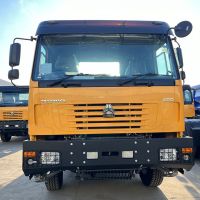
SINOTRUK HOWO 6×4 Tractor Truck widely used for mining, logistics and long-distance transportation projects across Africa.
Why Choosing the Right Tractor Truck Matters
Many first-time buyers focus mainly on the purchase price of a tractor truck. While the initial investment is important, experienced fleet operators know that ownership costs over five to ten years are far more significant than the purchase price alone.
Fuel consumption, component durability, maintenance frequency, and parts availability often determine whether a truck remains profitable throughout its service life. A lower-priced vehicle that requires frequent repairs may ultimately cost far more than a slightly higher-priced model built for demanding operating conditions.
This is especially true in Africa, where trucks frequently operate under conditions that differ considerably from those found in Europe or North America. Long transport distances, overloaded cargo, high ambient temperatures, dusty environments, and inconsistent road surfaces all place additional stress on engines, transmissions, suspension systems, and braking components.
Selecting a truck designed specifically for these environments helps reduce unexpected downtime while improving transportation efficiency.
Lower long-term operating costs
Improved fuel economy over extended distances
Better durability on rough roads
Higher vehicle availability
Reduced maintenance interruptions
Stronger resale value
For fleet operators managing multiple vehicles, these advantages become increasingly important because even small improvements in fuel efficiency or maintenance intervals can significantly reduce overall operating expenses.
Understanding Africa's Heavy Truck Market
Africa remains one of the fastest-growing markets for heavy-duty commercial vehicles. Ongoing investment in mining, infrastructure development, international trade, and regional logistics continues to increase demand for reliable tractor trucks capable of operating under challenging conditions.
Unlike many mature transportation markets, African fleet operators often require trucks that can perform across a wide variety of applications. A single tractor unit may spend one week hauling containers from a seaport, then transport construction materials to remote project sites before returning with mining equipment or agricultural products.
This versatility makes durability and ease of maintenance far more valuable than simply achieving maximum horsepower.
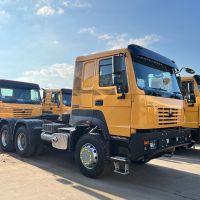
Reliable tractor trucks help logistics companies operate efficiently across ports, mining areas and cross-border transport routes.
Several factors continue to drive demand for heavy-duty tractor trucks across the continent:
Expansion of mining operations
Rapid infrastructure development
Growth of regional container transportation
Increasing cross-border trade
Government investment in highways and industrial parks
Rising demand for construction materials
Because operating conditions vary widely between countries, experienced buyers usually evaluate trucks based on reliability, maintenance simplicity, and parts availability rather than focusing solely on engine output or cabin features.
The HOWO series has earned a strong reputation in these markets because it combines proven mechanical reliability with a mature global service network. In many African countries, replacement parts and qualified technicians are already available, reducing repair time and minimizing vehicle downtime.
How to Choose the Right Tractor Truck Configuration
One of the first decisions buyers need to make is selecting the correct axle configuration. Although many customers initially compare engine horsepower or truck appearance, experienced fleet managers usually start by evaluating axle layout because it directly affects payload capacity, operating efficiency, tire wear, and overall transportation costs.
Among heavy-duty tractor trucks, the most common configurations include 4×2, 6×4, and 6×6. Each is designed for different operating environments rather than one being universally better than another.
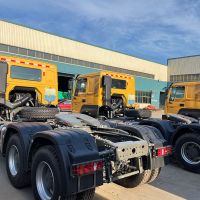
Selecting the correct axle configuration improves payload capacity, vehicle stability and long-term operating efficiency.
4×2 Tractor Truck
A 4×2 tractor truck is generally suitable for highways with relatively stable road conditions and lighter transportation tasks. Because it has fewer driven wheels and lower vehicle weight, fuel consumption is usually lower than larger configurations.
However, for many African transport projects, especially those involving mining, construction, or poor road infrastructure, a 4×2 configuration may not provide sufficient traction or load capacity.
Typical applications include:
Light container transportation
Urban logistics
Regional highway freight
Short-distance transportation
6×4 Tractor Truck
The HOWO 6×4 Tractor Truck has become the preferred choice for most African logistics companies because it offers an excellent balance between payload capacity, traction, maintenance cost, and purchase price.
With two powered rear axles, the vehicle maintains better traction on gravel roads, muddy construction sites, mining areas, and uneven highways. At the same time, operating costs remain considerably lower than larger off-road truck configurations.
This is one of the primary reasons why the 6×4 model has become the most exported HOWO tractor truck worldwide.
Long-distance freight transportation
Mining logistics
Port container transportation
Heavy cargo hauling
Cross-border transportation
Construction material delivery
6×6 Tractor Truck
For extremely demanding environments where vehicles regularly operate without paved roads, a 6×6 tractor truck provides the highest level of traction.
Because all three axles receive engine power, these trucks perform exceptionally well in mud, sand, steep slopes, and remote mining operations.
However, this additional capability also increases purchase cost, maintenance requirements, and fuel consumption. For many transport companies operating mainly on highways, a 6×6 truck may provide unnecessary capability.
Which Configuration Is Best for Africa?
There is no single answer that fits every customer. The most suitable configuration depends entirely on cargo type, transportation distance, road conditions, and local regulations.
Application Recommended Configuration Main Advantage Container Transport 6×4 Excellent balance of payload and fuel economy Mining Projects 6×4 / 6×6 Higher traction under difficult conditions Long-Haul Logistics 6×4 Lower operating cost with reliable performance Construction Transportation 6×4 Suitable for mixed road conditions Urban Distribution 4×2 Better fuel efficiency and lower purchase cost For most customers across Africa, South America, and the Middle East, the 6×4 configuration provides the most practical solution. It offers sufficient load capacity for heavy transportation while remaining economical to operate and maintain over long service periods.
Choosing the Right Engine
After selecting the axle configuration, the next important decision is engine specification. Contrary to what many first-time buyers believe, higher horsepower does not always mean better performance.
Professional fleet managers normally choose an engine based on the weight of the cargo, transportation distance, average road gradient, and expected daily mileage.
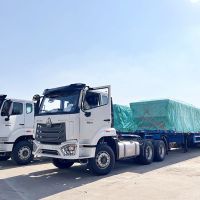
Selecting an appropriate engine specification improves fuel economy while maintaining sufficient pulling power.
371 HP Engine
The 371-horsepower engine remains one of the most popular configurations exported to Africa. It has earned an excellent reputation for mechanical reliability, simple maintenance, and competitive operating costs.
It is particularly suitable for:
General freight transportation
Container logistics
Construction material delivery
Regional transport companies
400 HP Engine
For companies carrying heavier loads over longer distances, a 400-horsepower engine provides additional torque while maintaining good fuel efficiency.
Many logistics operators consider this configuration an ideal compromise between operating cost and pulling capability.
430 HP Engine
The 430-horsepower engine is generally selected by customers operating under demanding conditions such as mining transportation, mountainous regions, or exceptionally heavy cargo.
Although fuel consumption is slightly higher, the increased torque improves climbing ability and reduces engine stress during continuous heavy-duty operation.
WD615 or MC Engine: Which One Should You Choose?
Engine selection often becomes one of the most discussed topics when purchasing a heavy-duty tractor truck. Many buyers immediately ask whether the traditional WD615 engine or the newer MC series engine is the better choice. The answer depends less on which engine is newer and more on how the truck will actually be used.
The WD615 engine has been serving African transport companies for many years. Because millions of trucks have been equipped with this platform, local mechanics are already familiar with its structure and spare parts are widely available throughout Africa, the Middle East, and South America.
For companies operating in remote regions where professional service centers may be hundreds of kilometers away, this simplicity is often more valuable than having the newest technology.
The MC series engine, developed using more modern engineering concepts, offers improved fuel efficiency, smoother operation, and lower emissions. It is an excellent option for fleets that focus on long-distance highway transportation and regular maintenance schedules.
Comparison WD615 Engine MC Series Engine Reliability ★★★★★ ★★★★★ Fuel Economy ★★★★☆ ★★★★★ Maintenance Simplicity ★★★★★ ★★★★☆ Parts Availability Excellent Very Good Recommended For Mining, Construction, Remote Areas Long-haul Logistics & Fleet Operations For many African customers, the WD615 engine continues to be the preferred solution because it combines proven durability with extremely convenient maintenance. Fleet owners who prioritize fuel efficiency and operate on well-established transport routes may prefer the MC engine instead.
Manual or Automatic Transmission?
Transmission selection has become increasingly important as transport companies seek to improve fuel economy while reducing driver fatigue.
Although automatic transmissions continue gaining popularity worldwide, manual gearboxes remain the dominant choice across many African countries due to their mechanical simplicity and lower maintenance costs.
For mining operations, construction projects, and overloaded transportation routes, experienced drivers often prefer manual transmissions because they offer greater control when climbing steep grades or operating on loose surfaces.
Automatic transmissions, however, can improve driving comfort during long-distance highway transportation and help reduce fuel consumption when operated under stable conditions.
Manual transmission offers lower purchase and maintenance costs.
Automatic transmission improves driver comfort on long routes.
Manual gearboxes are easier to repair in remote locations.
Automatic systems provide smoother gear shifting and better fuel management.
For most transport companies purchasing their first fleet of HOWO tractor trucks, manual transmissions remain the most practical choice because local maintenance resources are generally more accessible.
Understanding Long-Term Operating Costs
The purchase price of a tractor truck represents only a portion of its total lifetime cost. Fuel, routine maintenance, replacement parts, tire wear, and vehicle downtime often account for a much larger percentage of operating expenses over several years.
Experienced fleet managers therefore evaluate trucks according to their total cost of ownership rather than their initial selling price.
Several factors contribute directly to lower operating costs:
Reliable engine design
High-quality drivetrain components
Easy access to spare parts
Simple maintenance procedures
Strong local service support
Fuel-efficient powertrain matching
These are precisely the reasons why HOWO tractor trucks continue to maintain a strong presence across developing transportation markets. Their mature mechanical platform allows repairs to be completed quickly without requiring specialized diagnostic equipment.
How to Reduce Vehicle Downtime
For logistics companies, a truck parked in the workshop generates no revenue. Reducing downtime is therefore just as important as reducing fuel consumption.
Professional fleet operators typically focus on preventive maintenance rather than waiting for major failures to occur.
Simple inspection routines performed before each trip can significantly extend component life and improve overall reliability.
Inspect engine oil and coolant levels daily.
Check brake air pressure before departure.
Inspect tires for uneven wear or damage.
Lubricate suspension and steering components according to maintenance schedules.
Replace air and fuel filters regularly, especially in dusty environments.
Use genuine replacement parts whenever possible.
These relatively small maintenance practices often prevent expensive mechanical failures while helping fleets maximize vehicle availability throughout the year.
Spare Parts Availability Matters More Than Many Buyers Expect
One factor frequently overlooked during the purchasing process is the availability of replacement parts after delivery.
A truck may offer excellent specifications on paper, but if critical components require weeks to arrive, transportation schedules can quickly be disrupted.
HOWO has established one of the largest overseas spare parts networks among Chinese heavy-duty truck manufacturers. In many African countries, commonly replaced components—including filters, brake parts, clutch assemblies, suspension components, and engine accessories—can already be sourced through local distributors.
This widespread parts availability has become one of the key reasons why many logistics companies continue expanding their HOWO fleets instead of introducing multiple truck brands with different maintenance requirements.
How to Choose a Reliable Tractor Truck Supplier
Selecting the right truck is only part of the purchasing process. Choosing a reliable supplier is equally important because it affects product quality, delivery schedules, technical support, spare parts availability, and long-term operating costs.
Many buyers compare quotations from several suppliers before placing an order. While price is naturally an important factor, experienced fleet operators usually evaluate suppliers based on their ability to provide consistent quality and dependable after-sales support rather than simply offering the lowest quotation.
A professional truck supplier should be able to explain why a particular configuration is suitable for your project instead of recommending the same specification for every customer.
Before making a purchasing decision, buyers are advised to evaluate several key areas.
Whether the supplier understands local road conditions.
Whether different engine and transmission options are available.
Whether vehicle specifications can be customized.
Whether spare parts support is available after delivery.
Whether export documentation and shipping arrangements are handled professionally.
Whether technical advice continues after the truck arrives.
These factors often have a greater impact on fleet performance than a small difference in the initial purchase price.
Why Many Fleet Owners Continue Choosing HOWO
The popularity of HOWO tractor trucks across Africa has not been achieved simply through competitive pricing. Instead, it is largely the result of years of proven performance under demanding transportation conditions.
Many fleets operating today purchased their first HOWO trucks more than ten years ago. As those vehicles demonstrated reliable performance, operators gradually expanded their fleets using the same platform.
Maintaining a standardized fleet also simplifies maintenance management because mechanics become familiar with one mechanical platform while spare parts inventory remains consistent across multiple vehicles.
For transportation companies managing dozens or even hundreds of trucks, this operational consistency can significantly reduce maintenance costs and improve fleet utilization.
Factory Manufacturing and Quality Control
Reliable truck performance begins long before the vehicle reaches the customer. Manufacturing quality, welding accuracy, component selection, and final inspection all influence long-term durability.

Every exported vehicle undergoes inspection before shipment to ensure consistent quality and reliable field performance.
Professional manufacturers normally apply quality control throughout every production stage rather than relying solely on final inspection.
Incoming material inspection
Frame dimensional measurement
Welding quality verification
Engine and drivetrain installation inspection
Brake system testing
Electrical system inspection
Road testing before shipment
Final export preparation
This systematic production process helps reduce manufacturing defects while improving vehicle reliability after delivery.
Why Work With Qingdao Genron International Trade Co., Ltd.?
Qingdao Genron International Trade Co., Ltd. supplies heavy-duty trucks, semi trailers, tanker trailers, dump trucks, tractor trucks, trailer spare parts, and transportation equipment to customers worldwide.
Instead of supplying only standard vehicle configurations, Genron works closely with customers to understand transportation environments before recommending suitable specifications.
This practical approach helps buyers avoid unnecessary costs while selecting equipment that matches their actual operating conditions.
Industry Experience
With more than twenty years of international export experience, the Genron team has supported transportation projects throughout Africa, Southeast Asia, the Middle East, South America, and other developing markets.
This experience allows the company to understand differences in road conditions, vehicle regulations, maintenance capability, climate, and transportation requirements across various countries.
Technical Support
The engineering team provides technical recommendations covering engine selection, axle configuration, suspension systems, trailer matching, and overall fleet planning according to customer applications.
Flexible Customization
Truck specifications can be adjusted according to customer requirements, including engine power, transmission, fuel tank capacity, suspension configuration, tire selection, cab options, and auxiliary equipment.
International Logistics Support
Genron also assists customers with export documentation, Ro-Ro shipment, bulk vessel transportation, container loading solutions, and overseas delivery planning to simplify the purchasing process.
Related Resources
Destination Country
Transportation Application
Engine Preference
Required Horsepower
Quantity
Special Configuration Requirements
Frequently Asked Questions
1. Which HOWO tractor truck is most suitable for African road conditions?
For most logistics companies, the HOWO 6×4 tractor truck offers the best balance between payload capacity, durability, maintenance cost, and fuel efficiency. It performs well on highways, construction sites, mining roads, and cross-border transport routes.
2. Should I choose a 371HP or 430HP engine?
A 371HP engine is sufficient for general freight, container transportation, and regional logistics. If your business frequently transports heavy cargo through mountainous terrain or mining areas, a 430HP engine provides additional torque and climbing performance.
3. What is the difference between the WD615 and MC engines?
The WD615 engine is known for its mature design, simple maintenance, and widespread spare parts availability. The MC engine offers better fuel efficiency and more modern technology, making it suitable for fleets focused on long-distance highway transportation.
4. Is the HOWO tractor truck suitable for mining operations?
Yes. Many mining companies throughout Africa operate HOWO tractor trucks because of their reinforced chassis, heavy-duty axles, reliable drivetrain, and strong climbing capability under demanding working conditions.
5. Are spare parts easy to obtain?
Yes. HOWO has one of the largest overseas service and spare parts networks among Chinese heavy-duty truck manufacturers. Common maintenance components are available in many African countries.
6. Can the truck configuration be customized?
Absolutely. Customers can select different engine outputs, transmissions, suspension systems, fuel tank capacities, tire specifications, axle brands, and optional accessories according to local regulations and transportation requirements.
7. What shipping methods are available?
Depending on the destination, trucks can be shipped by Ro-Ro vessel, bulk cargo vessel, or flat-rack container. Genron recommends the most economical shipping solution according to vehicle quantity and destination port.
8. How can I receive a quotation?
Simply provide your destination country, expected payload, transportation application, preferred engine specification, and required quantity. The Genron engineering team will recommend a suitable configuration and prepare a detailed quotation.
Conclusion
Choosing the right tractor truck involves much more than comparing engine horsepower or purchase prices. Road conditions, maintenance capability, fuel quality, spare parts availability, and long-term operating costs all influence the profitability of a transportation business.
For many logistics companies across Africa, the SINOTRUK HOWO 6×4 Tractor Truck continues to offer one of the most practical solutions. Its proven mechanical reliability, reinforced chassis, strong aftermarket support, and flexible configuration options have made it a trusted choice for long-haul freight, mining operations, construction projects, and container transportation.
By selecting the appropriate axle configuration, engine specification, and supplier, fleet owners can improve operational efficiency while reducing maintenance costs throughout the truck's service life.
Request a Quote
Looking for a reliable SINOTRUK HOWO 6×4 Tractor Truck supplier?
Whether you are purchasing a single vehicle or building a complete transport fleet, Qingdao Genron International Trade Co., Ltd. can recommend a configuration based on your working conditions, payload requirements, destination market, and budget.
Recommended Information to Provide:
Company: Qingdao Genron International Trade Co., Ltd.
Website:
https://www.genronvehicle.com/Product Page:
SINOTRUK HOWO 6×4 Tractor TruckContact:
https://www.genronvehicle.com/contact.htmlEmail:
service@genronvehicle.comWhatsApp:
+86 188 6398 1951Reviewed By
This article has been reviewed by the engineering and export specialists of Qingdao Genron International Trade Co., Ltd.
Written by Genron Truck Team
Heavy Duty Truck Export Specialist
The Genron team has more than 20 years of experience supplying heavy-duty trucks, tractor trucks, dump trucks, fuel tankers, and transportation equipment to customers across Africa, the Middle East, Southeast Asia, and South America. Every recommendation in this guide is based on practical export experience and real customer applications rather than theoretical specifications.
HOWO vs SHACMAN: Which Truck Is Better for African Roads?
A Nigerian client's successful purchase of a custom 80-ton low bed trailer for mining equipment.
We’re Listening
Product Evaluation
Article Navigation
Related Products


-
E-mail:
service@genronvehicle.com
-
phone
+86 188 6398 1660
-
WhatsApp
+86 188 6398 1951
address
Office:
Qingdao city, Shandong provinceFactory:
Heze city,Shandong province, China-
products
-
tool

