
 English
 Français
 Español
 Árabe
 Deutsch
 简体中文
 Português
 Русский
 日本語
 한국어
 हिंदी
 Prancis
 Türkçe
 Tiếng Việt
 Italiano
 ไทย

Choose a fuel tanker size by comparing the quantity your contracts require with the quantity the proposed vehicle can transport and deliver under the assessed conditions. A nominal 50,000 litre tank can be a poor investment if the route or product-mass constraints regularly restrict loads below that figure. A smaller tanker can also be an expensive choice if its delivery capacity creates an avoidable extra trip.
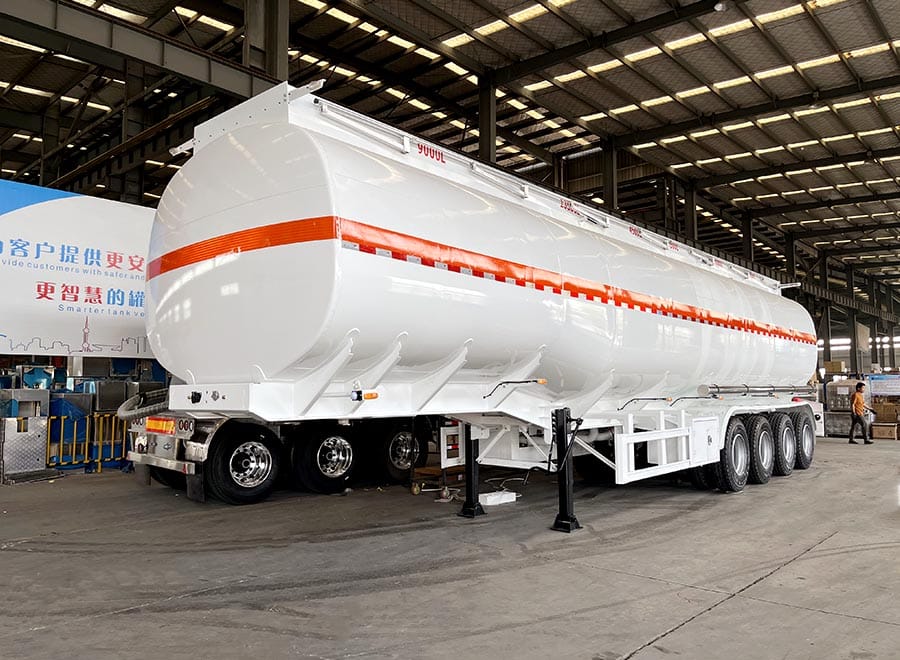
This purchasing comparison, prepared on 29 October 2026, uses 40,000, 45,000 and 50,000 litres as candidate nominal sizes. They are comparison points, not confirmation that every size, configuration or requested operating quantity is available in every GENRON product family. Obtain the current parameter table and a configuration-specific proposal before ordering.
Begin with the fuel tanker capacity guide for vehicle categories. Then check the quotation definitions for litres and tonnes. This article addresses a different question: how to decide between several candidate volumes when the business has actual contracts to serve.
How much fuel must one trip deliver?
Use customer orders and dispatch records rather than the largest order anyone can remember. Group deliveries by route, product, receiving site and delivery window. Identify which orders can realistically share a trip. Two customers needing fuel on the same day do not necessarily form one efficient tanker load if their access conditions or delivery times are incompatible.
Create a representative set of ordinary, busy and disrupted working days. For each, record the required quantities on a consistent measurement basis and the service time available. Include days with several products or small orders that cannot be combined as freely as a single bulk delivery. This exposes the duty that the tanker has to perform rather than assuming every trip can exploit its headline volume.
Consider an invented route requiring 37,000 litres on a normal day and 46,000 litres on a busy day. The difference between those days matters only after the proposed vehicle's reviewed operating quantity and trip cycle are known. A larger nominal tank might cover the busy day in one departure, or another constraint might prevent that. Record the condition explicitly before assigning financial value to the extra tank space.
When does moving from 40,000 to 45,000 litres help?
The additional nominal volume helps when it can be used on compatible orders without introducing a more restrictive vehicle, site or operating condition. For example, a fleet may regularly have an order combination that exceeds the smaller candidate's reviewed delivery quantity but fits the next candidate. That is a measurable business case. Occasional unassigned space in a sales drawing is not.
Compare the dispatch result across the representative days. Does the larger candidate remove a departure, eliminate a repeat terminal visit or provide a useful buffer within an agreed delivery arrangement? Check that the receiving sites can accept the planned quantities and that the products and compartments fit the same route. A theoretical saving disappears if orders must still travel separately.
Ask what changes with the proposed size increase. A revised tank may alter dimensions, equipped mass, compartment arrangement or required tractor compatibility. The supplier should show those changes in the quotation rather than describing the larger tank as the same vehicle with more litres. The assessment must follow the actual proposed configuration, including the delivery equipment requested by the fleet.
When does 50,000 litres become unused capacity?
Unused nominal volume is likely when the relevant product-mass allowance, route constraints or order pattern limit the load first. If a documented planning case permits only 42,000 litres of the intended product in the reviewed configuration, a nominal 50,000 litre description does not turn the remaining space into an automatic commercial benefit. The fleet needs to understand which condition restricts the quantity.
An order pattern can also leave volume unused. A carrier may have many small destinations with narrow delivery windows, or the terminal may release products in combinations that do not match the tanker's compartments. In those circumstances, dispatch flexibility and suitable equipment may matter more than the maximum nominal number. Compare completed routes and repeat visits, not just litres per theoretical departure.
There can still be reasons to purchase additional tank volume, such as a documented future contract or a second approved duty. Value that reason separately and state the assumptions. Avoid paying for a speculative future load while presenting it as a current operating saving. A purchase proposal should distinguish today's work, a confirmed expansion and an uncommitted sales forecast.
How do product mass and vehicle mass affect the comparison?
Compare all three candidates using a common product-data basis and the relevant configuration-specific empty masses. The relationship between volume and product mass is straightforward, but it cannot establish road acceptance by itself. The larger candidate may have a different equipped mass or load distribution. Those differences belong in the supplier's review before the fleet evaluates a delivery quantity.
For a purely invented screening case, assume the reviewed product mass allowance is 32,000 kg and use an invented density of 0.80 kg/L. The corresponding mass-based volume is 40,000 litres. This arithmetic does not approve a real load. It illustrates why nominal candidates of 40,000, 45,000 and 50,000 litres can have the same mass-based screen under one set of assumptions.
Change the assumptions and repeat the comparison. If one candidate has additional fitted equipment, include it. If the tractor differs, use the corresponding combination information. Do not reuse the best empty-mass figure from one offer with the largest tank figure from another. That hybrid vehicle may not exist, and its apparent advantage cannot be checked at delivery inspection.
How should compartment use enter a size decision?
Compare the orders assigned to each trip with the proposed compartment arrangement. The total nominal capacity alone does not show whether the tanker can serve the intended products and delivery quantities. Ask for the compartment schedule, its physical order and the relevant reviewed load cases. Product separation and the approved operating arrangement need to match the actual duty.
An invented daily total of 40,000 litres might consist of two orders for one product and a smaller order for another. A different day may require the same total in a very different product split. The fleet should show both cases to the supplier. Adding more total tank volume does not automatically make those product splits compatible with the same compartment arrangement.
Use the existing compartment planning guide to prepare the enquiry. For the size decision, focus on how often a candidate actually serves the recorded orders without unnecessary repeat trips. Do not turn a compartment arithmetic exercise into an operating loading sequence; have the responsible parties assess the actual arrangements and intermediate conditions.
What costs should be compared beyond the purchase price?
Build a cost comparison around completed deliveries. Include the quoted vehicle, required tractor, installed delivery equipment, planned maintenance support and the transport or commissioning scope that belongs to the purchase. Then model the operating items your fleet can substantiate, such as route distance, driver time, terminal visits and the number of trips. Keep uncertain estimates visible.
Use a consistent period, such as a defined contract year, and show the assumptions behind each candidate. If a larger tanker is expected to remove a certain number of trips, identify which recorded order combinations generate that result. If the route frequency remains unchanged, do not claim a saving simply because the nominal capacity increased. The benefit must appear in the dispatch model.
Avoid unsupported claims that a particular tank size always consumes less fuel per delivered litre or always earns back its extra cost quickly. Those results depend on the actual vehicle, routes, utilization and operating records. GENRON can provide the proposed supply scope, while the fleet contributes the commercial and operating inputs needed for a useful purchase comparison.
How can you test three candidates without buying first?
Replay a representative set of past dispatch days against each proposed configuration. Use the reviewed delivery quantity, product compatibility, receiving-site restrictions and realistic trip durations. Record completed routes, additional departures, unserved orders and the cause of each constraint. This produces an auditable comparison that purchasing, operations and the supplier can review together.
Keep the method simple enough to inspect. A worksheet with documented inputs is more useful than a complex simulation whose assumptions nobody can explain. Separate known site restrictions from estimates that still need a survey or technical review. A candidate should not receive credit for reaching a customer when its actual access and unloading arrangements have not been confirmed.
Test changes that could reverse the decision. Examples include a shorter terminal window, a denser product case, fewer compatible orders or an extra piece of delivery equipment. The purpose is to find the conditions under which each candidate works. A strong recommendation explains those conditions and the remaining evidence needed, rather than naming one tank size as the best choice for every fleet.
Which GENRON product information should you request?
Request the current parameter table and a written offer for the relevant carbon steel fuel tanker semi trailer or aluminium fuel tanker semi trailer family. Identify the exact candidate size, compartment arrangement, installed equipment and proposed tractor. Broad product-family ranges are a starting point for discussion, not a substitute for the final specification.
Ask GENRON to describe differences between the candidate configurations explicitly. The comparison should cover the capacity definition, equipped mass basis, dimensions, axle arrangement, delivery-equipment scope and supporting documentation. If a requested size requires a design change, the offer should identify that change and any additional inputs needed for assessment. Keep the drawing revision consistent across the comparison.
Send representative orders and route conditions through the GENRON enquiry page. State the business decision: replacing a specific tanker, reducing repeat trips, serving a new delivery contract or adding a second duty. That context helps the supplier propose a relevant configuration and explain what still needs verification before the fleet commits to a nominal capacity.
What should the final size recommendation say?
Write the recommendation around the contract outcome. Identify the preferred candidate, the route cases it serves and the evidence supporting the proposed quantities. State which additional departures or repeat visits another candidate would require. Keep the current demand records attached so a reviewer can see why the larger or smaller nominal tank earned its place in the decision.
Include the remaining conditions that could change that choice. A pending site assessment, a revised tractor or an unresolved equipment exclusion can affect the result. Assign the relevant action and update the comparison when the input is confirmed. This is more useful than issuing an unconditional size recommendation while the most influential assumptions are still estimates.
Finally, distinguish the purchase specification from the business forecast. The order should identify the agreed vehicle and supply scope; the fleet model should explain expected utilization and service benefits. Both are necessary, but they answer different questions. Keeping the connection clear lets the business inspect the supplied tanker against the contract and later compare its actual service with the assumptions that justified buying it.
Frequently asked questions about choosing a tanker size
Is a 50,000 litre tanker always better value than 40,000 litres?
No single nominal size establishes value. The larger candidate must serve additional compatible work under the reviewed vehicle and route conditions. Compare purchase scope and completed deliveries over the same operating period. If both candidates require the same trips, or another constraint limits their practical quantities, the additional tank volume may not produce the saving assumed in a simple price-per-litre comparison.
Can I order a tanker to match my largest customer order?
That order is a useful input, but include the rest of the route and the frequency of the demand. A vehicle selected around a rare peak may spend most working days underused or fail to serve smaller sites efficiently. Show the supplier normal and peak cases, then compare whether the larger candidate changes departures, delivery time or the number of vehicles actually required.
Should all quoted litre figures be treated as usable capacity?
Obtain the definition and supporting tank documentation for each figure. A nominal description, a compartment schedule and a permitted operating quantity are different purchasing questions. Compare offers on a common basis and have the relevant actual conditions reviewed. A headline litre figure should not be promoted to an unrestricted loading quantity just because the same number appears in an advertisement or product-family name.
Does the same nominal size require the same tractor?
Do not assume that two offers share a tractor requirement because their litre figures match. Compare the actual trailer geometry, coupling conditions, equipped mass and assessed loading cases with the proposed tractor. The supplier needs configuration-specific information. A previous fleet combination can provide useful records, but it does not automatically demonstrate that a revised tank and equipment package are compatible.
What if my future contract needs more volume?
Include the confirmed future duty as a separate case with its expected start date and assumptions. Compare the additional purchase cost with the value of meeting that duty. Keep unconfirmed forecasts separate from contracted work. The decision can still favour a larger tanker, but the purchase proposal should make clear which benefit is available now and which depends on future operating conditions.
What is the first document to request when offers are hard to compare?
Request a common specification schedule identifying the nominal capacity definition, compartment arrangement, equipped mass basis and included delivery equipment. Link it to each quotation and drawing revision. Missing definitions then become visible instead of being hidden in a single total. Once the schedules are comparable, the fleet can assess route performance and price without combining incompatible assumptions from different offers.


