
 English
 Français
 Español
 Árabe
 Deutsch
 简体中文
 Português
 Русский
 日本語
 한국어
 हिंदी
 Prancis
 Türkçe
 Tiếng Việt
 Italiano
 ไทย

The number of compartments in a fuel tanker should follow the delivery work it needs to perform. A large total capacity and several partitions do not automatically create the right allocation for a route. Individual compartment capacities, product requirements and the approved operating conditions matter.
Start with a delivery schedule: the products, usual quantities, receiving locations and variations in demand. The supplier can then develop a compartment proposal that addresses a defined job instead of selecting a familiar compartment count and leaving the allocation unresolved.
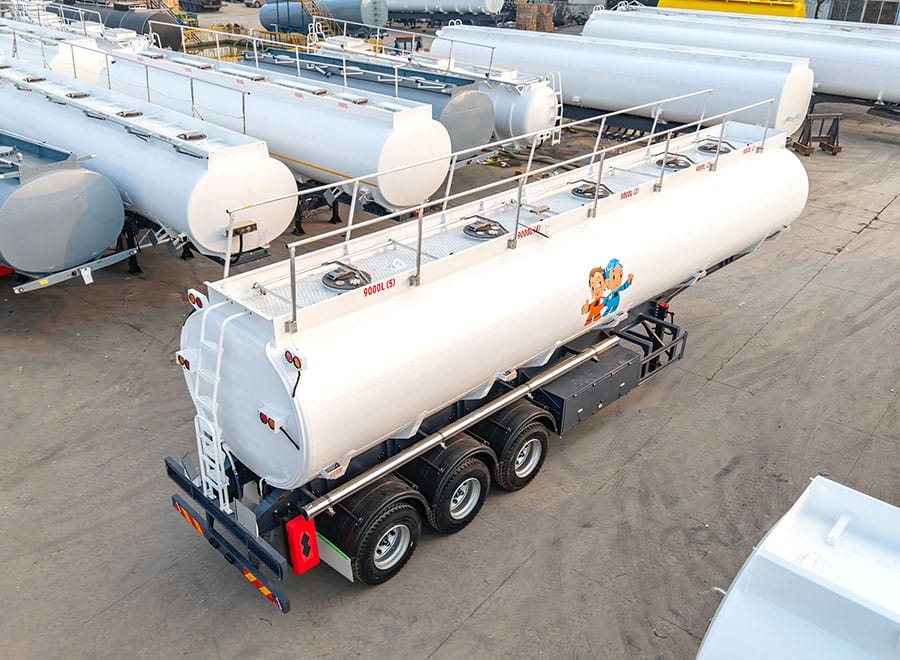
Write the Delivery Schedule Before the Tank Layout
List the normal quantity delivered at each destination and identify the product or grade involved. Record how often those quantities change and whether the tanker is expected to handle more than one product. Keep normal work separate from occasional requirements so the supplier can see which conditions should drive the design.
Also describe the collection terminal and receiving sites. Their accepted connections, loading or discharge arrangements and documentation requirements can affect the equipment specification. A compartment proposal should fit the complete operation, including the practical interfaces at both ends of the journey. It should not be assessed from total tank volume alone.
An Illustrative Delivery Schedule
These quantities are hypothetical enquiry targets, not a tank design, an approved loading plan or recommended compartment fill levels.
| Destination | Target delivery information |
|---|---|
| Site A | 8,000 liters of the specified product or grade. |
| Site B | 10,000 liters of the specified product or grade. |
| Site C | 6,000 liters of the specified product or grade. |
| Variation to discuss | Whether the route quantities change and whether products or grades differ. |
| Supplier response requested | A proposed compartment allocation with usable-capacity and operating conditions identified. |
Compare Individual Capacities, Not Only the Total
Two tankers can have the same advertised total volume but different individual compartment capacities. Those differences affect how the tanker can meet the delivery schedule. Ask for a compartment table showing the proposed capacities, position references and the basis of each capacity figure.
Distinguish geometric or nominal volume from the usable quantity permitted under the relevant tank and operating requirements. Do not assume that every compartment can be filled to its full internal volume. The proposal should identify the applicable filling conditions and documentation, with the operator and qualified technical or compliance personnel confirming the requirements for the products and jurisdiction concerned.
Separate Product Compartments From Baffles
A liquid-tight compartment partition separates contained volumes. A baffle is used to influence liquid movement and should not be treated as proof that two products are isolated from each other. Request the tank's internal arrangement drawing so the distinction is clear in the proposal.
Visible access covers are not a reliable way to determine the internal layout. The drawing should identify the compartments and relevant internal structures, while the equipment list should identify the associated outlets and other components. If different products or grades are part of the intended work, ask for the specific compatibility and separation assessment rather than assuming that any multi-compartment tanker is suitable.
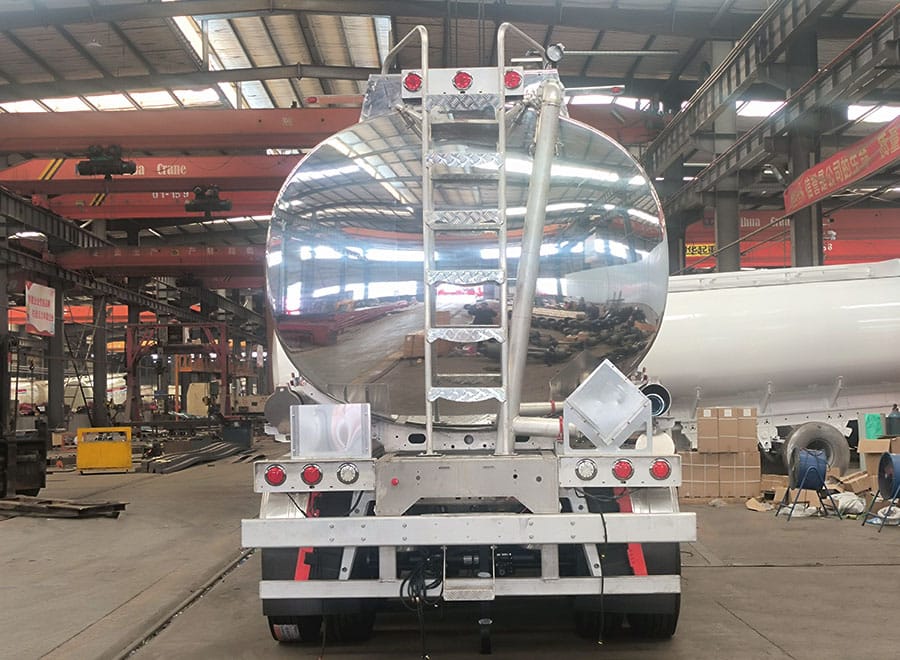
Include the Outlet and Connection Arrangement
The tanker specification should connect the compartment layout with the supplied outlet and connection equipment. Ask how the position references on the drawing correspond with the equipment identification. The operator needs a consistent record of what has been supplied, especially when the fleet uses several tankers with different arrangements.
Describe the receiving equipment and the product-quality requirements that affect the intended operation. Shared equipment or a different connection arrangement may need particular technical attention. This article does not prescribe product-switching, loading or discharge procedures. Those must come from the approved system documentation, the terminal requirements and appropriately trained personnel.
Assess Mass and Load Distribution Separately
Delivery quantities are often described in liters, while vehicle limits and equipment ratings involve mass. The product properties and the permitted filling conditions therefore need to be considered alongside compartment volume. A total volume label cannot establish the cargo mass or the allowable load for a particular route.
The distribution of cargo between compartments and changes during the delivery journey are also part of the vehicle-combination assessment. Give the technical parties the actual delivery schedule and expected variations. Do not rearrange a proposed allocation solely to use spare volume without the necessary assessment of the tank, combination and operating requirements.
Confirm the Applicable Tank and Transport Requirements
Fuel transport requires more than a commercial equipment list. Confirm which tank, vehicle, product and operating approvals apply to the countries and routes involved. Where ADR applies, its provisions cover matters including tank construction, testing, carriage conditions, crew requirements and vehicle approval. It should not be assumed that an ADR reference alone establishes compliance for every country or product.
Ask the relevant qualified adviser or authority to confirm the requirements before the final specification is accepted. The supplier should identify the documentation it can provide for the proposed vehicle. Keep any unresolved approval or product-compatibility question explicit. A compartment count, material description or safety-feature list is not a substitute for that confirmation.
Create a Compartment Register for the Fleet
The final register should connect each compartment reference with its supplied documentation, capacity basis and relevant equipment. Keep it with the tanker identification and final drawing revision. This provides a clear reference for dispatch, training, inspection records and future parts enquiries.
If a delivery pattern changes, review whether the existing specification covers the new requirement. For example, a tanker chosen around three regular depot quantities may face a different allocation problem when a fourth destination is added or a product grade changes. The register helps identify the question; it does not itself authorize a new loading or discharge arrangement.
Delivery schedule and normal variations.
Products or grades and their relevant technical information.
Compartment drawing and consistent position references.
Individual capacity figures and their stated basis.
Outlet, connection and associated equipment list.
Applicable approvals, documentation and unresolved questions.
Questions About Compartments
Is a tanker with more compartments always more flexible?
Not necessarily. Flexibility depends on the individual capacities, approved product applications, equipment arrangement and the route's delivery quantities. Compare those details rather than the count alone.
Can the compartment count be confirmed by counting the top covers?
No. Use the internal arrangement drawing and the supplied tank documentation. Access covers visible in a photograph do not establish the complete partition layout.
Useful Products and Further Reading
Technical References
ADR is a dangerous-goods transport framework, not a manufacturer specification. Confirm the applicable jurisdiction, current provisions and product-specific requirements with qualified personnel.
Ask GENRON for a compartment proposal based on your delivery schedule. Provide the products, target quantities, terminals and operating countries. Request the individual compartment capacities, equipment arrangement and documentation scope, with outstanding questions clearly identified.


