Fuel Tanker Capacity Guide: How Many Liters Does a Fuel Tanker Hold?

 English
 Français
 Español
 Árabe
Árabe
 Deutsch
 简体中文
简体中文
 Português
 Русский
 日本語
日本語
 한국어
한국어
 हिंदी
हिंदी
 Prancis
 Türkçe
 Tiếng Việt
 Italiano
 ไทย
ไทย

Fuel Tanker Capacity Guide: How Many Liters Does a Fuel Tanker Hold?
-
Fuel Tanker Capacity Guide: How Many Liters Does a Fuel Tanker Hold? Published: July 6, 2026 | Updated: July 6, 2026
Reading Time: 12 Minutes
Article Summary
Fuel tanker capacity is one of the most important factors when choosing a fuel tanker truck or fuel tanker trailer. Different fuel transport businesses require different capacities depending on delivery distance, fuel type, road regulations, axle configuration, compartment design, and operating conditions. This guide explains common fuel tanker capacities, how tanker volume is calculated, and how buyers can choose the right fuel tanker for fuel stations, mining projects, construction sites, agriculture, and petroleum logistics.Quick Navigation
Fuel Tanker Capacity Guide: How Many Liters Does a Fuel Tanker Hold?
Fuel transportation plays a critical role in mining, logistics, agriculture, construction, fuel station supply, and petroleum distribution. For buyers planning to purchase a fuel tanker truck or fuel tanker trailer, one of the first questions is usually simple:
How many liters does a fuel tanker hold?
The answer depends on tanker type, axle configuration, tank body design, compartment layout, fuel density, and local road regulations. A small fuel truck may carry 5,000 to 10,000 liters, while a heavy-duty 3 axle fuel tanker trailer may carry 40,000 to 60,000 liters or more.
For many customers in Africa, the Middle East, Southeast Asia, and South America, choosing the correct fuel tanker capacity is not only about carrying more fuel. It also affects operating cost, delivery efficiency, legal compliance, safety, and long-term profitability.
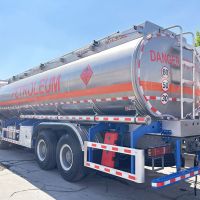
Fuel tanker capacity depends on tank size, axle configuration, compartment design, and local transport regulations.
Key Takeaways
Fuel tanker capacities commonly range from 5,000 liters to more than 60,000 liters.
Small fuel trucks are suitable for local delivery, while large fuel tanker trailers are better for long-distance petroleum logistics.
3 axle fuel tanker trailers commonly carry 40,000 to 60,000 liters depending on design and regulations.
Multi-compartment tankers allow diesel, gasoline, and kerosene to be transported in one trip.
The right tanker size should match delivery distance, road conditions, fuel type, and business volume.
Common Fuel Tanker Capacities
Fuel tankers are available in many sizes. The correct capacity depends on whether the tanker is used for city delivery, regional distribution, mining site supply, fuel station refilling, or long-distance petroleum transportation.
Tanker Type Typical Capacity Common Application Small Fuel Tank Truck 5,000–10,000 Liters Local fuel delivery, small construction sites, farms Medium Fuel Tank Truck 10,000–25,000 Liters Regional fuel distribution, construction projects 2 Axle Fuel Tank Trailer 25,000–35,000 Liters Fuel station supply, medium-distance transport 3 Axle Fuel Tank Trailer 40,000–60,000 Liters Long-distance fuel transport, mining fuel supply, petroleum logistics Heavy Duty Fuel Tank Trailer 60,000+ Liters Bulk petroleum transport and high-volume logistics For many export markets, the most popular fuel tanker trailer configuration is a 3 axle tanker with a capacity between 40,000 and 60,000 liters. This range offers a practical balance between volume, road compliance, and transportation efficiency.
How Fuel Tanker Volume Is Calculated
Fuel tanker volume is usually measured in liters or cubic meters. One cubic meter equals 1,000 liters.
The basic volume calculation depends on the shape of the tank. Many fuel tanker bodies use elliptical, round, or modified cylindrical structures, so final usable capacity is calculated by professional tank design software and confirmed during manufacturing.
A simple reference formula for a cylindrical tank is:
Volume = π × Radius² × Length
For example, if a tank has an estimated volume of 45 cubic meters, its theoretical capacity is about 45,000 liters.
45 m³ × 1,000 = 45,000 liters
However, usable capacity may be lower than theoretical volume because tankers require safety expansion space, internal baffles, compartment walls, manhole structures, valves, and anti-wave plates.
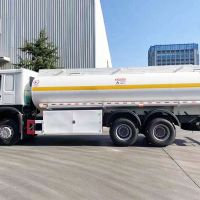
Fuel Tanker Capacity Comparison by Industry
Different industries require different tanker sizes. A mining company may need a large tanker to supply heavy equipment, while a small agricultural operator may only require a medium fuel truck.
Industry Recommended Capacity Reason Fuel Stations 30,000–45,000 Liters Balanced delivery volume and road operation flexibility Mining Projects 40,000–60,000 Liters High daily fuel consumption from dump trucks, excavators, and loaders Construction Sites 20,000–40,000 Liters Suitable for machinery support and regional fuel supply Agriculture 10,000–30,000 Liters Supports tractors, harvesters, and irrigation equipment Petroleum Distribution 50,000–60,000+ Liters Improves long-distance delivery efficiency and reduces cost per liter Single-Compartment vs Multi-Compartment Fuel Tankers
Fuel tanker trailers can be designed with one large compartment or several independent compartments. The correct choice depends on business model and delivery requirements.
Single-Compartment Fuel Tanker
A single-compartment tanker carries one type of fuel in one trip. It is simpler, easier to clean, and often less expensive to manufacture.
It is suitable for companies that transport only one fuel type, such as diesel for mining equipment or fuel supply for industrial operations.
Multi-Compartment Fuel Tanker
A multi-compartment fuel tanker can carry different fuel products at the same time. For example, one tanker may carry diesel, gasoline, and kerosene in separate compartments.
This design is common for fuel distributors that deliver to multiple stations or customers during the same route.
Design Advantages Best For Single Compartment Simple structure, lower cost, easier cleaning Single fuel product transport Multi-Compartment Carries different fuels in one trip, improves delivery flexibility Fuel stations and petroleum distributors 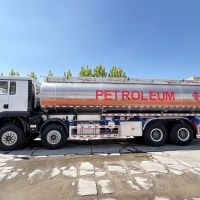
Common Applications of Fuel Tankers
Fuel Station Supply
Fuel tankers deliver gasoline and diesel from depots or refineries to fuel stations. For this application, 30,000 to 45,000 liters is often a practical capacity range.
Mining Site Fuel Supply
Mining projects use large amounts of diesel for dump trucks, excavators, loaders, drilling rigs, generators, and support vehicles. A 40,000 to 60,000 liter fuel tanker trailer is often suitable for this type of work.
Construction Project Fuel Delivery
Construction companies use fuel tankers to supply bulldozers, cranes, graders, concrete equipment, and road construction machinery. Tanker size should match project scale and delivery frequency.
Agricultural Fuel Distribution
Farms may use smaller or medium-sized fuel tankers to support tractors, harvesters, irrigation pumps, and storage tanks during seasonal operations.
How to Choose the Right Fuel Tanker Capacity
Before purchasing a fuel tanker, buyers should not choose capacity only by price. A tanker that is too small increases delivery frequency. A tanker that is too large may exceed local weight limits or become difficult to operate on rural roads.
1. Confirm Fuel Type
Diesel, gasoline, kerosene, petrol, and aviation fuel may require different compartment designs, valves, safety accessories, and material considerations.
2. Calculate Daily Fuel Demand
Estimate how much fuel must be transported per day or per week. This helps determine whether a 20,000L, 40,000L, or 60,000L tanker is more suitable.
3. Check Local Road Regulations
Road weight limits and axle load regulations vary by country. A tanker capacity that works in one market may not be legal or practical in another.
4. Evaluate Road Conditions
Rough roads, mining roads, and rural fuel delivery routes may require stronger suspension, reinforced tank supports, and suitable tire configuration.
5. Decide Compartment Layout
If your business delivers several fuel products, a multi-compartment tanker can improve efficiency. If you transport only diesel, a single-compartment tanker may be more economical.
Need a fuel tanker quotation?
Send your required capacity, fuel type, destination country, and compartment layout. Our engineering team will recommend a suitable tanker configuration.Related Products and Guides
Frequently Asked Questions
How many liters does a fuel tanker hold?
Fuel tankers commonly hold between 5,000 and 60,000+ liters depending on tanker type, axle configuration, tank dimensions, and application.
What is the most common fuel tanker capacity?
For long-distance fuel transport, 3 axle fuel tanker trailers with capacities between 40,000 and 60,000 liters are common in many markets.
How many liters can a 3 axle fuel tanker carry?
A 3 axle fuel tanker trailer commonly carries around 40,000 to 60,000 liters, depending on tank design, legal weight limits, and customer requirements.
What is the difference between a fuel tanker truck and a fuel tanker trailer?
A fuel tanker truck has the tank mounted directly on the truck chassis, while a fuel tanker trailer is pulled by a tractor truck and usually offers larger capacity for long-distance transport.
Why do fuel tankers have multiple compartments?
Multiple compartments allow different fuel products to be transported in one trip while preventing product mixing and improving delivery efficiency.
How do I choose the right fuel tanker capacity?
Buyers should consider daily fuel demand, delivery distance, road conditions, legal weight limits, fuel type, and whether multiple compartments are required.
Final Recommendation
Fuel tanker capacity should be selected according to real operating needs rather than simply choosing the largest tank available. A small fuel truck may be suitable for local delivery, while a 40,000 to 60,000 liter fuel tanker trailer is often better for long-distance petroleum logistics, mining fuel supply, and fuel station distribution.
Buyers should consider tank volume, axle configuration, compartment layout, safety accessories, road regulations, and delivery frequency before making a purchase decision.
A properly selected fuel tanker improves delivery efficiency, reduces transport cost per liter, and supports long-term business profitability.
Request a Fuel Tanker Recommendation
Looking for a fuel tanker truck or fuel tanker trailer supplier?
Send Genron your required capacity, fuel type, destination country, compartment number, and operating conditions. Our team will help recommend a suitable fuel tanker solution for your business.
Company: Qingdao Genron International Trade Co., Ltd.
Website: https://www.genronvehicle.com/
Contact: https://www.genronvehicle.com/contact.html
Email: service@genronvehicle.com
WhatsApp: +86 188 6398 1951
Reviewed By
This article has been reviewed by the engineering and export team of Qingdao Genron International Trade Co., Ltd.
Written by Genron Tanker Trailer Team
Fuel Tanker and Petroleum Transport Equipment Specialist
The Genron team has experience supplying fuel tanker trucks, fuel tanker trailers, heavy-duty trucks, semi trailers, and customized petroleum transport solutions for customers in Africa, Southeast Asia, the Middle East, and South America.
What Is a Bulk Cargo Transport Semi Trailer? Complete Buyer’s Guide
A Nigerian client's successful purchase of a custom 80-ton low bed trailer for mining equipment.
We’re Listening
Product Evaluation
Article Navigation

-
E-mail:
service@genronvehicle.com
-
phone
+86 188 6398 1660
-
WhatsApp
+86 188 6398 1951
address
Office:
Qingdao city, Shandong provinceFactory:
Heze city,Shandong province, China-
products
-
tool

