
 English
 Français
 Español
 Árabe
 Deutsch
 简体中文
 Português
 Русский
 日本語
 한국어
 हिंदी
 Prancis
 Türkçe
 Tiếng Việt
 Italiano
 ไทย

A return-load opportunity can make a dedicated cement tanker look like a flexible bulk-powder vehicle. The commercial attraction is clear, but the decision involves more than matching cubic metres. Residue from the previous product, moisture, contact materials and the receiver’s quality requirements may determine whether the load is acceptable.
This guide is for buyers and fleet planners discussing a proposed change of duty. It does not claim that a particular tanker is suitable for cement, fly ash, lime, food ingredients or any other alternative material. Each proposed product needs an explicit review with the equipment and product stakeholders.
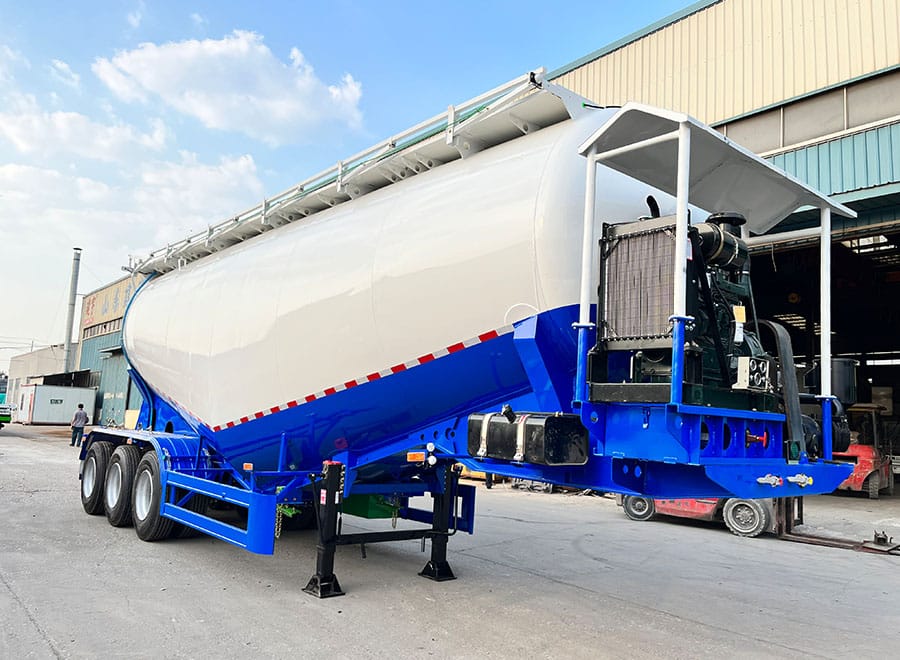
Define the proposed change precisely
Write down the previous product and the proposed next product using their proper commercial and technical identities. “Powder” is not a sufficient description. Obtain current product information and safety data from the material supplier, together with the receiver’s transport-quality requirements.
State whether this is a permanent change, an occasional return load or frequent alternating service. Those patterns have different implications for scheduling, quality controls and records. A one-time acceptance should not silently become approval for unlimited switching between materials.
Identify who can accept or reject the material at the destination. The tanker operator, product seller and receiving plant may each have different responsibilities. Establish the decision process before loading so that a disputed residue or cleanliness condition is not discovered only after the vehicle arrives.
Compatibility covers the entire product path
The vessel shell is only part of the equipment in contact with the powder. Include internal fittings, seals, valves, aeration components, discharge lines and hoses in the compatibility review. A general statement about the tank material does not establish that every contact component is suitable.
Give the equipment supplier the relevant material characteristics and operating requirements. Ask it to identify what the existing equipment is designed to handle and where modifications, exclusions or further assessment are needed. Do not transfer an approval from another tanker merely because its exterior looks similar.
The proposed receiving installation matters too. A material accepted by one plant may be unsuitable for another plant’s process or quality specification. The enquiry should therefore identify both the product and its destination, rather than requesting blanket approval for an entire category such as mineral powders.
Separate the questions before agreeing on a return load
| Review area | Information needed | Acceptance should come from |
|---|---|---|
| Product identity | Previous and proposed material information | Material supplier and cargo owner |
| Contamination | Allowed residue and evidence required | Receiver or responsible quality authority |
| Equipment | Product-contact materials and intended duty | Equipment manufacturer or responsible specialist |
| Moisture | Product restrictions and approved preparation method | Product and equipment stakeholders |
| Records | Inspection, release and traceability requirements | Named parties in the transport-quality agreement |
Replace “clean enough” with an agreed acceptance requirement
A visually tidy discharge outlet does not establish the condition of the complete product path. Residue may be relevant even when it is not obvious in an exterior photograph. Ask the receiver what contamination matters and what evidence it requires before accepting a changed-duty tanker.
Avoid inventing a universal percentage of allowable carryover. Some receiving processes may have defined limits; others may prohibit previous cargoes or require dedicated transport. The requirement must come from the responsible product-quality parties, not from a generic trailer article.
Agree the release record in advance. It might identify the previous cargo, the approved preparation work, the inspection scope and the person authorising the next use. A cleaning invoice alone may not answer those questions unless its scope matches the receiver’s acceptance requirement.
Do not assume water is an acceptable cleaning shortcut
A change-of-product discussion should explicitly address moisture. The product supplier may have restrictions, and the equipment may require a particular approved preparation method. Do not treat a dry-powder tanker as a general vessel that can be washed and immediately returned to service.
Any proposed cleaning method should be assessed by the responsible equipment and product specialists, including its effect on internal components and the required release condition. The plan must establish what evidence demonstrates readiness for the next cargo. “Looks dry” is not a complete acceptance criterion.
This article provides no instructions for opening, entering, cleaning or depressurising a tanker. Such work can involve pressure, hazardous substances and confined-space risks. HSE’s confined-space material is a general safety reference; vessel access requires the appropriate competent assessment and controlled arrangements.
Further source information:
Dedicated service may be commercially simpler
A return load may generate revenue while also adding preparation time, quality checks and rejection risk. Compare the complete operating cycle rather than only the loaded kilometres. Identify the parties responsible for any delay, rework or rejected material before treating the opportunity as a saving.
For illustration, a planner could compare dedicated cement service with alternating service under an agreed release process. The comparison should include documented preparation costs, time availability and destination acceptance. It should not assume a universal cleaning duration or guaranteed additional revenue.
Where the quality requirements are demanding or the compatibility remains uncertain, a dedicated vehicle may be the clearer proposal. That is a commercial and technical decision for the parties involved, not a claim that all product changes are impossible or that one tanker design suits every powder.
Include hoses and accessories in the traceability record
A tanker may have an identified previous cargo while a shared hose has a different service history. Include product-contact accessories in the traceability system. If equipment is dedicated to a material, make the identification and storage arrangement clear to the people using it.
Agree how substitutions are approved. Replacing a hose, seal or valve with a visually similar part can change the basis of a compatibility review. The records should identify the relevant specification rather than relying only on an informal description from the workshop.
Cement itself presents occupational exposure concerns, as HSE’s cement guidance explains. That supports the need for a planned, controlled approach to handling residues; it is not a recipe for preparation work or a statement that another material has the same hazards. Use the current safety information for every product involved.
Further source information:
Product-change decision record
Previous cargo and proposed cargo:
Current product and safety information references:
Receiver and named quality-acceptance contact:
Prohibited previous cargoes or residue limits:
Equipment and product-contact accessory specifications:
Approved preparation and inspection scope:
Release evidence and authorisation responsibility:
Decision: accepted for defined duty / further review / dedicated service required:
Use a hold-point list for the first changed-duty load
Before the first proposed switch, create a list of decisions that must be complete before the vehicle can be assigned. Typical headings include material identity, equipment compatibility, receiver approval, preparation scope and release evidence. These are approval categories, not instructions for carrying out the work.
Put a named responsible party beside each category and retain its decision with the relevant specification revision. An email saying “acceptable” is ambiguous if it does not identify the product, vehicle, accessory set or conditions covered. Ask for those boundaries to be stated clearly.
If one decision remains unresolved, keep the proposed duty unresolved too. This prevents a provisional sales discussion from becoming an operating commitment. Once a defined change has been accepted, use the same record to manage later variations, such as a different receiving plant, shared hose or revised powder formulation. Each variation can then be assessed against the actual basis of acceptance.
Questions about changing bulk-powder cargoes
Can a cement tanker carry fly ash?
Do not assume compatibility from the product names alone. The specific material, equipment, previous cargo, destination requirements and preparation arrangements need written review. This article does not approve that change for any particular tanker.
Is an empty tanker automatically ready for another product?
No. Empty does not necessarily mean free from relevant residue or suitable for a different material. Establish the next receiver’s acceptance criteria and the equipment requirements.
Does a cleanliness certificate guarantee acceptance?
Only if its scope and evidence satisfy the receiving party’s agreed requirements. Check what was inspected, which equipment was covered and who has authority to release the tanker for the defined next cargo.
Should product flexibility be specified before purchase?
Yes. List intended products and switching patterns at enquiry stage. That allows compatibility, accessories and quality-control requirements to be discussed before a dedicated-duty tanker is ordered.
Related Reading
Sources and Scope
HSE sources provide safety context, not product-change approval or destination regulations. The checklist is an editorial decision aid; it does not specify a cleaning method, residue limit or safe entry procedure.


