
 English
 Français
 Español
 Árabe
 Deutsch
 简体中文
 Português
 Русский
 日本語
 한국어
 हिंदी
 Prancis
 Türkçe
 Tiếng Việt
 Italiano
 ไทย

A bulk cement tanker needs an air-supply system suited to its material and discharge arrangement. Tank volume does not establish the required air performance, and an advertised compressor size does not establish the unloading time at every receiving site.
Ask for a proposal based on the actual powder, tanker equipment and delivery connection. The most useful enquiry includes information from the receiving site as well as the trailer specification. Without that information, a quoted discharge-time claim may describe conditions that the buyer never encounters.
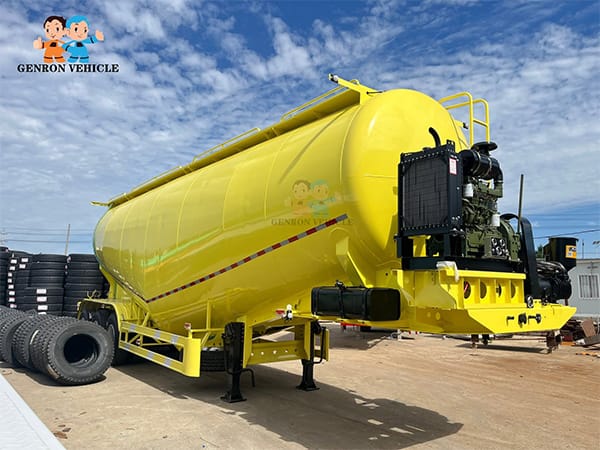
Specify the Powder and Its Relevant Properties
Identify the material and provide the available technical information about its bulk density, particle characteristics, moisture condition and handling requirements. Pneumatic conveying equipment is selected for an application, not simply for the word powder. If the tanker will carry different materials, list them separately and ask which applications the proposed system covers.
Gardner Denver's dry-bulk guidance identifies material properties, required airflow and operating pressure as relevant selection inputs. Use such guidance to identify the information needed, not to copy a manufacturer's performance figure into an unrelated trailer quotation. The supplier should explain the proposed equipment using the actual material and system configuration.
Separate Airflow, Pressure and Power Requirements
Airflow and pressure describe different aspects of the equipment's performance. A headline number for one does not provide the complete operating information for the other. Request the manufacturer, model and applicable performance data for the proposed air-supply equipment, including the conditions associated with the quoted figures.
Also identify the power source and the relevant installation requirements. A trailer-mounted power package and equipment driven through the tractor are different supplied arrangements. The proposal should state which components are included and what equipment the buyer must provide. This avoids comparing one offer for a complete package with another that assumes an existing power source.
A Discharge-Site Information Sheet
| Site information | What to obtain from the receiving operator |
|---|---|
| Material and delivery quantity | The material specification and normal quantity expected per delivery. |
| Connection | The receiving connection type and relevant dimensions. |
| Delivery line | The actual route, length, diameter, bends and elevation changes. |
| Receiving silo | Relevant operating limits and the site's approved delivery requirements. |
| Site equipment | The receiving arrangement and any equipment assumptions that affect the proposal. |
| Working area | Vehicle access, position, available space and site restrictions. |
| Acceptance criteria | How the parties will assess performance under agreed conditions. |
Include the Delivery Line in the Assessment
The delivery path is part of the conveying application. Hose or pipe dimensions, distance, bends and elevation changes can affect the required performance. Ask the receiver for its actual arrangement instead of describing every site as a standard silo connection.
For an illustrative comparison, one site may use a short connection while another has a longer line and a greater elevation change. The same tanker capacity does not make those discharge conditions identical. Send both site records to the supplier if the fleet expects to serve both locations. Ask which conditions have been evaluated and which need additional information or a separate proposal.
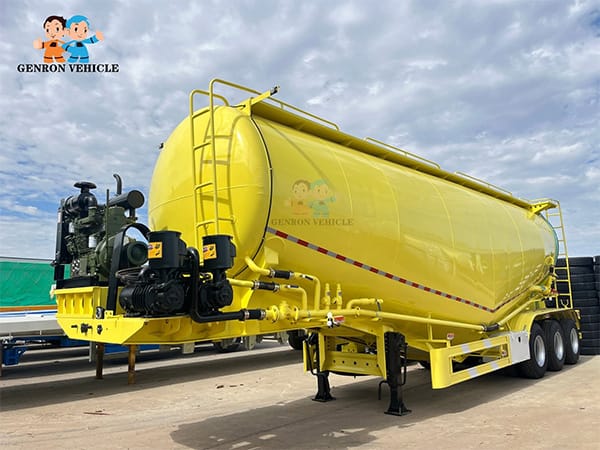
Check the Complete Air-Supply Installation
An equipment model needs to be considered within its installation. Ask for the supplied air-supply components, power package, relevant connections and system documentation. Identify any accessories or receiving-site equipment that the proposal assumes but does not include.
The equipment list should correspond with the tanker drawing and the agreed material application. If an alternative air-supply unit is proposed, ask for the technical information supporting that change. A different model with a similar advertised output is not automatically an equivalent installation. Keep the final designations and supporting documents with the vehicle record for future support enquiries.
Treat Discharge Time as a Conditional Result
A useful performance proposal states the material, quantity, equipment configuration and receiving conditions used to support its discharge-time estimate. Ask whether the estimate covers the buyer's sites and how the parties will evaluate it. A bare promise to unload quickly gives the buyer little basis for a fair comparison.
Where a performance assessment or acceptance test is agreed, record the conditions and responsibilities in the purchase documents. Describe the information to be collected and how a difference from the agreed conditions will be handled. This is more useful than asking for the fastest advertised time, because it connects the promise with a defined and repeatable delivery situation.
Keep Pressure Limits and Protective Equipment Intact
The tanker and conveying equipment must be used within the applicable design and operating requirements. A slow delivery is not a reason to increase a setting beyond the approved limits or modify protective equipment. The operator should follow the supplied instructions and refer unexpected performance to qualified technical personnel.
Include the relevant operating and maintenance documentation in the order. The fleet needs to know which instructions apply to the fitted air-supply unit and tanker system, rather than using a generic procedure from a similar vehicle. This guide concerns equipment selection and information gathering; it does not provide pressure settings or a discharge procedure.
Build a Site Register After Handover
Keep a record of the receiving sites and the conditions used in the original proposal. When a new site is added, compare its information with the conditions already covered. A changed connection or delivery line should be identified before the fleet assumes that the same performance estimate still applies.
Document confirmed equipment identifiers and support contacts with the tanker record. If performance changes, provide the technical parties with the material, site and equipment information needed to investigate it. This creates a useful distinction between a changed application, a purchasing assumption and a fault that requires workshop attention.
Copyable Air-Supply Enquiry
Material and available technical specification:
Normal quantity per delivery:
Tanker configuration or proposed drawing:
Air-supply equipment manufacturer / model, if existing:
Power source available or requested:
Receiving connection details:
Delivery line route, dimensions and elevation:
Receiving-site operating requirements:
Sites expected to use the same tanker:
Equipment and accessories included:
Performance conditions to agree:
Operating and maintenance documents required:
Two Air-Supply Questions
Does a larger tank need the same compressor as every tank of that size?
No. The material, conveying arrangement, air performance and installation need to be matched. Volume is one part of the transport requirement, not a complete air-supply specification.
Can a discharge-time estimate be compared without the site conditions?
Not reliably. Compare estimates using the same material, quantity, equipment scope and receiving arrangement, with the assumptions stated.
Useful Products and Further Reading
Technical References
The reference describes Gardner Denver equipment. It supports the selection questions, not a pressure setting or performance guarantee for the tanker photographed here.
Ask GENRON for a site-based cement tanker proposal. Attach the material specification and receiving-site records. Request the air-supply equipment designation, installation scope and the conditions behind any stated discharge-performance estimate.


