
 English
 Français
 Español
 Árabe
 Deutsch
 简体中文
 Português
 Русский
 日本語
 한국어
 हिंदी
 Prancis
 Türkçe
 Tiếng Việt
 Italiano
 ไทย

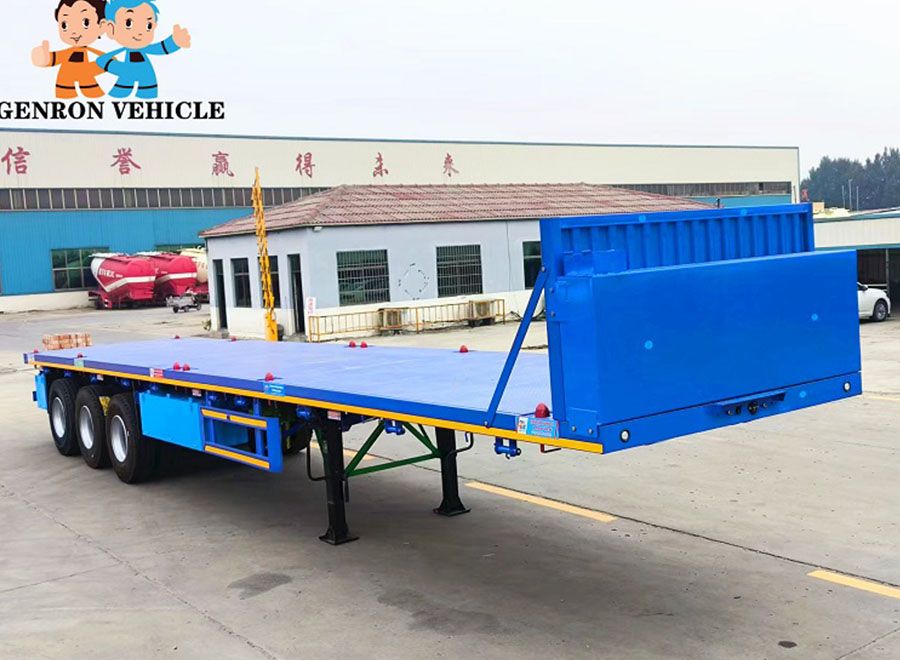
Reinforcing bar and mesh shipments are often described by total tonnage, yet the delivery problems usually appear in the details: bundle length, package identity, supports, lifting access and the sequence in which a construction site needs the material. A flatbed enquiry should connect those details with the trailer layout before price and delivery dates are agreed.
This guide covers the purchasing brief for packaged reinforcing products carried on an open-deck semi trailer. It is not a load-securing calculation or permission to carry an overhanging load. The producer’s product information, an appropriate transport plan and the requirements of the actual journey remain necessary. The aim is to compare practical layouts using real dispatch units rather than a generic label such as construction steel.
Separate straight bar, fabricated shapes and mesh packs
Identify the products that will actually be shipped. Straight bar bundles, fabricated reinforcing shapes and mesh packs do not have identical geometry or supporting needs. Provide the delivered package dimensions, gross mass and the producer’s handling information. A single material order can include several cargo units that need different treatment on the deck.
List packages individually or group only genuinely equivalent units. State which packages may be stacked and which require their own support or handling arrangement. Do not infer these conditions from material grade or a photograph. The trailer supplier needs a clear cargo matrix before it can discuss usable supporting area and access, especially where fabricated shapes occupy more space than their mass suggests.
Use bundle identity to connect production with delivery
Each package should have an identity that appears consistently on the packing list and delivery instructions. Include customer, order and destination references as appropriate. Site staff should be able to recognise the required package without dismantling another package or relying on the driver’s memory of the loading process.
Where several construction stages are delivered together, identify the sequence in which the receiver needs them. That does not automatically dictate the trailer position, because support and securing requirements still govern the load plan. It does, however, give the transport planner a real operational objective to work with instead of discovering at the gate that an urgently needed pack is inaccessible under another customer’s material.
Confirm actual length and projections
Give the overall dimensions of the shipping unit, including wrapping, frames or projections that affect the envelope. Keep nominal bar length separate from the actual packaged length. If fabricated reinforcement has an irregular shape, provide a drawing or dimensioned outline rather than describing only the longest straight dimension.
The route planner must assess the actual loaded vehicle and any relevant projections against the journey requirements. Do not treat a flatbed’s open rear or removable fittings as approval for overhang. If a proposed load does not fit the accepted envelope, record the issue and obtain the necessary review before choosing a trailer or declaring the shipment ready for normal dispatch.
Obtain the producer’s support requirements
Ask the product producer how the packages are to be supported during transport and handling. Include the locations and contact information requested by the trailer designer. The objective is to connect the package’s needs with the vehicle structure, not merely to place timber where a familiar loading photograph shows it.
British Steel publishes product-specific load-restraint documentation and explicitly distinguishes the scope of its technical advice. That illustrates why a plan for another steel product or route should not be copied indiscriminately. It is not a reinforcing-bar transport approval for this guide. Obtain the applicable information for the actual products and give it to the competent planners reviewing the proposed load. British Steel: scope of product-specific load-restraint documentation
Compare flatbed layouts against the load matrix
GENRON’s three-axle flatbed trailer and four-axle flatbed layout provide open-deck vehicle layouts for discussion. Compare their usable deck area, supporting structure, fittings and access against the package matrix. A vehicle’s advertised payload does not establish acceptance of a concentrated bundle, a particular support spacing or a stacking arrangement.
Ask for the intended package positions and supplied fittings to appear on the accepted drawing. Identify the space needed for securing and handling rather than fill every available rectangle on a scale sketch. If one layout covers the routine straight-bar work but not the fabricated-shape cases, retain that exception visibly. A focused vehicle can be a sensible choice, but its limits should be understood before purchase.
Keep bundle bands distinct from vehicle securing
Ask the producer what the bands or ties around a package are intended to do. Maintaining bundle integrity through production and handling is not the same function as restraining the whole load to the trailer. The competent securing planner needs the package characteristics and the vehicle’s documented fittings to establish the actual arrangement.
Do not assume that side posts, a headboard or a convenient chain point has an unlimited role in that arrangement. Identify their supplied specification and documented function. This guide does not prescribe a strap count, chain arrangement or restraint force. It makes those information boundaries explicit so that a purchasing decision is not built around an unverified assumption about familiar-looking equipment.
Design access around the approved handling method
Confirm whether each package will be handled using side-entry equipment, overhead equipment or another approved method. Provide the handling provisions and clearances requested by the responsible planner. The package’s position should allow the intended method to be used without forcing the receiver to improvise around a blocked access point.
Fixed trailer fittings can interfere with handling even on an open platform. Show posts, boxes, spare-wheel equipment and other relevant components on the layout. Where removable equipment is proposed, include how it is handled and stored. An accessory that is useful for one load type may be inconvenient for another, and that trade-off belongs in the enquiry rather than being discovered during the first delivery.
Plan bar and mesh combinations explicitly
If straight-bar bundles and mesh packs travel together, show them as different package types on the load plan. Do not assume the lighter-looking cargo can be placed wherever a heavier bundle leaves space. Support, permitted stacking, movement characteristics and handling access need to be reviewed for the actual combination.
Identify what remains after each delivery and how its supporting and securing arrangement is maintained. The acceptable departure layout is not the only case on a multi-stop journey. If one package provides access or support conditions that change when it is removed, that dependence needs to be understood by the planner. Clear package identities make this review much easier than a load description based only on steel tonnage.
Use arithmetic to check the packing list, not to approve a load
Suppose a hypothetical shipment contains six labelled bundles recorded at 1.8 tonnes each and two mesh packs recorded at 1.1 tonnes each. Their listed cargo mass totals 13.0 tonnes before any separately accounted support or equipment. This is a packing-list calculation, not evidence that a particular trailer, position or route is suitable.
Use such a check to expose omissions and inconsistent units. Record whether the listed figures include packaging and supporting materials. Then give the complete cargo record to the responsible vehicle and load planners. Passing a total-mass calculation does not establish acceptable axle distribution, floor loading, securing or dimensions. Those questions remain separate even where the arithmetic is straightforward.
Review construction-site receiving conditions
A steel stockyard may offer organised loading lanes and established equipment, while a construction site may have limited access and changing storage areas. Ask the receiver to confirm the delivery point, working area, handling method and any restrictions that affect the planned arrival. Keep a contact responsible for resolving changes before the vehicle is dispatched.
Do not assume that an empty area shown in an old photograph will be available on delivery day. Site conditions can change with the construction sequence. If the receiver changes the unloading position or method, refer the affected load and access assumptions for review. The vehicle specification should support a defined operation, not depend on a promise that site staff will find a way when the truck arrives.
Protect package identification and condition
Agree how labels and any required product records remain connected to the delivered packages. If a customer needs traceability information, identify the documents and transfer process rather than assume an exterior label will remain readable throughout every handling stage. The trailer purchase should not be expected to solve a missing product-documentation process.
At collection, record package count, identities and visible exceptions using the agreed process. Photographs are more useful when they show the shipment reference and relevant condition than when they merely show a full trailer. Do not use them as a substitute for a support or securing assessment. Their role is to document what was presented and transferred, not to certify an arrangement from appearance alone.
Consider repeated dispatches and changing package sizes
For a regular contract, define the range of package lengths, masses and shapes the trailer is intended to serve. Identify the configurations that drive deck and fitting requirements. A standard body can be useful where the producer’s dispatch units are consistent, but an undefined future requirement should not be treated as already assessed.
If production introduces a longer bundle, a different mesh-pack size or a new fabricated shape, update the matrix before assigning the vehicle. The change may be minor commercially but important for support or access. A simple review register helps the fleet retain flexibility while making the boundary between routine accepted work and a new load case visible to dispatch staff.
Compare the complete equipment scope
Ask suppliers to respond to the same cargo and site brief. Compare usable deck dimensions, supporting requirements, documented anchor provisions, proposed removable fittings and storage arrangements. Make the scope of separately supplied supports or transport frames clear. A low vehicle price is not a complete comparison if another quotation includes equipment needed for the actual packages.
Avoid generic savings claims based on maximum payload or loading speed. The useful commercial comparison identifies how the accepted work will be performed, what preparation is required and what remains excluded. Ask for unresolved items to be named before final agreement. This lets the buyer make an informed choice without assuming that a feature-rich trailer is automatically suitable for every reinforcing product leaving the factory.
Turn the accepted drawing into a dispatch reference
At handover, check that the supplied configuration and fittings match the accepted proposal. Retain relevant identification, instructions and restrictions with the vehicle record. Connect those documents to the package matrix so that the people arranging loads can identify the accepted cases without reconstructing the original sales discussion.
After the first deliveries, collect practical feedback about package identification, access and receiving facilities. Use it to improve the brief through the responsible review process, not to authorise undocumented alterations. A reliable flatbed operation depends on consistent information between the producer, carrier and site. The trailer is an important part of that chain, but it cannot compensate for an undefined package or an unconfirmed receiving method.
Record the reason for any dispatch substitution
If production replaces one planned package with another, retain both the original reference and the replacement details. A substitution can preserve the customer’s total order mass while changing package length, support or handling requirements. The dispatch process should identify that difference before the driver arrives, not leave it for the receiving site to reconcile.
Connect the accepted replacement with the revised packing list and load-case reference. This keeps production, transport and customer records aligned. It also provides useful evidence for the next trailer enquiry by showing which variations are routine and which repeatedly require a separate arrangement rather than treating every reinforcing-steel order as an identical load.
FAQ: Flatbeds for reinforcing bar and mesh
Is total steel tonnage enough to request a firm trailer specification?
No. Provide actual package dimensions, gross masses, product types, support information and handling requirements. Straight bars, fabricated shapes and mesh packs can create different load cases even at the same total mass. The trailer proposal should identify which packages and arrangements it covers instead of relying on one construction-steel description.
Are bundle bands the same as securing the load to the trailer?
No assumption of equivalence should be made. Ask the producer what the package bands are designed to do and give that information to the competent securing planner. The whole load still needs an assessed connection to the vehicle using suitable documented provisions and the requirements applicable to the actual journey.
Can mesh packs be placed on top of bar bundles?
Only where the actual package support, permitted stacking and securing arrangement have been reviewed and accepted. A physically convenient position is not evidence of suitability. Obtain the producer’s requirements and include the proposed combined arrangement in the load case, especially where the packages are delivered at different stops.
Does an open flatbed permit a longer load to overhang?
An open platform is not route or regulatory approval. Provide the real loaded dimensions and obtain the appropriate transport review for the journey. If a package extends beyond the accepted envelope, keep the issue visible before dispatch. Do not infer permission from removable rear fittings or the lack of an enclosed body.
Why does delivery order matter when the load fits at departure?
Removing a package can change support, access, remaining mass distribution and securing conditions. Review the intermediate load cases rather than assume the full-load arrangement covers every later stage. Package identities and confirmed receiving methods allow the planner to compare those stages without relying on an informal unloading sequence chosen at the gate.
What changes should trigger another review?
Changes to bundle length or mass, fabricated geometry, mesh-pack dimensions, permitted stacking, handling method or receiving site should be checked against the accepted record. A familiar material grade does not establish equivalent transport requirements. Update the package matrix and retain the responsible decision before treating a new configuration as routine fleet work.
Product Options to Discuss
Product pages identify layouts to discuss, not acceptance of a specific load or proof that every optional component is included. Confirm the order-specific configuration with the responsible suppliers.
Related Reading
How to Specify a Flatbed Trailer for Steel and Packaged Building Materials
Flatbed Trailer Floor Specification for Pallets and Loading Equipment
How to Choose the Right Flatbed Semi Trailer for Container and General Cargo Transportation


