
 English
 Français
 Español
 Árabe
 Deutsch
 简体中文
 Português
 Русский
 日本語
 한국어
 हिंदी
 Prancis
 Türkçe
 Tiếng Việt
 Italiano
 ไทย

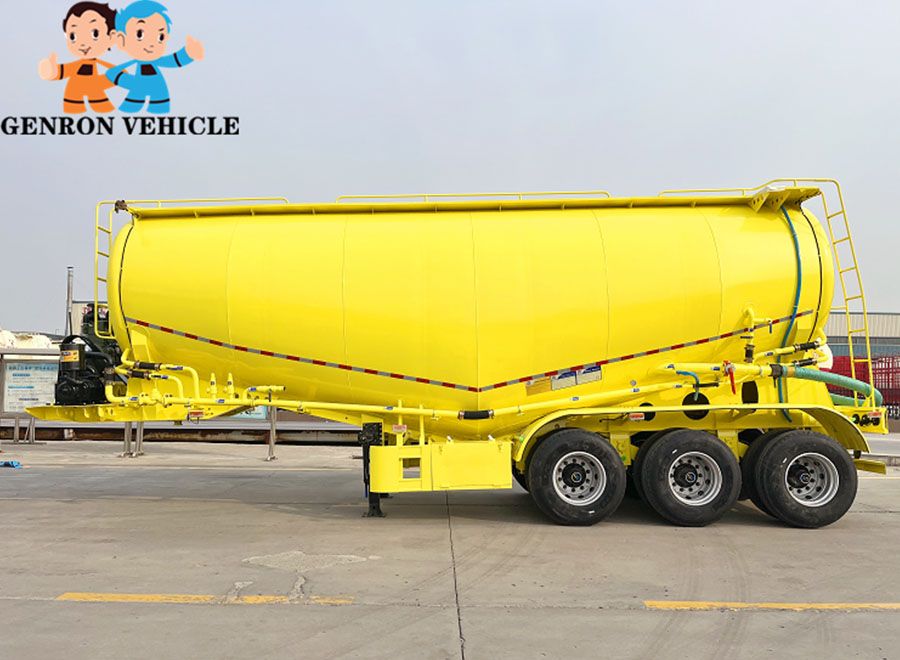
A bulk cement tanker and a receiving silo can both be described as compatible with pneumatic delivery while an important connection or site assumption remains unresolved. The hose route, inlet location, receiving equipment and responsibility for supplied assemblies need to be defined before a buyer treats the delivery system as complete.
This guide focuses on the procurement interface between a cement tanker and its intended receiving sites. It is not a discharge procedure, a pressure-setting guide or permission to connect unidentified equipment. The tanker manufacturer, hose supplier and receiving operator must assess the actual arrangement. A good enquiry makes their information requirements visible early enough to influence the equipment order.
List receiving sites as distinct operating cases
Prepare a site register showing the actual silos or receiving facilities the tanker will serve. Identify the operator responsible for confirming the interface at each location. Do not collapse different inlet heights, access arrangements and equipment boundaries into a general description such as cement depot delivery.
Mark confirmed information separately from estimates. If the receiving operator has not supplied a connection specification or relevant system information, retain that as an open item. The fleet can then decide which deliveries the proposed configuration covers and which require further review. This is more useful than buying a long hose and assuming it will make every site accessible.
Identify the powder and delivery requirements
Name the actual bulk product and provide the product information requested by the equipment suppliers. Cement, fly ash and other powders should not be treated as interchangeable merely because they can travel in similar-looking tankers. Product characteristics and acceptance requirements can affect the system and the receiving process.
Keep this enquiry distinct from a product-change or cleaning approval. If the fleet intends to carry several materials, identify those cases and obtain the relevant compatibility and contamination review. The receiving-interface specification should refer to an accepted product duty, not attempt to solve an undefined materials requirement through a generic hose, compressor or tank-volume description.
Describe the complete connection path
Use an interface drawing or clearly annotated site record to show the tanker outlet, proposed hose assembly, intermediate connections and receiving inlet. Identify the parts supplied with the vehicle and those belonging to the site. A shared nominal diameter does not establish that two couplings form a suitable complete connection.
Ask the responsible suppliers which dimensions, standards, ratings and material details they need to assess the actual assemblies. Keep component identification with the order. Avoid describing a connection as universal unless the supplier defines exactly what it covers. A commercial statement that adapters can be supplied should not replace confirmation of an accepted path between the stated vehicle and receiving equipment.
Measure a routed hose requirement, not a straight line
The distance from a parked vehicle to a silo is only part of the hose-routing discussion. Show the intended vehicle position, receiving inlet and the route available between them. Identify obstructions, changes in level and working-space constraints for the responsible designer to assess.
Do not select an assembly by stretching a tape measure directly between two points and adding an arbitrary allowance. The hose manufacturer’s requirements for the actual assembly and service matter. Provide site information and ask for an accepted routing and equipment proposal. A longer hose is not automatically a better solution if its handling, support or system implications have not been considered.
Keep hose length separate from system performance
A delivery-time claim should identify the actual system and receiving conditions behind it. Hose length alone cannot establish a discharge rate, and a compressor’s headline figure does not demonstrate performance at every site. Ask the responsible designer to state the duty and assumptions used for the proposed package.
Use a site matrix to compare the accepted cases instead of requesting one maximum-distance promise. If an offer has not been assessed for a particular route or receiving condition, record the exception. This keeps a preliminary equipment description from becoming an unsupported guarantee that the tanker will discharge any compatible powder through any available hose arrangement.
Specify a complete hose assembly
Identify the hose, end connections and any other required assembly elements through the appropriate supplier documentation. The combination, not just the hose tube, must be suitable for the stated service. Ask how the assembly will be marked and how the fleet will identify the correct replacement later.
Continental lists a cement-silo hose for applications including cement plants and silo trucks. That is a product-specific example, not confirmation that every industrial hose or GENRON-supplied assembly has the same duty. Use the actual assembly manufacturer’s current information and obtain confirmation for the proposed service, rather than select equipment from a familiar appearance or a catalogue category name. Continental: CONTI CEMENT SILO hose application information
Make storage part of the vehicle layout
Hoses and connections occupy space when the tanker is travelling. Specify the proposed storage method and show it on the trailer drawing. Consider the assembly dimensions, handling requirements and the access needed around other equipment. An empty-looking frame area is not automatically suitable storage space.
Ask what protection, retention and identification arrangements are included in the offer. Do not assume a supplied hose includes a suitable storage tube or that an existing tube accepts a revised assembly. When the hose package changes, review its effect on the vehicle layout and equipment scope. A clear storage plan helps prevent loose equipment from becoming an improvised addition after the trailer has already left the factory.
Confirm the receiving operator’s equipment boundary
Ask the receiving operator to state the site equipment and information it provides for the accepted delivery arrangement. The tanker supplier should not be expected to infer the receiving system from a photograph of an inlet pipe. Equally, the receiver should not assume the vehicle includes equipment absent from the agreed order.
Keep the responsibilities for connection acceptance, site readiness and the discharge operation explicit. This article does not assess a receiving silo’s pressure protection, ventilation or other safety systems. Those belong to the appropriate site-specific review. A trailer quotation should identify the interface information needed and the party responsible for supplying it, rather than imply that a vehicle feature makes an unverified receiving installation acceptable.
Compare tanker options without inventing delivery reach
GENRON’s three-axle bulk cement tanker and four-axle cement-tanker layout provide powder-tanker configurations to discuss. Their tank volume and axle arrangement are different purchasing inputs from the accepted delivery interface. Product links do not establish a universal hose reach, receiving height or unloading time for every powder and site.
Ask for the proposed tanker, air-supply package, outlet arrangement and carried assemblies to be documented together. Compare the complete configuration against the receiving-site matrix. Where one offer excludes a required assembly or relies on site equipment, show that alongside the price. A clearly defined exception is preferable to a broad performance statement that leaves the fleet unsure which customer deliveries are covered.
Use a site-survey example carefully
Suppose a hypothetical survey records a 14-metre horizontal separation between an accepted vehicle position and the receiving area. The usable hose route may differ because the path is not straight and the inlet is at another level. The survey should therefore record the actual geometry for the designer, rather than prescribe a 14-metre hose from one measurement.
The example provides no recommended hose length or operating limit. Its purpose is to show why the route record matters. Ask the equipment suppliers what additional information they require, then obtain their proposal for the complete arrangement. If the parking position later changes, review the effect instead of assuming the original route remains valid simply because the same silo is being served.
Plan for several sites without carrying unidentified alternatives
A fleet may need different accepted assemblies for different receiving interfaces. If so, label and document them clearly, with a record connecting each assembly to its permitted application. Do not turn a collection of adapters into an informal universal compatibility kit.
Include the storage and mass implications of the equipment carried. Ask how dispatch and operating staff identify the correct configuration and what process applies when a customer requests a connection not covered by the register. The objective is not to make every driver redesign an interface at the gate, but to give the fleet an agreed set of cases and a clear route for resolving a new requirement.
Agree inspection and replacement information
Obtain the relevant manufacturer instructions for the supplied assemblies, including identification, inspection and maintenance requirements. Define who retains those records and how replacement equipment is specified. A hose that looks similar or has the same nominal diameter should not be assumed interchangeable with the accepted assembly.
This guide does not provide an inspection interval or a repair method. Those details must come from the appropriate manufacturer and responsible maintenance programme. The purchasing decision should ensure that the information and service support needed for the supplied equipment are available. That is more practical than accepting an undocumented accessory on the assumption that any workshop can maintain or replace it later.
Document acceptance without improvising a discharge test
Agree how the supplied equipment and interfaces will be checked against the proposal before normal deliveries begin. Identify the drawings, component records, required services and the people responsible for acceptance. Where performance evidence is part of the order, state the product, system and receiving conditions to which it applies.
Do not substitute an improvised site trial for the appropriate design and safety review. The purchase record should make the intended duty and test responsibilities clear, while actual operations follow the relevant instructions and competent supervision. If information is missing, retain the affected decision as open rather than allow a successful-looking demonstration to imply acceptance of every future receiving condition.
Keep interface changes under control
At handover, connect the tanker identity, outlet arrangement, supplied assemblies and receiving-site register. Retain the accepted revisions and record unresolved cases. This allows the business to allocate the vehicle to known work without relying on one person’s memory of the initial equipment discussion.
Review changes to the powder, hose assembly, connection, parking position or receiving installation before using the previous acceptance as a reference. The same customer name does not mean the interface is unchanged. A small site alteration can affect a relevant assumption. Maintaining the register turns a one-time quotation into a practical fleet tool while keeping equipment selection, site responsibility and operating procedures in their proper roles.
Keep drawing information usable at the receiving site
A supplier’s detailed proposal is less useful if the receiving team cannot identify which drawing or assembly it describes. Give the accepted interface a reference linked to the site, tanker configuration and equipment list. Keep the record accessible to the people arranging the delivery and provide the receiving operator with the information needed to recognise the agreed setup.
Where a site uses several inlets, identify the one covered by the record rather than rely on the facility’s general address. If the operator requests another inlet, treat that as a change requiring the appropriate review. The distinction can be commercially important even when the new point appears nearby. A short, clear site reference prevents a confirmed arrangement for one connection from becoming an informal assumption that every connection at the same facility is equivalent.
FAQ: Cement-tanker hoses and receiving interfaces
Is a longer hose always the best way to serve more sites?
No. The complete routed arrangement, handling requirements and system duty need assessment. Length alone does not establish suitability or performance. Provide actual site information and obtain the responsible suppliers’ proposal. Do not treat additional hose as a universal answer to an unconfirmed parking position, receiving connection or delivery condition.
Do connections match if their nominal diameters are the same?
Not necessarily. The complete connection specification and assembly requirements must be checked. Give the relevant suppliers the actual dimensions, component identification and service information they request. A familiar-looking coupling or a generic adapter description is not evidence that the proposed path between tanker and receiving equipment has been accepted.
Does tank volume determine unloading reach?
No. Tank volume describes another aspect of the vehicle specification. Delivery capability depends on the actual product, system and receiving conditions assessed by the responsible parties. Ask what assumptions support a performance statement rather than infer a universal hose distance or receiving height from a 40-cubic-metre or other capacity label.
Should the hose-storage arrangement be included in the quotation?
Yes. Identify the carried assemblies and their intended storage, retention, protection and handling provisions. Show relevant equipment on the trailer drawing. A revised assembly may not fit an existing storage tube or leave the same access around other components, so storage should not be treated as an undefined detail to solve after delivery.
Can an old site acceptance cover a relocated silo inlet?
Do not assume so. Review changes to geometry, connection information and other relevant receiving conditions with the responsible parties. Keep the updated site record linked to the vehicle and assembly configuration. The fact that the business still delivers the same powder to the same customer does not establish an unchanged interface.
What should be ready before normal deliveries begin?
Retain the accepted equipment and site records, identifiable assemblies, relevant manufacturer instructions and clear responsibilities for operation, inspection and acceptance. Resolve any outstanding interface information before assigning the affected duty. This procurement guide does not replace the receiving operator’s safety review or the qualified procedures required for the actual discharge operation.
Product Options to Discuss
Product pages identify layouts to discuss, not acceptance of a specific load or proof that every optional component is included. Confirm the order-specific configuration with the responsible suppliers.
Related Reading
Bulk Cement Tanker Air Supply: Compressor Matching and Discharge-Site Questions
Bulk Cement Tanker Trailer Buying Guide: Structure & Selection


