
 English
 Français
 Español
 Árabe
 Deutsch
 简体中文
 Português
 Русский
 日本語
 한국어
 हिंदी
 Prancis
 Türkçe
 Tiếng Việt
 Italiano
 ไทย

A tanker can have the requested capacity and compartment layout yet still be unsuitable for the loading depot. The problem may be a connection, an interface height, a control arrangement or documentation the terminal requires before admitting the vehicle.
These are easier issues to resolve before manufacture than at the first loading appointment. This guide explains how to assemble a terminal-interface schedule for quotation and acceptance. It is not an operating instruction for loading, unloading or modifying a fuel tanker.
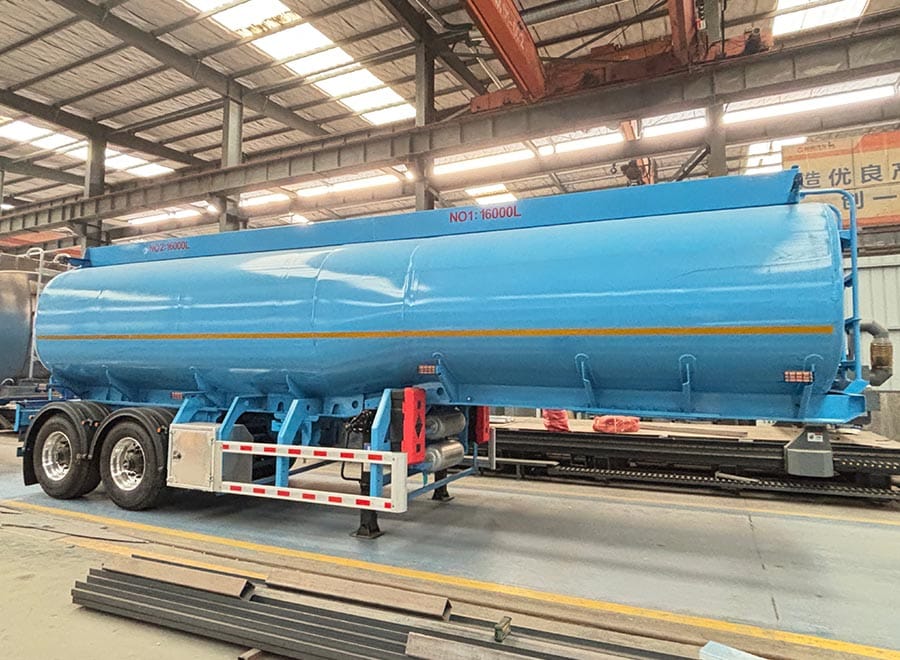
Begin with the terminal, not a preferred equipment label
Ask each loading terminal for its current vehicle-acceptance requirements. Identify the products handled, the permitted loading arrangements and any restrictions on the vehicle configuration. Record the document revision and a contact who can clarify technical questions.
A route may involve more than one terminal. List them separately rather than assuming a vehicle accepted at the first depot will be accepted elsewhere. Differences can involve connection standards, access, vehicle identification or control systems as well as the basic loading method.
Give the trailer supplier the actual requirements rather than an informal summary such as “standard bottom loading.” If some documents are unavailable at enquiry stage, identify that as an open item. An undefined interface should not quietly become a confirmed feature in the sales description.
Use top and bottom loading as descriptions, not complete specifications
In broad terms, top loading introduces product through an upper loading arrangement, while bottom loading uses a lower product connection and the associated system. Those descriptions do not identify all the equipment, safeguards or approvals needed for a particular product and installation.
Do not assume that one arrangement is universally suitable or that an existing tanker can be converted simply by adding a lower connection. A proposed conversion requires the responsible manufacturer and competent specialists to assess the vessel, equipment, controls and applicable requirements.
For procurement, request a defined loading-system description with a drawing and equipment schedule. State whether a single method or more than one approved method is required. Any alternative operation needs to be expressly covered; it should not be inferred from the presence of an access opening or unused fitting.
A terminal-interface schedule for quotation review
| Interface | Information to match | Evidence to retain |
|---|---|---|
| Product transfer | Connection specification, location and intended service | Terminal requirement and vehicle equipment reference |
| Vapour system, where required | Connection and system requirements | Reviewed system description and terminal acceptance |
| Electrical and control systems | Applicable interface and functional requirements | Equipment specification and agreed verification scope |
| Compartment identification | Product path and compartment mapping | Consistent labels, drawing and operating documentation |
| Physical access | Connection heights, working space and vehicle envelope | Arrangement drawing and site review |
| Vehicle acceptance | Inspection and document requirements | Named acceptance process and unresolved-item list |
Match the complete interface, not just the coupling shape
Two fittings may appear similar while differing in specification or intended duty. Request the precise equipment references and the terminal’s required connection information. Appearance in a photograph is useful for orientation, but it is not a compatibility check.
Include the space around the interface. Guards, cabinets, hoses, operating handles and adjacent fittings can affect access even when the connection itself is correct. A drawing should show the arrangement as it will be delivered, not only a catalogue image of an isolated component.
Keep product-transfer, vapour and control interfaces distinct in the schedule. Acceptance of one does not establish acceptance of the others. If an item is described as optional, identify who decides whether it is needed and when that decision must be made to avoid an incomplete delivered system.
Compartment mapping needs one consistent naming system
A compartment schedule should connect the physical compartments, relevant connections, labels and documents. If different drawings use different numbering directions, resolve the mismatch before the vehicle is placed in service. A clear identification scheme is valuable precisely because the equipment may be handled by several organisations.
Describe which products the tanker is intended to carry and how product separation is addressed in the proposed system. Do not infer that several compartments automatically provide independent product paths in every configuration. The equipment schedule and drawings should explain the actual arrangement.
At handover, check that the vehicle labels match the accepted documents. Any component substitution or revised connection layout should be reflected in the final records. An old drawing with handwritten assumptions is a poor basis for terminal acceptance or future maintenance.
Separate factory scope from terminal acceptance
The factory can supply and verify equipment within an agreed scope, while the terminal may retain its own acceptance process. Define these responsibilities at order stage. “Ready for loading” is too broad unless the parties agree what evidence and acceptance it includes.
Ask for a verification plan that identifies the checks required by the responsible specialists and terminal. This article does not prescribe live-product testing or ask anyone to bypass a terminal procedure. Any commissioning activity must follow the approved arrangements and applicable requirements.
HSE’s guidance on petrol delivery highlights risk assessment and the responsibilities of the parties involved. That is useful context for defining a clear handover, but its Great Britain regulatory framework should not be copied as a universal destination requirement. The actual terminal and local competent authorities must determine what applies.
Further source information:
Compare an apparently cheaper quotation fairly
Imagine two proposals for the same nominal tank capacity. Proposal A identifies the terminal interface documents, lists the supplied equipment and states the acceptance exclusions. Proposal B says only “bottom loading system included.” The second proposal is less defined, even if its price is lower; it is not necessarily equivalent.
Send both suppliers the same interface schedule and ask them to mark included, excluded or awaiting clarification against every line. Obtain the cost and delivery implications of open items. This turns a vague equipment comparison into a manageable scope review.
The same approach helps if a second terminal is added later. Compare its requirements with the existing vehicle schedule and refer differences for review. Do not promise fleet-wide compatibility from one successful loading appointment or from another operator’s experience with similar-looking equipment.
Fuel-terminal enquiry brief
Product names and intended service:
Loading terminals and requirement-document revisions:
Required loading method or approved alternatives:
Product-transfer connection specifications and positions:
Vapour, electrical and control interfaces where applicable:
Compartment and product-path identification scheme:
Factory verification scope and terminal acceptance responsibility:
Open items, exclusions and required decision dates:
Review document changes before they become equipment changes
Terminal requirements can be revised while a vehicle is being manufactured. Identify who receives updates and who checks whether they affect the accepted equipment schedule. Without that responsibility, a supplier can build to an older document while the buyer assumes the newest requirement has been included.
A change register should describe the requirement, the affected vehicle interface and the agreed response. It should also state whether the factory scope, terminal acceptance or delivery timing changes. Keep the old and new references visible so that the reason for a component substitution can be understood later.
At handover, provide one final interface schedule rather than a folder of conflicting versions. That schedule can become the starting point for adding another terminal or ordering replacement equipment. It also helps prevent an otherwise straightforward maintenance purchase from introducing a component that was never assessed for the accepted system.
Fuel-tanker loading-interface questions
Is bottom loading always better than top loading?
There is no universal purchasing answer. The appropriate arrangement depends on the product, terminal, vehicle design and applicable requirements. Start with an accepted operating system rather than a general preference.
Does a matching coupling prove terminal compatibility?
No. The complete product-transfer, vapour and control arrangements, physical access and acceptance documentation may also matter. Review the whole interface schedule.
Can a tanker serve several terminals?
Potentially, if its defined configuration meets each terminal’s requirements and is accepted through the relevant process. List each site separately and resolve differences before promising compatibility.
What should be confirmed before manufacture?
At least the intended duty, terminal requirements, equipment scope, interface drawing, identification scheme and acceptance responsibilities. Unresolved items should have named owners and agreed decision dates.
Related Reading
Sources and Scope
These are Great Britain safety references, not proof of compliance in another country or approval of a GENRON loading system. The article is a specification checklist, not a fuel-transfer or conversion procedure.


