
 English
 Français
 Español
 Árabe
 Deutsch
 简体中文
 Português
 Русский
 日本語
 한국어
 हिंदी
 Prancis
 Türkçe
 Tiếng Việt
 Italiano
 ไทย

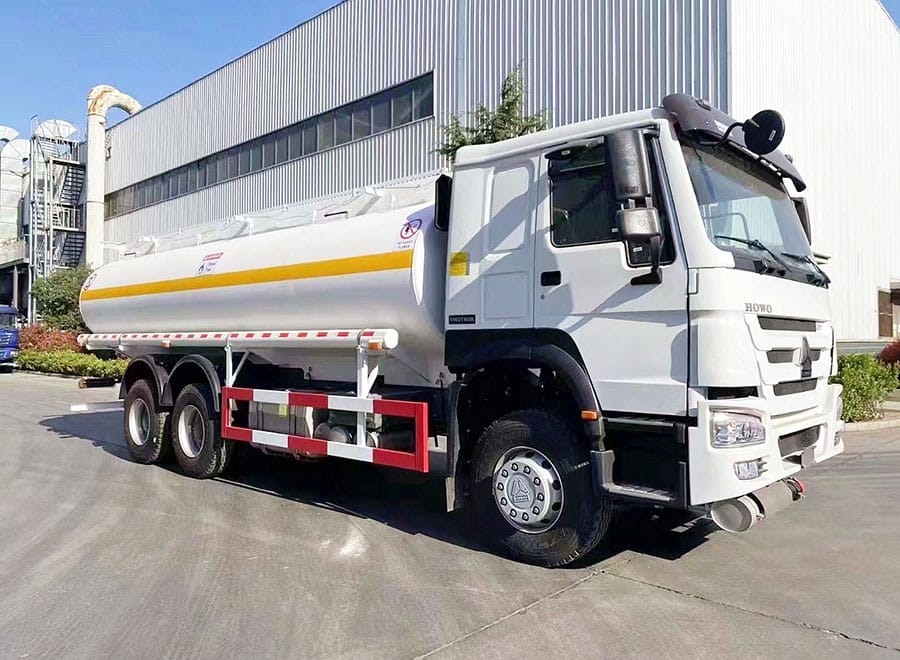
A fuel tanker truck carries its tank on the truck chassis. A fuel tanker semi trailer carries its tank on a trailer coupled to a tractor. Choose between these arrangements by testing the actual delivery duty, site access, reviewed product quantity and fleet resources. The larger nominal tank does not automatically produce the better service or the lower cost for a particular route.
This guide, prepared on 29 October 2026, compares purchasing decisions rather than prescribing a universal vehicle size. Product-family descriptions can help shortlist candidates, but the final choice needs the current parameter table, proposed equipment and configuration-specific assessment. Site access and delivery-system requirements should be documented before the fleet assigns commercial value to extra nominal litres.
The fuel tanker capacity guide covers the broader capacity question. The article on litres, tonnes and quotation definitions explains why a volume description is separate from product mass. Here the focus is choosing the vehicle arrangement that can complete the required deliveries with the fleet and sites available.
Which delivery records should shape the first shortlist?
Start with the sites, products, order sizes and time windows the vehicle must serve. Group the routes into duties that are actually similar. A long-distance bulk transfer between established terminals presents a different purchasing question from several smaller deliveries to constrained receiving sites. The same daily total can therefore produce different shortlists once the route and equipment details are included.
Use recent operating records where available. Record ordinary days, peak demand and known exceptions rather than relying on one idealized journey. Identify the work that would remain on another vehicle if a new tanker could not access a site or meet a delivery window. The cost of that remaining work belongs in the comparison, even when the new vehicle has unused tank volume.
For a new operation, distinguish confirmed information from assumptions. A customer address is not a completed access assessment, and a verbal statement that large trucks enter the site is not a configuration-specific check. List the missing surveys and customer confirmations so the shortlist can be revised before the order. This avoids selecting the tank volume first and discovering the receiving constraints later.
How should site access be compared?
Give the responsible reviewer the actual proposed vehicle dimensions and the receiving-site information. The assessment should consider the route and site conditions relevant to the duty, including the entrance, internal movement, standing location and connection arrangements. A truck-mounted tanker can still be unsuitable for a particular site, while a semi trailer can work well at a site designed for that configuration.
Do not reduce access to total length alone. Wheelbase, steering arrangement, trailer geometry and the proposed movement path can all matter to the review. Request the information needed for an appropriate site assessment rather than making an assumption from axle count or a side-view photograph. Keep the reviewed configuration linked to the supplier's drawing revision so later changes are visible.
Ask the customer or site operator to confirm the receiving arrangement and applicable access process. Commercial planning should include time spent obtaining access, positioning and completing site requirements. If one candidate requires a different receiving arrangement, record the cost and responsibility for that change. The vehicle comparison then reflects the complete service rather than comparing nominal tank sizes in isolation.
How do capacity and product mass change the choice?
Compare each candidate's documented capacity basis and its assessed product quantity for the proposed duty. A litre figure on a truck-family page and one on a trailer-family page may be broad descriptions rather than directly comparable operating quantities. Obtain the configuration-specific tank schedule and the appropriate mass information for each candidate before calculating trips or revenue.
For a truck-mounted tanker, clarify the chassis and equipment included in its empty-mass basis. For a semi trailer, clarify the trailer figure and the proposed tractor combination. Add operating items consistently. A comparison that includes the complete rigid truck but only the bare trailer on the articulated side will exaggerate the latter's apparent mass advantage and distort the commercial decision.
Show the fleet's actual product cases to the supplier. Changes in the product-density basis can alter the relationship between a mass constraint and a volume requirement. The result should remain traceable to the product documentation and reviewed vehicle configuration. Do not assume a universal tonnes-to-litres conversion or use the largest advertised volume as a guaranteed quantity for every contract.
What difference does the existing tractor fleet make?
A semi trailer proposal may be commercially attractive where a compatible tractor and the required fleet capability are already available. Establish whether that tractor is actually available for the intended shifts, not merely listed in the fleet inventory. A tractor committed to other work can create a scheduling cost that disappears from a trailer-only price comparison but reappears during operation.
Include compatibility and changeover requirements in the technical and operating review. The coupling, braking, electrical and any equipment interfaces need to be addressed for the actual combination. If several tractors might be assigned, identify them and obtain the appropriate assessment. General familiarity with a trailer type does not demonstrate that every tractor in the fleet is interchangeable for the proposed tanker duty.
A truck-mounted tanker integrates the tank duty with its chassis, which may simplify some fleet allocations but ties those assets together. Compare that arrangement with the proposed tractor and trailer allocation using the fleet's maintenance and scheduling records. The useful question is which assets remain available to serve contracts under the actual plan, including maintenance periods and other commitments.
How should delivery equipment be compared?
Use a common delivery-system brief for both candidates. Identify the products, receiving arrangements, required measurement scope and the equipment expected in the quotation. Then compare the installed pump, meter, hoses, controls and supporting records as the actual offered system. A vehicle type does not by itself establish that the equipment suits the customer's transfer or measurement requirements.
Where power is needed for equipment, ask the supplier to identify the proposed power source, compatibility and included installation work. The answer may affect the vehicle specification, mass basis and commissioning scope. Keep responsibility for integration explicit, especially where equipment is supplied or installed by another party. A component list alone can leave the buyer with an incomplete operating system.
Compare service access and replacement support with the fleet's workshop resources. Ask which equipment documents, spare parts information and training are included. If a proposed system requires destination work, record the workshop capability, cost and expected downtime before service. A lower vehicle price may not represent the lower delivered-service cost when installation or acceptance work has been omitted.
How do you compare trip cycles and operating costs?
Calculate a complete trip cycle for each candidate using the route it can actually serve. Include terminal activities, travel, site service, return movement and the relevant scheduling constraints. A vehicle that carries more product can still complete fewer useful trips if the proposed route or receiving arrangements consume more time. Measure completed deliveries rather than litres divided by purchase price.
Consider an invented duty requiring 60,000 litres per day on a common quantity basis. One candidate might serve it in several smaller trips, while another might need fewer departures. Neither result is established until the reviewed quantity per trip and realistic cycle durations are known. Add driver and terminal availability before deciding that either schedule fits within the intended working period.
Use fleet records for costs wherever possible. Compare the complete vehicle or combination, expected route work, required personnel and the maintenance support available. Keep estimated fuel consumption or maintenance assumptions identified as estimates. Avoid assigning universal savings to one arrangement; the result depends on utilization, contracts, actual configuration and the costs the business will incur.
What happens during maintenance or a service interruption?
Assess the fleet response to an unavailable chassis, tractor, tank or delivery-system component. The consequences can differ between an integrated truck and a tractor-trailer operation, but flexibility exists only where compatible equipment, qualified personnel and the relevant operating process are available. Document the backup arrangement rather than assuming a detachable trailer automatically eliminates downtime.
Use representative interruptions from the fleet's records. If delivery equipment is unavailable, identify which customers another unit can serve and which contracts need external cover. If a tractor is unavailable, confirm whether a proposed substitute is part of the reviewed combination scope. Include the cost and availability of substitute assets when calculating the value of fleet flexibility.
Ask suppliers for support information linked to the actual configuration. Component identification, maintenance documents and parts availability are more useful than a general promise of after-sales service. Purchasing should know which party handles tank, chassis and delivery-equipment issues, particularly when those items have separate suppliers. A clear responsibility map can shorten the route from a fault report to the correct support contact.
What should a comparable GENRON enquiry include?
For a truck-mounted candidate, request the current configuration information for the SINOTRUK HOWO fuel tanker truck. For a semi trailer candidate, request the relevant carbon steel fuel tanker semi trailer specification. State the same products, routes and delivery-equipment expectations so the two proposals can address the same commercial duty.
Include receiving-site records, daily orders, intended working periods and available tractor information. Ask for a written capacity definition, equipped-mass basis, dimensions and included documents for each proposal. Identify any destination-specific assessment that remains outside the quoted supply scope. These fields let the business compare actual candidates without treating a broad product-family range as an accepted operating specification.
Send the enquiry through GENRON's contact page with the decision you want to evaluate. If the fleet is considering a mixed arrangement, describe which routes may use each vehicle type. The strongest purchase plan may allocate different duties to different configurations rather than forcing every customer and every order into one nominal capacity target.
What evidence should be gathered before the shortlist is closed?
Give both candidates the same evidence standard. If access for one vehicle is supported by a site assessment while the other relies on an unverified assumption, the resulting comparison is not balanced. Identify the outstanding information for each candidate and obtain it before using access, turnaround or delivery readiness as a deciding advantage in the purchase proposal.
Connect the supplier's proposed dimensions and equipment with the actual customer records. Ask the fleet to confirm whether the proposed arrangement would serve the listed orders, and ask the relevant technical reviewers to identify the conditions assessed. The purpose is a documented shortlist with explainable differences, rather than a decision based on which vehicle looks more familiar to the purchasing team.
Where a candidate remains provisional, state what evidence could remove it from consideration or make it preferred. That threshold helps the business focus its next enquiry or site visit. It also prevents repeated discussions of nominal capacity after the real decision has shifted to an unresolved interface, an unavailable tractor or a receiving-site restriction that only one candidate can address.
Frequently asked questions about tanker trucks and semi trailers
Is a tanker truck always easier to access small delivery sites?
The actual vehicle and site need assessment. A truck-mounted arrangement does not guarantee access, and total length alone does not describe manoeuvring requirements. Give the reviewer the proposed configuration, entrance and internal movement information, standing location and receiving connections. Compare candidates using that assessment, then include any required site changes or alternative delivery arrangements in the commercial plan.
Is a semi trailer always the right choice for large daily demand?
High demand is a reason to evaluate a semi trailer, but the result depends on reviewed trip quantities, access, delivery time and fleet resources. Some duties may need a mixed fleet or several smaller deliveries. Compare complete schedules using the actual contracts. A larger nominal tank helps only when its additional volume can be used within the vehicle, site and operating conditions assessed.
Can I compare a trailer-only quotation with a complete tanker truck price?
Only after adjusting the comparison boundary. Include the tractor, required equipment, installation and other costs needed to provide the same service. An existing tractor can have a real allocation cost even if the business already owns it. Record both purchase cash requirements and the operating resources committed, so the lower quoted line item is not mistaken for the lower complete service cost.
Can an existing tractor be used with any fuel tanker semi trailer?
Compatibility needs review for the actual combination and equipment. Provide the tractor data and identify relevant coupling, braking, electrical and power interfaces. If several tractors may be assigned, include them in the enquiry. A nominal tank capacity, matching brand name or previous use with another trailer does not demonstrate compatibility with the proposed tanker configuration and delivery-system scope.
Which vehicle type is cheaper to maintain?
Use the proposed equipment, fleet workshop capability and supplier support information to estimate that cost. Vehicle type alone cannot establish a universal maintenance saving. Consider the chassis or tractor, tank, delivery equipment, parts support and service interruption response. Historical records from similar work are more useful than an unsupported percentage advantage attached to one vehicle category.
What evidence helps choose a mixed fleet?
Separate the routes by assessed access, order pattern and delivery-system requirements, then compare which candidates can serve each group. Model ordinary and peak days with the vehicles and personnel actually available. A mixed fleet is justified when the resulting schedules and costs support the contracts more effectively. Keep the assumptions and remaining technical checks visible so the allocation can be revised when the duty changes.


