
 English
 Français
 Español
 Árabe
 Deutsch
 简体中文
 Português
 Русский
 日本語
 한국어
 हिंदी
 Prancis
 Türkçe
 Tiếng Việt
 Italiano
 ไทย

Fuel tanker tare weight is useful for purchasing only when its configuration and measurement boundary are clear. A bare trailer estimate, a tanker fitted with delivery equipment and an operating tractor-trailer combination are different mass figures. Comparing them without identifying the differences can create a false payload advantage and an inaccurate estimate of the quantity the fleet can deliver.
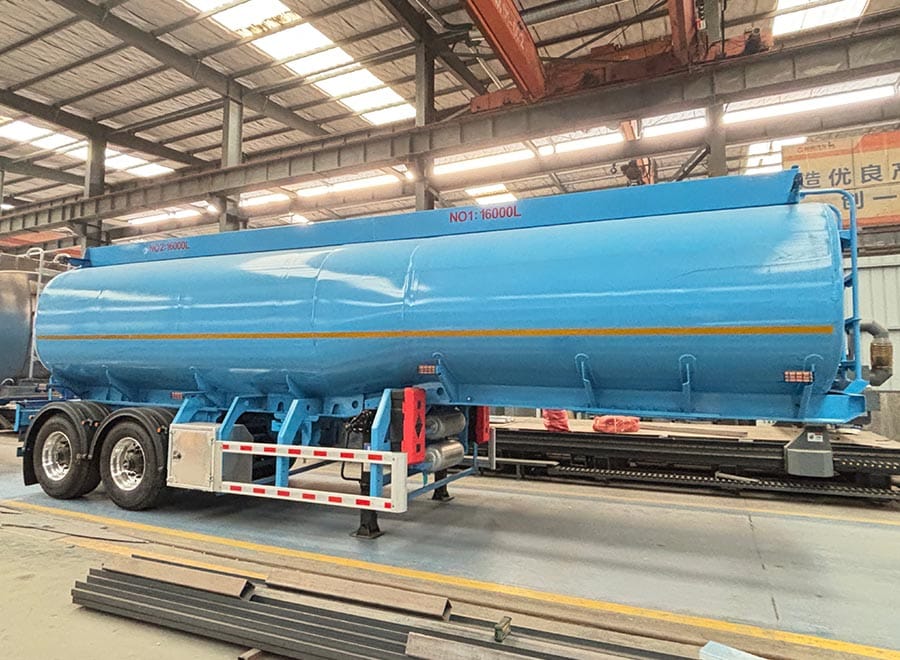
Prepared on 29 October 2026, this guide explains how to request and reconcile empty-mass information during procurement. It focuses on the evidence behind the number and the scope included in competing offers. Final operating quantities still require the relevant vehicle, product, route and tank assessments; a low tare figure alone does not establish acceptance of a proposed load.
Start with the fuel tanker capacity guide if the vehicle categories are unfamiliar. The article on quotation capacity definitions explains the volume and mass distinction. The next useful question is whether the empty-mass input represents the actual vehicle and equipment being purchased.
Which mass boundary does the supplier's figure describe?
Ask the supplier to name the boundary in writing. Does the figure describe a bare tank assembly, a completed trailer, a truck-mounted tanker or a tractor and trailer combination? Does it come from a preliminary estimate or a record for an identified unit? These questions should be answered before the number enters a payload or price comparison.
For semi trailers, identify the proposed tractor separately when the assessment concerns combination mass. A completed trailer figure can be entirely correct while still being incomplete for a combination calculation. Likewise, a complete truck-mounted tanker should not be compared with an unmounted tank assembly. The purchasing worksheet needs consistent boundaries on both sides of the comparison to support a useful decision.
Give each mass figure a source, date and configuration reference. Record whether optional equipment is included and whether the figure will be verified later. A sales spreadsheet that simply lists tare weight next to capacity leaves too much interpretation to the buyer. A clear boundary makes the number usable and gives delivery inspection a defined item to check.
What equipment must be included in the comparison?
Create a common equipment schedule before comparing proposals. Identify the tank arrangement, running gear, landing gear where applicable, spare-wheel provision and the delivery equipment requested by the fleet. Include the pump, meter, hose storage or reel, controls and mounting items that form part of the offered system. Specify quantities and configuration references rather than relying on broad descriptions.
Ask the supplier to identify exclusions explicitly. An offer may describe a delivery-ready tanker while leaving some equipment to a destination installer. Another offer may include those items before dispatch. Their empty-mass figures are not comparable until the scope difference is reconciled. The price comparison needs the same adjustment, including installation, testing and the relevant acceptance work.
Separate permanent supplied equipment from operating items whose mass depends on the fleet's condition of use. Request the appropriate basis for vehicle fuel, personnel, tools and other items in the operating calculation. This prevents double counting when a weighing record already includes an item that the spreadsheet adds again. The boundary statement should be understandable to both the supplier and the fleet.
How should an estimated mass be used before manufacture?
An estimate can support an early comparison when its basis and limitations are identified. Ask which drawing and equipment schedule it represents, which items remain provisional and how the final figure will be verified. The estimate is then a controlled purchasing input. It should not be presented with more certainty than the supplier's design and equipment decisions actually support.
For example, two offers might initially show estimates that differ by 400 kg. If their equipment schedules are still incomplete, that difference may not survive final specification. Ask for the mass effect of the remaining choices before treating the entire gap as an assured cargo benefit. The purpose is to evaluate the documented candidates, not to select whichever preliminary number is smaller.
Agree how a material change in the final specification will be handled. The contract can identify the required evidence, review process and responsibility for resolving differences. Avoid inventing an arbitrary acceptance tolerance without technical and commercial agreement. A useful process connects the estimate to the final supplied configuration and explains what happens when those inputs differ.
What makes a weighing record useful at acceptance?
A useful record identifies the unit and the condition in which it was weighed. Match the vehicle identification and configuration to the order, and record the installed equipment and relevant operating state. The purchasing team should know whether the record covers the trailer alone, a complete truck or a combination. A mass value without that context cannot resolve a boundary mismatch.
Retain the weighing details required by the agreed process, including the date, scale or facility identification and the stated units. Where axle or group information is part of the assessment, obtain the appropriate record rather than assuming a single total provides it. The responsible parties should determine the weighing and verification method suitable for the actual acceptance question.
Reconcile the result with the final equipment list. If additional items are installed after weighing, their effect must be addressed through the agreed process. A pre-installation record should not remain labelled as the final equipped condition. Similarly, changing the tractor means a previous combination record may no longer represent the vehicle that operations plans to use.
How does lower tare translate into product volume?
Under an otherwise identical reviewed mass constraint, a lower equipped operating empty mass can increase the available product-mass allowance. The volume equivalent depends on the documented product-density basis. Other conditions can still limit the intended quantity, so the purchasing comparison should show both the arithmetic and the assessment that determines whether the potential benefit can be used.
Consider a purely hypothetical reduction of 600 kg and an invented density of 0.80 kg/L. The arithmetic equivalent is 750 litres. This is an illustration of sensitivity to empty mass, not a promise for a named fuel or an approved increase in loading quantity. A different density basis or another binding constraint changes the result and must be recorded.
Compare the commercial significance of that potential quantity with the fleet's contracts. If normal order sizes leave ample unused space and the trip schedule remains unchanged, the mass reduction may not remove a delivery or vehicle. It may still have value for another documented duty. The purchase recommendation should explain where the benefit occurs rather than assuming every kilogram creates immediate revenue.
Is aluminium always the better choice for a low tare target?
Material choice needs a configuration-specific comparison. An aluminium product-family name does not establish the exact mass difference between two equipped offers. Tank design, capacity, equipment, running gear and other specification choices affect the total. Ask for current parameter tables and the written proposal for the actual candidate rather than assigning a generic percentage advantage to a material.
GENRON's aluminium fuel tanker semi trailer and carbon steel fuel tanker semi trailer families provide starting points for that enquiry. Keep the product and duty requirements consistent when requesting offers. Material compatibility, required documentation and the intended operating conditions must be addressed alongside mass and purchase price.
The fleet should also compare repair support, equipment service and the capabilities available in its operating area. These costs depend on the proposed unit and service network. A lower tare target is a purchasing objective, but the business still needs a tanker that can be maintained and supported under its actual working conditions over the intended ownership period.
Why can a shipping mass differ from operating empty mass?
Export arrangements may involve a transport configuration that differs from the completed operating vehicle. Parts or equipment can be packed separately under an agreed shipment plan. The mass shown on a packing or shipping document may therefore answer a transport question rather than the fleet's equipped operating question. Identify the document purpose before copying its figure into the payload worksheet.
Ask which items will be fitted before dispatch and which require destination assembly or installation. The supplied equipment list should connect the shipment packages with the final configuration. Where destination work changes the equipped mass, establish how that final state will be documented and verified. A shipping record should retain its original purpose rather than being relabelled as final vehicle acceptance evidence.
Keep responsibility for destination work explicit. The vehicle supplier, freight provider and receiving workshop may each control different parts of the process. Purchasing should know who confirms completion, who supplies the revised equipment records and who closes the remaining assessment work. That clarity is more valuable than trying to force several different document masses into one unexplained tare figure.
How can the fleet control mass changes after purchase?
Retain a configuration record for each tanker and update it through the fleet's normal change process. Replacement equipment, new hose systems, additional storage or a different tractor can alter an earlier operating calculation. Record the change and obtain the relevant review instead of continuing to use an original sales estimate after the supplied configuration has evolved.
Ask operations and maintenance to identify proposed equipment changes before they are treated as routine procurement. A small purchase can have integration and mounting implications beyond its own mass. The relevant technical parties should establish the required assessment, documentation and acceptance steps. Purchasing can support that process by keeping component identification and supplier information traceable.
For a new enquiry, send GENRON the desired duty, proposed tractor and common equipment schedule through the contact page. Request a configuration-specific mass basis, a list of exclusions and the intended verification process. Those details make the supplier's response easier to compare and give the fleet a practical path from a preliminary estimate to an accepted equipped vehicle record.
How can a mass difference be reconciled without losing its cause?
Maintain a change ledger between the quoted estimate and final equipped record. Each entry should identify the specification change, the document that introduced it and the way its mass effect was established. Include both additions and removals. The ledger lets the receiving team explain a difference instead of treating an unexplained total as evidence that either document must be wrong.
Keep calculated item effects separate from measured totals. The sum of component estimates can help explain a change, but it should not be relabelled as a weighing result. Equally, a measured total does not automatically identify the source of every difference. Use the appropriate evidence for each purpose and have unresolved discrepancies reviewed through the agreed supplier and fleet process.
Once the configuration is accepted, retain a clear baseline for later maintenance and equipment changes. The fleet then has a reference for deciding whether a replacement is equivalent or requires further review. A traceable baseline is useful throughout ownership because it connects the physical unit, installed equipment and mass assumptions that supported the original capacity and service plan.
Frequently asked questions about fuel tanker tare weight
Is tare weight the same as payload?
Tare describes an empty-mass condition whose boundary must be defined. Payload describes cargo mass under the relevant assessed conditions. One is an input to a purchasing calculation, while the other depends on additional constraints and assumptions. Ask the supplier to identify the configuration and source of each figure so a correct empty-mass record is not confused with a product-capacity guarantee.
Should a pump and meter be included in quoted tare?
Their treatment should follow the explicitly agreed comparison boundary. If the quotation represents the equipped tanker with those items installed, the mass basis should reflect that scope or state any exclusion clearly. Competing offers need the same equipment basis. An omitted system can make one offer appear lighter until the fleet adds the installation and revises the calculation.
Can the brochure weight be used in a purchase calculation?
A brochure value can support initial screening if its configuration and status are understood. Request the current proposal-specific figure, equipment schedule and planned verification evidence before finalizing the comparison. Product-family descriptions can cover several configurations. The number associated with one example should not be assigned automatically to a different capacity, compartment layout or installed delivery system.
Does a weighing ticket need to identify the tractor?
If the record is used to represent a tractor-trailer combination, the tractor identity and relevant operating condition need to be traceable. For a trailer-only record, the boundary should be equally clear. The agreed verification process determines the detailed records required. Purchasing should reconcile that boundary with the calculation instead of treating every mass ticket as evidence for the same complete vehicle.
Should we compare purchase price per kilogram saved?
That ratio can be one commercial input, but it is incomplete without the actual duty. Establish whether the mass difference increases the reviewed delivery quantity, reduces trips or serves another valuable requirement. Include equipment scope and support costs. A theoretical mass advantage with no effect on the fleet's work should not be valued as though every available kilogram produces saleable cargo on every trip.
What if equipment is added after the final weighing?
Record the change and follow the agreed technical and operating review process. The earlier ticket still describes the earlier condition, so it should not be presented as a record of the newly equipped unit. Update the configuration documents and the relevant mass and load assessments. Keeping the history visible helps the fleet understand why an accepted purchasing calculation has subsequently changed.


