
 English
 Français
 Español
 Árabe
 Deutsch
 简体中文
 Português
 Русский
 日本語
 한국어
 हिंदी
 Prancis
 Türkçe
 Tiếng Việt
 Italiano
 ไทย

A fuel tanker capacity stated only in gallons is incomplete. US liquid gallons and imperial gallons represent different volumes, so the quotation must identify the unit before the buyer compares tank sizes or delivery quantities. State litres alongside the specified gallon unit, retain the conversion basis and keep nominal tank capacity separate from the quantity accepted for actual operation.
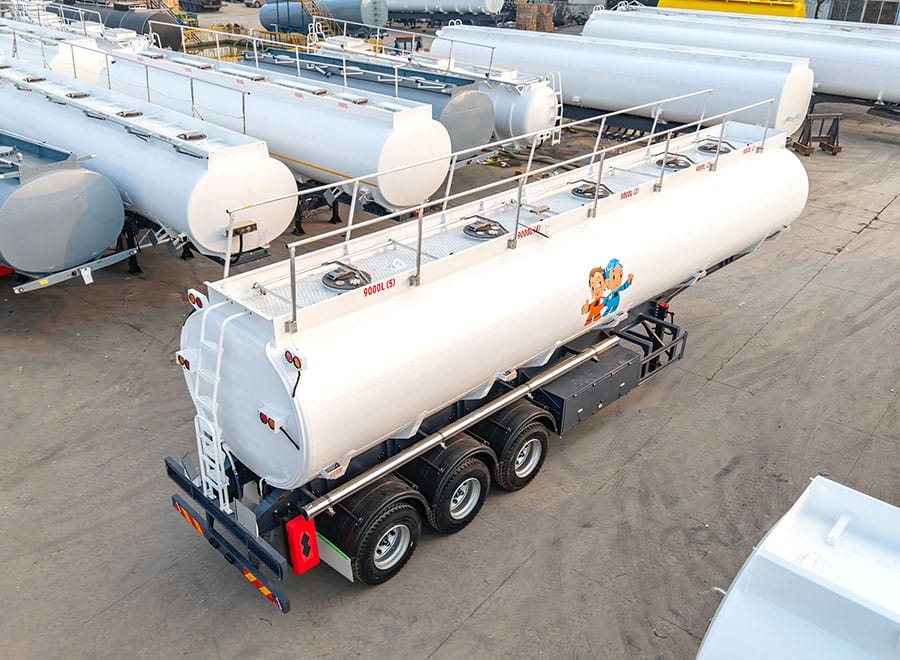
Prepared on 29 October 2026, this guide addresses a common cross-border purchasing problem: the same word can create two different specifications. It also explains why a correct unit conversion cannot resolve an undefined capacity basis, an inconsistent measurement condition or a vehicle-mass constraint. Those questions require their own records and review.
For a broader introduction, use the fuel tanker capacity guide. For the distinction between volume, product mass and quotation terms, read fuel tanker capacity in litres and tonnes. This article concentrates on the gallon-unit decision so a conversion error does not enter the enquiry or purchase order.
Which gallon does the quotation mean?
Ask the supplier to write US liquid gallon or imperial gallon wherever that unit appears. Do not infer the answer from the supplier's location, the customer's country or a screenshot of another order. Cross-border trade can involve specifications, equipment and customers using different conventions. A clear written unit is easier to inspect than an assumption about local habits.
The NIST conversion reference distinguishes the two units. One US liquid gallon equals 3.785411784 litres; one imperial gallon equals 4.54609 litres. Use the US liquid measure for that stated calculation. A US dry-volume unit should not enter a liquid-fuel tanker enquiry simply because a converter offers several similarly named options.
Keep the unit attached to the value when information moves between documents. A spreadsheet heading that says gallons may be forgotten when a cell is copied into an email. Write the value and its unit together in customer-facing schedules, drawing notes and quotation comparisons. The small amount of repetition protects the specification against a much larger ambiguity.
How do you convert litres into US or imperial gallons?
Divide litres by the appropriate litres-per-gallon factor. For US liquid gallons, divide by 3.785411784. For imperial gallons, divide by 4.54609. Use multiplication by the same factor when converting the specified gallon unit back into litres. Keep the calculation in sufficient precision internally, then round the displayed result to a level appropriate for the document's purpose.
For an illustrative nominal volume of 40,000 litres, the results are approximately 10,566.9 US liquid gallons or 8,798.8 imperial gallons. These two gallon figures describe the same volume, not two tanker sizes. The nominal capacity definition remains unchanged by the conversion. Neither displayed gallon value establishes an accepted operating or delivered quantity for a real tanker.
Use a comparison table only after the litre basis has been defined. The following rounded values are unit conversions of candidate nominal volumes. They are not a model availability list or a schedule of approved loads. A purchasing team should retain the original figure, unit and supporting document so later rounding does not obscure the specification used for the order.
| Nominal litres | US liquid gallons, approximate | Imperial gallons, approximate |
|---|---|---|
| 40,000 L | 10,566.9 | 8,798.8 |
| 45,000 L | 11,887.7 | 9,898.6 |
| 50,000 L | 13,208.6 | 10,998.5 |
| 60,000 L | 15,850.3 | 13,198.2 |
What error does an undefined 10,000 gallon description create?
A specification of 10,000 US liquid gallons represents approximately 37,854.1 litres. A specification of 10,000 imperial gallons represents 45,460.9 litres. The difference is approximately 7,606.8 litres. This arithmetic shows why two offers using the same unqualified gallon number may describe substantially different volumes before any other tanker specification is compared.
Do not correct that discrepancy by casually selecting the larger interpretation. Return to the customer's required duty and establish the intended unit in writing. If procurement, operations and the supplier used different assumptions, update the affected schedules and calculations together. A change to the unit can alter the requested tank configuration and invalidate a comparison made using the earlier volume.
Retain the clarification as part of the enquiry record. If a customer originally requested gallons without identifying the system, the resolved specification should show the agreed gallon unit and its litre equivalent. That record provides a reference when a later drawing, meter schedule or shipment document uses different display units and somebody asks whether the quantity has changed.
Why does rounding need a stated purpose?
A brochure may round a conversion for readability, while a purchase specification needs a more precise definition of the agreed nominal quantity and its basis. Keep those document purposes separate. A rounded marketing description should not silently replace the original specification. Conversely, displaying many decimal places does not make an underlying estimated tank-volume figure more accurate.
For example, a nominal 40,000 litre description might be summarized as roughly 10,600 US gallons in an introductory discussion. The order should still retain the agreed litre quantity and definition, rather than converting that rounded gallon label back into a different litre specification. Avoid repeated conversion and rounding as information travels through several spreadsheets or sales emails.
Ask the supplier and relevant measurement personnel how unit display and rounding will appear on the installed equipment and records. A nominal capacity comparison and a regulated delivery-measurement result can have different requirements. The purchasing team should identify the relevant requirements and acceptance scope, rather than treating a general website conversion as the specification for every instrument or transaction record.
Does converting gallons also correct for temperature?
A gallon-to-litre conversion changes the unit used to express a volume. It does not by itself convert a measured quantity between different temperature or pressure conditions. The OIML R 117-1:2019 terminology distinguishes metering conditions from specified base conditions used for conversion. Keep those conditions attached to the quantity where they are relevant.
When comparing a dispatch record with a receiving record, first establish the unit and measurement basis of each. If one record reports a volume at metering conditions and another uses a converted base-condition volume, merely changing gallons to litres does not make them equivalent. Have the responsible measurement personnel reconcile the records using the applicable system and product information.
Do not insert an invented universal temperature correction or percentage into a purchasing worksheet. The appropriate treatment depends on the actual product, equipment and measurement requirements. Ask what the proposed system indicates, which supporting measurements it uses and what the records will show. This is a separate equipment and documentation question from the nominal capacity of the tank.
How do gallons relate to tonnes and cubic metres?
Litres, gallons and cubic metres are volume units. One cubic metre is 1,000 litres. A metric tonne is a mass unit equal to 1,000 kilograms. Moving from one volume unit to another does not supply the product density needed to calculate mass, and it does not establish the vehicle's permissible product-mass allowance for the intended use.
If a quotation presents both a gallon quantity and a tonne quantity, request the calculation basis. Identify the product-density source, compatible units and relevant conditions. A tonne figure copied from a general product-family description should not be assumed to describe every fuel product or every nominal volume in that family. Keep the supporting calculation linked to the specific proposed configuration.
Also distinguish cargo-tank capacity from the vehicle's own engine-fuel tank. A search phrase such as tanker truck fuel capacity can refer to either question outside a clear context. An enquiry should say capacity of the cargo tank or capacity of the vehicle's operating fuel tank, as appropriate. That simple wording helps the supplier answer the actual requirement and prevents unrelated figures from entering the comparison.
What units should appear on the purchase schedule?
Choose a primary volume unit for the enquiry and show any secondary unit with its system clearly identified. State whether the requested quantity is a nominal tank description, a compartment-schedule quantity or another agreed measure. Reference the supporting drawing and schedule. The unit statement should travel with the definition instead of appearing only in a footnote that later documents omit.
For a carbon steel fuel tanker semi trailer or aluminium fuel tanker semi trailer, request the current parameter table and the proposal-specific capacity schedule. Identify the required unit displays for any included delivery equipment. A litre-based product page and a gallon-based customer request can be reconciled without changing the underlying quantity if their definitions match.
Check the quotation, drawing, compartment schedule and equipment offer against the agreed wording before order confirmation. Where a document uses a different unit, record the conversion and its rounding basis. If the underlying capacity definition differs, resolve that difference separately. A correct calculation cannot repair a schedule that is describing a different quantity from the one the customer requested.
How can procurement prevent a unit error at handover?
Prepare a short reconciliation record containing the original required quantity, primary unit, secondary-unit conversion and supporting specification reference. Match the delivered unit identification and capacity documents to that record. If measurement equipment is part of the supply, compare the agreed display and record units with its actual documented configuration under the relevant acceptance process.
Investigate differences by identifying their source. A discrepancy may come from rounding, a different gallon system, a different tank-volume definition or a measurement-condition mismatch. Those causes require different resolutions. Do not change the tank schedule to force agreement with a rounded sales label, and do not alter a measurement record without the responsible measurement process establishing the correct treatment.
Send the original customer wording and the clarified unit requirement through GENRON's contact page. Include the intended products, destination and equipment scope. A complete enquiry lets the supplier keep capacity, units and supporting documents consistent throughout the proposal, while making any unresolved definition visible before the order proceeds.
What does a clear cross-border quantity note look like?
A useful enquiry note might identify a requested nominal quantity of 40,000 litres and state that the secondary display is approximately 10,566.9 US liquid gallons. It should then identify the capacity schedule and its revision. This wording keeps the primary requirement, secondary unit and definition together. The illustrative wording is not a substitute for the agreed tank specification or operating documentation.
If the customer's primary requirement is instead 10,000 imperial gallons, keep that requirement visible and show its 45,460.9 litre equivalent. Ask the supplier to explain the proposed configuration and any difference between the requested quantity and its offered nominal description. Do not silently round the enquiry into a different standard tank size without documenting and agreeing the change.
Apply the same discipline when translating the commercial documents. A translation should preserve the specified gallon system and quantity basis, even if the local text commonly uses another convention. Check the numeric schedule against the original after translation. This small reconciliation task can prevent an apparently fluent document from describing a different tank volume than the purchasing team intended.
Frequently asked questions about tanker capacity in gallons
How many gallons are in a 40,000 litre fuel tanker?
As a unit conversion, 40,000 litres is approximately 10,566.9 US liquid gallons or 8,798.8 imperial gallons. Specify which gallon you mean. If the litre figure describes nominal capacity, the converted figures describe that same nominal quantity. They do not independently establish a permitted fill quantity, payload or delivered volume for a particular tanker and operating condition.
Are US and imperial gallons interchangeable in an enquiry?
They represent different volumes and must be identified explicitly. A supplier should not have to infer the customer's meaning from location or previous business. Write the gallon system alongside the number and include a litre equivalent on the agreed capacity schedule. Carry that wording into the quotation and purchase documents so a copied number does not lose its unit definition.
Can I round the gallon number for a website title?
A rounded introductory description can be useful if its approximate nature and underlying specification are clear. Keep the agreed primary-unit quantity and capacity definition in the technical documents. Avoid converting the rounded title back into a new specification. A readable label and a purchase quantity serve different purposes, and neither should silently replace the other during quotation review.
Does a gallon-to-litre calculator establish cargo weight?
It converts volume units only. Calculating product mass also requires a compatible, documented density basis. Establishing what the vehicle may transport needs further assessment of the actual equipped configuration and relevant constraints. Keep these calculations as separate fields so a convenient unit conversion is not mistaken for a complete product-capacity or road-acceptance calculation.
Why can delivery records differ after the units are converted?
Unit mismatch is only one possible cause. Capacity definitions, metering versus base conditions, rounding and the installed measurement system may also matter. Have the responsible personnel reconcile records using their actual documentation and applicable process. Do not assume that a nominal tank description should equal every dispatched or delivered quantity merely because all figures are now displayed in litres.
Which information should I send with a gallon-based tanker request?
Specify US liquid or imperial gallons, the desired capacity definition and a litre equivalent on a stated rounding basis. Add the intended products, compartment requirements, destination and delivery-equipment scope. If the customer wording is unclear, include the original request and the clarification. That record helps the supplier identify the right quantity and avoids carrying an assumption into the final tank schedule.


