
 English
 Français
 Español
 Árabe
 Deutsch
 简体中文
 Português
 Русский
 日本語
 한국어
 हिंदी
 Prancis
 Türkçe
 Tiếng Việt
 Italiano
 ไทย

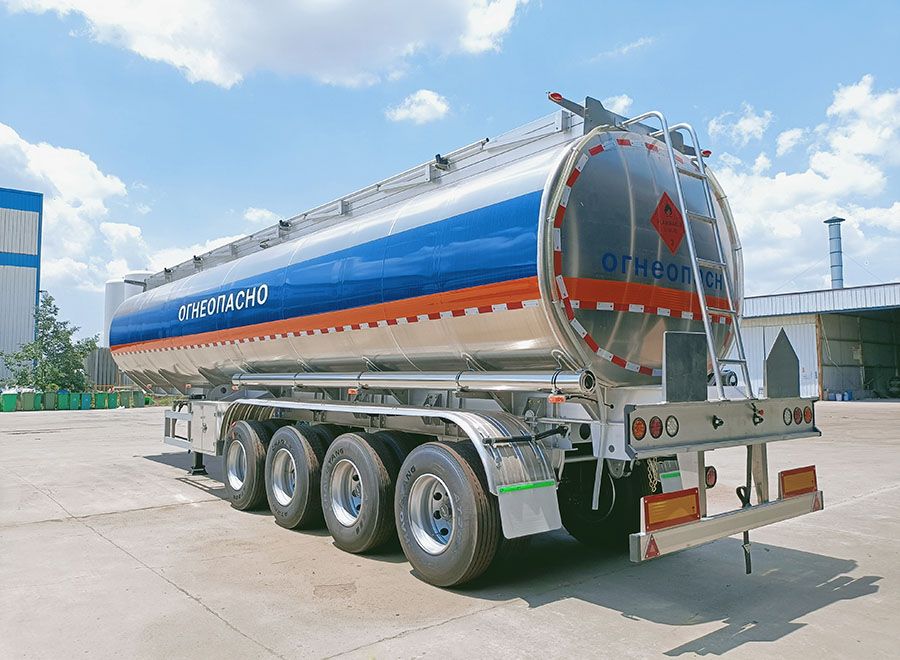
A fuel tanker quotation that includes a pump is not necessarily a more complete quotation than one without it. The right arrangement depends on how the receiving facilities accept product, which equipment is available at each site and what the carrier is expected to supply. Buying an impressive flow-rate figure before defining those interfaces can create an expensive mismatch.
This guide compares gravity-delivery and pumped-delivery requirements at the purchasing stage. It is not an unloading procedure or a pump-selection calculation. Petroleum transfer involves site-specific safety requirements and equipment limits; the responsible system designer and operators must establish the actual arrangement. The buyer’s role is to provide a clear delivery brief and compare offers on the same basis.
Map the receiving facilities first
List the facilities the tanker will serve and identify how each receives fuel. Ask the receiver to describe its accepted transfer arrangement, connection details and available equipment. Distinguish a confirmed interface from an arrangement the buyer hopes the facility will accept. A photograph of a receiving tank cannot answer all of those questions.
Use separate entries for materially different sites. A depot with its own accepted pumping system and a remote receiving point without that equipment should not be represented by one average delivery description. The resulting site matrix helps determine whether the fleet needs one delivery configuration or several. It also reveals where an equipment decision cannot be completed until the receiving operator supplies more information.
Separate gravity capability from a general unloading claim
Gravity transfer relies on the actual relationship between the tanker, product path and receiving arrangement. Do not assume that a bottom outlet makes every delivery possible without a pump. Ask the responsible designer and receiving operator to review the proposed duty and the conditions under which the arrangement is accepted.
The quotation should describe the intended mode of delivery, not merely say fast discharge. If gravity delivery is proposed, identify the receiving cases it covers and any stated limitations. If one site falls outside those assumptions, keep that exception visible. A transport business can then decide whether to change equipment scope, serve the site differently or obtain further engineering review before committing to the order.
Specify the pumped-delivery duty as a system
Identify the actual fuel, the required delivery task and the receiving-system information requested by the designer. The pump is part of a system that may include drive equipment, piping, valves, hoses, measurement equipment and controls. Its advertised maximum flow does not establish the performance or suitability of the complete installed arrangement.
Blackmer’s refined-fuels information distinguishes pump families and transport applications. That supports the need for application-specific equipment selection, not a claim that any listed pump is fitted to a GENRON trailer. Ask the proposed equipment supplier to identify the exact model, materials, duty basis and supporting documentation for the offered system. Do not transfer values from a different pump or application into the purchase specification. Blackmer: refined-fuel transfer equipment and transport applications
Identify who supplies each part of the transfer path
Draw a simple interface diagram showing tanker equipment, vehicle drive connections, delivery hoses and receiver equipment. Give each item a supplier and an acceptance responsibility. This prevents both sides from assuming the other party supplies the same fitting, power source or control function.
Make the boundary visible in the commercial offer. A pump-only price is not equivalent to an installed, documented and accepted delivery package. Likewise, a receiver-owned component should not be described as part of the tanker’s standard equipment. Ask what is supplied loose, what is installed, what requires another party’s work and which activities are needed before the complete system is ready for its intended duty.
Confirm the exact fuel and compatibility requirements
Name the transported fuel and any relevant product variations. Ask the system supplier what additional properties or documents it needs to assess materials and equipment compatibility. Diesel, gasoline, other petroleum products and blended fuels should not be grouped into an undefined statement that a pump handles oil.
Keep compatibility statements tied to the actual components and service conditions. A suitable tank material does not establish suitable seals, hoses or other installed equipment. If the proposed system is intended for more than one product, identify the accepted cases and any restrictions. This guide does not approve substitutions or describe cleaning between products; those decisions require the relevant manufacturer information and responsible operating procedures.
Compare drive arrangements with the actual tractor
Where the delivery system depends on the tractor or another power source, identify the offered drive arrangement and the exact vehicle interface. Ask the responsible suppliers to state the required equipment and the compatibility evidence. A phrase such as PTO pump is incomplete if the tractor configuration and installed drive scope remain unidentified.
Include mounting, protection, connections and documentation in the comparison. Record any work expected from the buyer after arrival. A delivery system can appear complete in a sales photograph while still requiring significant integration with the tractor. Resolving that scope before purchase is more useful than discovering that an attractive pump option does not match the truck the fleet intends to assign.
Treat metering as a separate requirement
A pump moves product; a measurement package serves a different function. Ask whether the operation requires metered delivery, what quantity basis is used and which requirements apply to the transaction. Do not assume that adding a pump includes an accepted meter, ticketing equipment or the records the customer expects.
If a meter is proposed, identify the complete system boundary and who establishes its acceptance for the intended market and application. Keep measurement claims distinct from transfer-performance claims in the quotation. A high stated flow rate does not demonstrate measurement accuracy, and a familiar meter brand does not prove that the complete installed package meets the receiver’s or competent authority’s requirements.
Record hose and connection requirements accurately
Obtain the receiver’s actual connection information and provide the routing and reach requirements requested by the designer. Include the proposed hose assembly, couplings and storage arrangement in the system scope. Do not choose an assembly from a nominal diameter or a convenient length without the appropriate product and service review.
Ask how equipment will be identified and supported through inspection, maintenance and replacement. A hose reel or storage tube occupies vehicle space and affects access even when the hose is not in use. Show its location on the trailer drawing so that delivery fittings, vehicle components and routine access do not compete for the same area after manufacture.
Use time calculations only as planning screens
A simple arithmetic example can clarify the delivery brief. A hypothetical 12,000-litre transfer completed at a sustained average of 600 litres per minute would require 20 minutes of transfer time. This does not establish that a particular system can achieve that average, or that the whole vehicle visit takes 20 minutes.
Arrival checks, connection, site acceptance, measurement tasks, disconnection and departure add other activities. Ask which parts of the visit a quoted performance figure describes. Where scheduling matters, distinguish the desired service window from verified system performance. A maximum catalogue flow should not be used as an assumed average at every receiving facility or as a guaranteed vehicle turnaround time.
Compare tanker layouts without assuming installed options
GENRON’s carbon-steel fuel-tanker layout and aluminium-alloy fuel-tanker layout provide two fuel-tanker layouts for an enquiry. They do not prove that a particular delivery pump, drive, meter or hose package is included on every order. Request the configuration-specific drawing and equipment schedule for the intended delivery operation.
Compare the complete arrangement, including the location of added equipment and its effect on mass, access and maintenance. Keep tank capacity and delivery-system capability separate. A larger tank does not automatically support a higher transfer rate, while a delivery package can affect the finished vehicle’s equipment and mass basis. The final quotation should explain both scopes clearly enough for purchasing and fleet staff to identify what is supplied.
Review a mixed-site fleet example
Consider a hypothetical fleet serving three depots. Site A supplies its own accepted transfer equipment, Site B proposes a gravity arrangement requiring confirmation, and Site C requests vehicle-supplied pumping. Start by obtaining the missing site information rather than ordering identical optional equipment for all vehicles.
The fleet may ultimately choose a common configuration, dedicated vehicles or a different service allocation. That is an operational decision based on the accepted systems and routes. The comparison should show which sites each offer covers, the integration work required and the unresolved conditions. It should not describe a pump as a universal solution to every receiving-site limitation merely because it adds another delivery mode.
Define commissioning and handover evidence
Agree the evidence needed to show that the supplied package matches the accepted proposal. Identify equipment records, drawings, manufacturer instructions and the responsibilities for installation checks and commissioning. Keep the test basis connected to the intended service rather than accept an unexplained demonstration of product movement.
Do not use a purchasing article as instructions for setting controls or testing safety functions. Those activities must follow the relevant manufacturer documents and be performed by the appropriate people. The buyer should instead ensure that the required services and records are in the scope, with a clear plan for resolving discrepancies before the fleet relies on the package for customer deliveries.
Include service support in the equipment decision
Ask for component identification, maintenance information, available service support and the scope of any supplied spares. A package that can be supported locally may suit a fleet better than a poorly documented alternative, but that judgment should be based on actual support arrangements rather than an unsupported claim of maintenance-free operation.
Where replacement components are expected to be sourced later, retain the exact specifications and manufacturer references. Similar dimensions do not establish interchangeability for a petroleum-transfer system. Record the process for obtaining approved replacements or reviewing modifications. This helps prevent a carefully selected initial package from becoming an undocumented mixture of components during years of service in different workshops.
Make the final comparison readable
Put the accepted receiving-site cases beside each quotation. For each offer, identify the delivery mode, exact equipment, drive interface, measurement scope, hose assemblies, installed locations and handover services. Mark exclusions and unresolved questions next to the price rather than leaving them in separate messages.
The best offer is not automatically the one with the largest pump or most accessories. It is the offer that meets the agreed delivery duty with a clear scope and adequate evidence. Where a decision remains dependent on receiver information or engineering review, name the responsible party and keep the exception open. This creates a defensible purchasing record without inventing a universal fuel-delivery configuration.
Give unresolved interfaces a commercial owner
An incomplete receiving-site response can delay an otherwise detailed vehicle order. Keep a short register naming the missing item, the party supplying it and the purchasing decision it affects. A required connection drawing, for example, should not be buried in a general list of optional equipment while the delivery package is priced as though every interface has already been accepted.
Before signing off the specification, ask whether the offer is final for the stated duty or remains conditional on that information. This does not require the buyer to perform the designer’s work. It requires the commercial record to distinguish an agreed installation from a provisional allowance, including the process for reviewing any resulting change in scope, price or delivery timing.
FAQ: Gravity and pumped fuel-tanker delivery
Does every fuel tanker need an onboard pump?
No. Establish how the actual receiving sites accept product and which equipment they provide. Some duties may be covered without vehicle-supplied pumping, while others require a specifically designed package. Do not decide from tank capacity alone. Record the accepted delivery cases and any conditions the receiving operator or system designer requires.
Does an advertised pump flow equal the unloading rate?
Not necessarily. The complete system and receiving conditions affect actual performance. Ask what duty, configuration and test basis a quoted figure represents. Separate transfer time from the whole site visit, and do not use a catalogue maximum as a guaranteed average for every customer or delivery route.
Is a meter normally included with a pump?
Do not assume it is. Define the measurement requirement separately and ask for the exact supplied system, documentation and acceptance responsibilities. Pumping capability does not establish measurement accuracy or authorisation for a commercial transaction. Make any ticketing, quantity basis and customer record requirements explicit in the enquiry.
Can a pump package be added after the trailer is delivered?
That requires an appropriate design and integration review. Mounting, drive interfaces, compatibility, equipment location, mass and safety requirements may all be affected. Do not treat it as a simple accessory substitution. Ask the responsible suppliers to define the complete retrofit scope and the documentation needed before relying on the modified system.
What should a receiving-site survey include?
Ask the receiver for its accepted transfer arrangement, equipment boundary, connection information, operating constraints and the performance information requested by the designer. Identify who confirms missing data. A site photograph is useful context, but it does not replace the technical and operational information needed to establish a suitable delivery system.
Does this guide cover LPG or chemical-tanker pump selection?
No. It addresses the procurement brief for the stated petroleum-fuel delivery duty. LPG, chemicals and other services require their own product-specific systems and specialist assessment. Do not transfer equipment recommendations, compatibility statements or operating assumptions from one liquid or application to another without the responsible manufacturer’s review.
Product Options to Discuss
Product pages identify layouts to discuss, not acceptance of a specific load or proof that every optional component is included. Confirm the order-specific configuration with the responsible suppliers.
Related Reading
Fuel Tanker Trailer Compartments: Delivery Quantities, Product Separation and Specification
Fuel Tanker Capacity on a Quotation: Litres, Tonnes and Volume Definitions
Fuel Tanker Trailer Safety Features: Baffles, Valves, Manholes and Grounding Explained


