Best Dump Truck for Mining in Africa (2026 Buyer's Guide)

 English
 Français
 Español
 Árabe
Árabe
 Deutsch
 简体中文
简体中文
 Português
 Русский
 日本語
日本語
 한국어
한국어
 हिंदी
हिंदी
 Prancis
 Türkçe
 Tiếng Việt
 Italiano
 ไทย
ไทย

Best Dump Truck for Mining in Africa (2026 Buyer's Guide)
-
Published: July 4, 2026 | Updated: July 4, 2026
Reading Time: 13 Minutes
Article Summary
Choosing the best dump truck for mining in Africa requires more than comparing engine power or purchase price. Mining projects often operate under heavy loads, rough haul roads, high temperatures, dust, and long working hours. This guide explains how buyers can evaluate payload capacity, chassis strength, drivetrain reliability, maintenance cost, spare parts availability, and total operating value before selecting a mining dump truck in 2026.Quick Navigation
Best Dump Truck for Mining in Africa (2026 Buyer’s Guide)
Mining operations across Africa continue to grow as demand increases for copper, gold, coal, iron ore, limestone, aggregates, and construction materials. Behind every mining project, transportation efficiency plays a direct role in production output and profitability.
A dump truck used in mining is not the same as a truck used for ordinary road logistics. It must carry heavy loads repeatedly, travel on unpaved haul roads, work under high temperatures, and remain reliable even when operating far away from major service centers.
For buyers in Zambia, Ghana, Tanzania, Kenya, Nigeria, South Africa, Zimbabwe, Mozambique, and the Democratic Republic of Congo, choosing the right dump truck can reduce downtime, control maintenance costs, and improve daily material movement.
The best dump truck for mining in Africa is not always the most expensive model. It is the truck that matches the project’s payload demand, road conditions, maintenance resources, spare parts supply, and long-term operating plan.
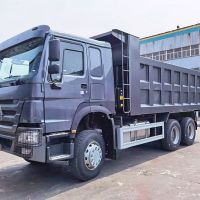
Mining dump trucks must handle heavy payloads, rough roads, dust, heat, and continuous operation.
Why the Right Mining Dump Truck Matters
In mining transportation, truck selection directly affects project efficiency. A truck with insufficient payload capacity may require more trips. A truck with weak chassis strength may experience frame fatigue. A truck with poor parts availability may remain parked for days while waiting for repairs.
Many first-time buyers focus mainly on purchase price. Experienced mining contractors usually look deeper. They calculate total cost of ownership, including fuel use, tire wear, maintenance frequency, spare parts supply, downtime risk, and resale value.
A cheaper truck may look attractive at the beginning, but if it breaks down frequently or consumes more fuel, it may become more expensive over a three-to-five-year operating period.
For African mining projects, reliability and serviceability are often more important than advanced electronic features. Trucks need to be strong, repairable, and supported by commonly available parts.
Key Factors to Compare Before Choosing a Mining Dump Truck
1. Payload Capacity
Payload capacity determines how much material a truck can move per trip. For small quarry or construction projects, a 25–35 ton payload may be enough. For heavier mining work, buyers may need 40–50 ton capacity or more.
However, bigger is not always better. A larger truck may increase purchase price, fuel consumption, tire cost, and maintenance cost. The right payload should match the mine road, loading equipment, daily production target, and local road regulations.
2. Chassis Strength
Mining roads create constant vibration and impact. A reinforced chassis is essential for carrying ore, stone, gravel, coal, and construction aggregates. Weak frame design may lead to bending, cracking, or frequent welding repairs.
3. Engine and Drivetrain Reliability
Mining trucks often work at low speeds with heavy loads. The engine must provide enough torque for climbing, starting under load, and moving through rough terrain. Transmission, drive axle, clutch, and differential quality also affect long-term performance.
4. Suspension and Tires
Suspension systems absorb road impact and help protect the frame, cargo body, axles, and tires. In Africa, mining roads can be rocky, muddy, uneven, or steep. Heavy-duty mechanical suspension is still widely used because it is strong, familiar to mechanics, and easier to maintain in remote areas.
5. Spare Parts Availability
Parts availability is one of the most practical factors in African mining operations. A truck may have excellent specifications, but if brake parts, filters, suspension parts, clutch parts, or axle components are difficult to source locally, downtime becomes expensive.
6. Maintenance Simplicity
Mines often operate far from major cities. Trucks that local mechanics already understand are usually easier to keep running. This is one reason Chinese mining trucks, especially HOWO and SHACMAN models, are widely used across many African markets.
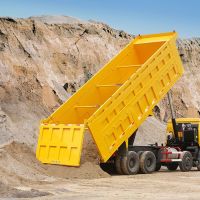
Common Dump Truck Types Used in African Mining Projects
HOWO 6×4 Dump Truck
The HOWO 6×4 dump truck is one of the most common choices for quarry, construction, and medium-duty mining transport. It offers a practical balance between purchase cost, payload capacity, spare parts availability, and maintenance convenience.
This configuration is suitable for sand, gravel, limestone, construction aggregate, coal, and general mining support work. For many small and medium-sized contractors, HOWO 6×4 provides fast return on investment because it is easier to purchase, operate, and repair.
HOWO 8×4 Mining Tipper Truck
The HOWO 8×4 configuration offers higher payload capacity and better load distribution. It is more suitable for heavier mining applications, quarry operations, and long-distance movement of ore or rock.
Compared with a 6×4 truck, the 8×4 model usually has higher purchase cost and operating cost, but it can move more material per trip. For larger projects, this can improve productivity and reduce transport cost per ton.
SHACMAN Mining Dump Truck
SHACMAN trucks are also widely used in African mining and construction markets. They are known for strong chassis design and heavy-duty operation. In some severe-duty applications, buyers may compare SHACMAN directly with HOWO.
FAW Dump Truck
FAW dump trucks can be suitable for construction, infrastructure, and medium-load transport. FAW is often appreciated for fuel efficiency and highway performance, but in many mining regions HOWO has stronger parts familiarity and service presence.
Large Rigid Mining Truck
Large rigid mining trucks are used in major open-pit mines. They can carry much larger payloads, but their purchase cost, maintenance requirements, tire cost, and service complexity are far higher than road mining dump trucks.
For most private contractors and medium-sized mining companies in Africa, HOWO 6×4 and HOWO 8×4 dump trucks remain more practical than large rigid haul trucks.
Payload Capacity Comparison
The table below gives a practical comparison for common mining dump truck options used in Africa.
Truck Type Common Configuration Typical Payload Range Best Application HOWO Dump Truck 6×4 20–30 Tons Quarry, construction, sand, gravel, medium-duty mining HOWO Mining Tipper Truck 8×4 30–50 Tons Ore, rock, heavy quarry, larger mining transport SHACMAN Dump Truck 6×4 / 8×4 25–45 Tons Mining, construction, severe-duty haul roads FAW Dump Truck 6×4 20–30 Tons Construction, infrastructure, medium-load transport Rigid Mining Haul Truck Off-road mining vehicle 100+ Tons Large open-pit mining projects For buyers comparing tri axle dump truck capacity, the most important point is not only the rated capacity. Buyers should also consider road conditions, legal axle load limits, body volume, material density, and tire selection.
Best Dump Truck Options for African Mining Projects
Best Overall Choice: HOWO 6×4 Dump Truck
For many African mining contractors, the HOWO 6×4 dump truck is the best overall choice because it is affordable, widely supported, and suitable for many transport tasks. It performs well in quarry work, construction material transport, coal movement, aggregate hauling, and general mining logistics.
Its biggest strength is practical serviceability. Many workshops already understand HOWO trucks, and common parts are easier to find in many African markets.
Best for Heavy Mining Loads: HOWO 8×4 Mining Tipper Truck
For heavier mining work, the HOWO 8×4 mining tipper truck provides better payload capacity and improved load distribution. It is suitable for large quarry operations, ore transport, and projects where fewer trips can improve daily output.
Buyers should choose this option when the mine road, loading equipment, and maintenance team can support heavier truck operation.
Best for Severe-Duty Conditions: SHACMAN Dump Truck
SHACMAN can be a strong option for severe-duty mining roads and heavy construction projects. It is often chosen when buyers prioritize heavy chassis strength and off-road durability.
Best for Construction and Medium-Duty Transport: FAW Dump Truck
FAW is suitable for construction, road building, and medium-duty transport where fuel efficiency and highway performance matter. It may be less dominant than HOWO in mining, but it remains a practical choice for many contractors.
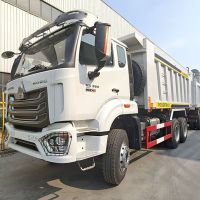
Operating Cost and Maintenance Considerations
Mining dump truck cost does not end with the purchase price. The most important long-term costs include fuel, tires, maintenance parts, repairs, downtime, and resale value.
Fuel Cost
Mining trucks often work under heavy load and low-speed conditions. Fuel consumption can be high if the truck is not matched properly to the work. Buyers should choose horsepower and axle configuration according to real operating needs rather than selecting the largest specification automatically.
Tire Cost
Tires are a major expense in mining transport. Sharp stones, heat, overloading, poor roads, and improper tire pressure can all shorten tire life. Choosing the right tire specification is essential.
Preventive Maintenance
Regular maintenance reduces major failures. Cooling system, brake system, suspension, hydraulic system, engine oil, filters, and tire pressure should be inspected frequently, especially in dusty or high-temperature mining areas.
Downtime Cost
Downtime is often more expensive than the repair itself. A truck waiting for parts cannot move material or support production. This is why local parts availability should be checked before purchase.
Need a quote for your mining dump truck?
Share your payload, material type, road condition, and destination country. Our team will recommend a suitable truck configuration.Buying Guide: How to Choose the Right Mining Dump Truck
Before asking for a quotation, buyers should prepare clear project information. This helps suppliers recommend a practical configuration instead of only offering a standard model.
Information Buyers Should Confirm
Destination country
Material type: ore, coal, stone, sand, gravel, limestone, or soil
Expected payload per trip
Road condition: paved road, gravel road, mining road, mountain road, or muddy road
Daily working hours
Required steering position: LHD or RHD
Preferred engine horsepower
Quantity and delivery schedule
Common Buying Mistakes
Choosing the lowest price without checking spare parts supply
Ignoring tire cost and road conditions
Overloading a smaller truck to save purchase cost
Buying a truck that local mechanics cannot repair easily
Comparing only horsepower instead of total operating value
A good mining truck selection should improve productivity, reduce downtime, and keep operating costs predictable.
Related Products and Guides
Frequently Asked Questions
Which dump truck is best for mining in Africa?
For many mining contractors, HOWO dump trucks are among the most practical choices because they offer competitive purchase cost, good payload capacity, easy maintenance, and strong spare parts availability in many African markets.
Is a 6×4 or 8×4 dump truck better for mining?
A 6×4 dump truck is suitable for quarry, construction, and medium-duty mining transport. An 8×4 dump truck is better for heavier payloads, larger mining projects, and applications where higher transport efficiency is required.
What is the typical payload capacity of a mining dump truck?
Road mining dump trucks commonly carry between 20 and 50 tons depending on configuration. Larger rigid mining haul trucks can carry more than 100 tons but require much higher investment and specialized maintenance.
Are Chinese dump trucks reliable for African mining projects?
Yes. Chinese dump trucks such as HOWO, SHACMAN, and FAW are widely used in African mining, quarry, construction, and infrastructure projects because they balance cost, durability, and serviceability.
What affects dump truck operating cost the most?
Fuel consumption, tire wear, maintenance frequency, spare parts availability, driver habits, road conditions, and downtime all affect the operating cost of a mining dump truck.
How can I choose the right dump truck for my mining project?
Buyers should confirm payload requirement, material type, road condition, daily working hours, destination country, maintenance resources, and budget before selecting a dump truck.
Final Recommendation
The best dump truck for mining in Africa depends on the project. Smaller quarry and construction operations may get better value from a HOWO 6×4 dump truck. Larger mining operations may benefit from a HOWO 8×4 mining tipper truck because of higher payload capacity and improved productivity.
Buyers should avoid choosing a truck based only on the lowest quotation. A reliable mining truck should deliver steady uptime, manageable maintenance, available spare parts, and a strong return on investment.
For many African mining and construction customers, HOWO dump trucks remain one of the strongest choices because they combine practical cost, proven performance, and strong market support.
Request a Mining Dump Truck Recommendation
Need help choosing the right dump truck for your mining project?
Send Genron your destination country, material type, expected payload, road conditions, and required quantity. Our team will help recommend a suitable truck configuration for your mining or construction transport business.
Company: Qingdao Genron International Trade Co., Ltd.
Website: https://www.genronvehicle.com/
Contact: https://www.genronvehicle.com/contact.html
Email: service@genronvehicle.com
WhatsApp: +86 188 6398 1951
Reviewed By
This article has been reviewed by the engineering and export team of Qingdao Genron International Trade Co., Ltd.
Written by Genron Heavy Truck Team
Mining Transportation Equipment Specialist
The Genron team has extensive experience supplying mining dump trucks, tractor trucks, fuel tanker trucks, semi trailers, and customized transportation solutions for mining and construction projects across Africa, Southeast Asia, the Middle East, and South America.
Dump Trailer vs End Dump Trailer: What Is the Difference?
A Nigerian client's successful purchase of a custom 80-ton low bed trailer for mining equipment.
We’re Listening
Product Evaluation
Article Navigation

-
E-mail:
service@genronvehicle.com
-
phone
+86 188 6398 1660
-
WhatsApp
+86 188 6398 1951
address
Office:
Qingdao city, Shandong provinceFactory:
Heze city,Shandong province, China-
products
-
tool

