
 English
 Français
 Español
 Árabe
 Deutsch
 简体中文
 Português
 Русский
 日本語
 한국어
 हिंदी
 Prancis
 Türkçe
 Tiếng Việt
 Italiano
 ไทย

A fixed-gooseneck low bed trailer and a detachable-gooseneck lowboy solve different loading-access problems. The choice is not simply between a basic trailer and a more advanced one. It depends on the machines being moved, the available approach space, the tractor and the people and equipment at each site.
A removable gooseneck is often abbreviated to RGN. When comparing an RGN with a fixed-neck trailer, start with the proposed loading arrangement and a side-profile drawing. Then compare the complete equipment package and the work required at the loading site.
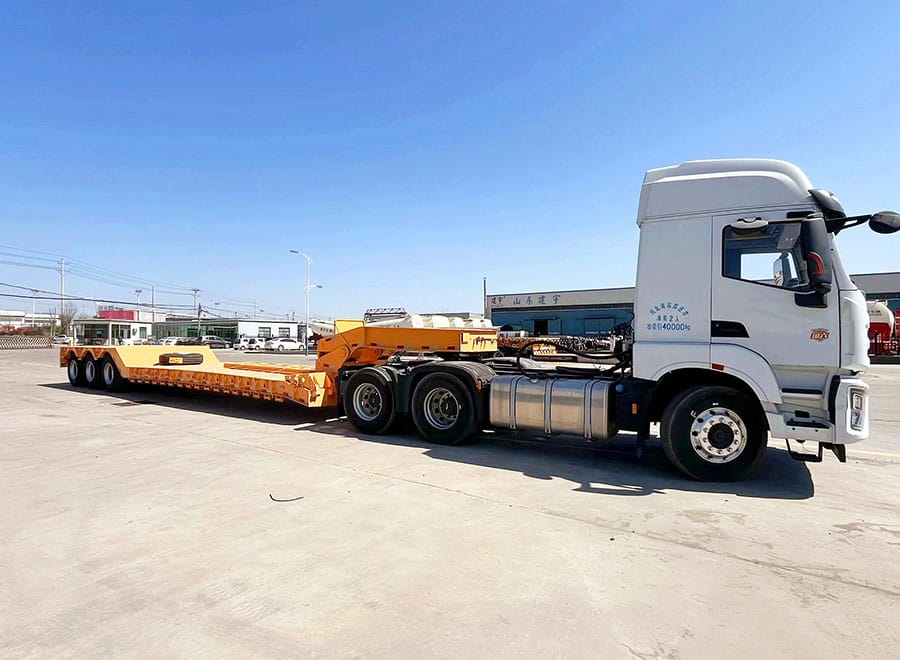
Begin With the Machine's Access Requirements
Many fixed-neck machinery trailers provide rear loading through ramps. A detachable-gooseneck design can provide access from the front of the lower deck when configured for that purpose. Neither description proves that a particular machine can use the arrangement. The machine's transport position, contact loads and ground clearance still need to be assessed.
Provide the manufacturer, model and transport dimensions for every machine that will regularly use the trailer. Identify whether the machine is self-propelled or needs additional loading equipment. A low-clearance machine may create a different access problem from a taller excavator, even when the two have similar weights. Keep these differences visible in the enquiry instead of selecting the trailer from one headline capacity.
Compare the Quoted Arrangements, Not the Labels
| Purchase question | Fixed-gooseneck proposal | Detachable-gooseneck proposal |
|---|---|---|
| Machine approach | Assess the quoted ramps and rear-deck transitions. | Assess the specified front approach and lower-deck entry. |
| Working space | Record approach space behind and around the trailer. | Record space for the tractor, neck handling and machine approach. |
| Power and controls | Identify equipment supplied for the proposed ramp system. | Identify the neck's hydraulic power source and control arrangement. |
| Routine handling | List the tasks required by the supplied operating instructions. | List the tasks required by the supplied operating instructions. |
| Service support | Check ramp, hinge and other relevant component support. | Check neck, connection, hydraulic and other relevant component support. |
| Final approval | Confirm the actual machine and trailer arrangement. | Confirm the actual machine and trailer arrangement. |
Draw the Loading Site Before Choosing the Trailer
Include the approach road, yard entrance and intended loading area in a simple site sketch. Mark fixed obstructions, overhead restrictions and the space available for the tractor to maneuver. A large open yard and a restricted construction entrance are different operating conditions. A vehicle that works well at the collection depot may be difficult to use at the receiving site.
For a detachable-neck proposal, ask the supplier what working space and site conditions the specified system requires. For a rear-ramp proposal, ask for the relevant approach and transition information. Photographs are useful, but a dimensioned sketch reduces uncertainty about space. The site review should be completed by the parties responsible for the equipment and operation, not inferred from a promotional video.
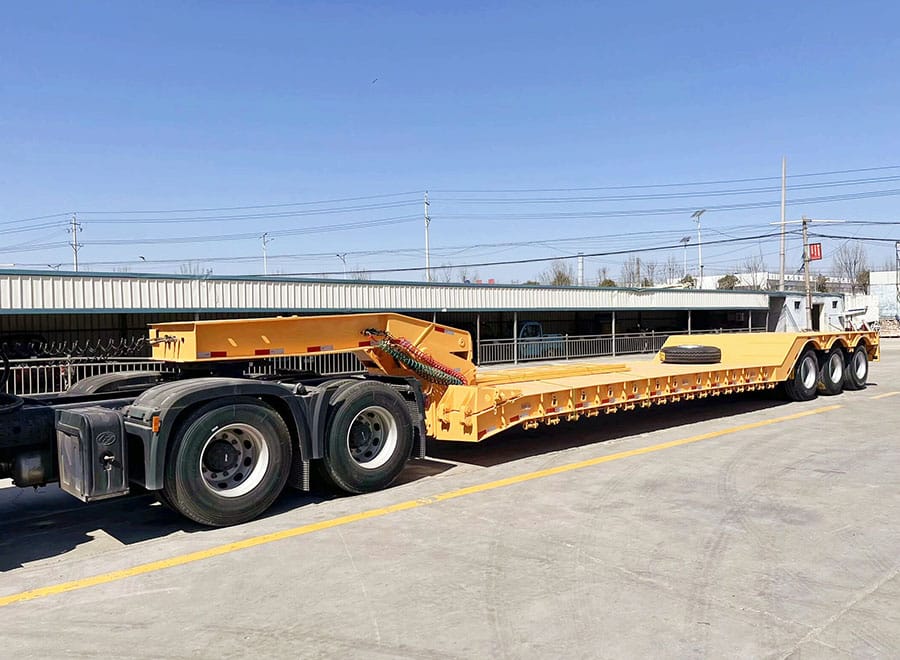
Identify Where the Hydraulic Power Comes From
The word hydraulic does not identify the complete power supply. The quoted design may require equipment on the tractor, an independently supplied power unit or another specified arrangement. Ask the supplier to identify the source, connections, controls and supplied components for the actual system. If the tractor must provide power, its compatibility is part of the enquiry.
This is particularly important for a fleet that shares trailers between several tractors. Record which tractors will be used and whether each has the required equipment. Do not assume that every tractor in the fleet can operate the same hydraulic system. Request a clear boundary between equipment included with the trailer, equipment included with the tractor and equipment the buyer must obtain separately.
Review Deck Space, Support and Securing Access
A lower deck can be useful for a particular load, but its usable length, width and support arrangement still matter. Compare the complete machine footprint with the proposed deck drawing. Show removable attachments and other separately transported items. Ask how the specified cargo positions affect the vehicle combination and which securing points remain accessible.
Also distinguish the space visible in a photograph from the loading positions assessed by the supplier. A loadable neck area, side extension or removable deck section is a feature of a particular design, not a property of every lowboy. If a quotation includes one of these features, request its drawing and permitted loading conditions. That prevents a photo-based assumption from becoming a production requirement.
Include Training, Documentation and Maintenance in the Price
Compare more than the vehicle purchase price. Ask for the operating instructions, component identification, maintenance literature and handover information supplied with the trailer. Discuss the receiving workshop's ability to support the proposed hydraulic and connection equipment. A complex system is easier to manage when the fleet can identify its components and obtain the correct parts.
Request an itemized equipment list for each offer. It should describe the neck arrangement, loading access, power supply and relevant accessories rather than using only the phrase RGN lowboy. Record exclusions and optional equipment separately. Where the supplier proposes a different system from the one requested, ask how that change affects the tractor, site requirements and support arrangements.
An Illustrative Two-Machine Decision
Consider a fleet that moves both a tracked excavator and a low-clearance machine. The fleet usually collects equipment from an open depot but sometimes delivers to a site with a narrow entrance. Comparing the trailers by payload alone would miss the different machine clearances and the restricted receiving location.
A useful comparison would assess each machine on each proposed trailer and document the site conditions for which the arrangement is suitable. The buyer could then see whether one configuration covers the regular work or whether the exceptional job requires a different transport solution. This is a planning example, not a customer case or an approved loading plan. Its value is in separating the questions before the quotation is accepted.
Questions About Removable Goosenecks
Is an RGN automatically better than a fixed-gooseneck trailer?
No. Compare the actual loading access, machine fit, site space, tractor equipment and support requirements. A feature adds value when it solves a defined problem in the operation.
Does a detachable gooseneck mean that rear ramps are unnecessary for every job?
No. The access arrangement depends on the specified design and the cargo. Describe all expected loading methods and obtain the corresponding equipment proposal.
Can any tractor operate a hydraulic gooseneck?
Do not assume so. The supplier must identify the system's power and connection requirements and assess them against the tractors that will be used.
Useful Products and Further Reading
Technical References
The external manufacturer page describes its own equipment. For the chosen vehicle, use the supplied drawings and instructions; this comparison is not a coupling or loading procedure.
Discuss your loading arrangement with GENRON. Send the machine records, tractor details and photographs or sketches of both sites. Ask for an equipment list that clearly identifies the loading access and hydraulic power supply.


