What Is a Bulk Cargo Transport Semi Trailer? Complete Buyer’s Guide

 English
 Français
 Español
 Árabe
Árabe
 Deutsch
 简体中文
简体中文
 Português
 Русский
 日本語
日本語
 한국어
한국어
 हिंदी
हिंदी
 Prancis
 Türkçe
 Tiếng Việt
 Italiano
 ไทย
ไทย

What Is a Bulk Cargo Transport Semi Trailer? Complete Buyer’s Guide
-
What Is a Bulk Cargo Transport Semi Trailer? Complete Buyer’s Guide Published: July 7, 2026 | Updated: July 7, 2026
Reading Time: 12 Minutes
Article Summary
A bulk cargo transport semi trailer is designed for carrying loose, bagged, packaged, agricultural, construction, and industrial cargo over medium and long distances. For African, Middle Eastern, Southeast Asian, and South American markets, bulk cargo trailers are widely used because they offer flexible loading, strong structure, large capacity, and lower operating cost. This guide explains the main types of bulk cargo semi trailers, their applications, key specifications, and how buyers can choose the right trailer for their transport business.Quick Navigation
What Is a Bulk Cargo Transport Semi Trailer? Complete Buyer’s Guide
Bulk cargo transport is one of the most common logistics needs in developing and emerging markets. From agricultural products and bagged cement to steel materials, livestock, timber, construction supplies, and general cargo, many transport companies need trailers that can handle different loading conditions without changing equipment frequently.
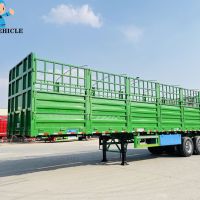
This is where the bulk cargo transport semi trailer becomes valuable. It is not a single fixed trailer type. Instead, it refers to a group of semi trailers designed for flexible cargo transportation, including fence semi trailers, dropside semi trailers, flatbed semi trailers, and super link trailer combinations.
For buyers in Africa, the Middle East, Southeast Asia, and South America, choosing the correct bulk cargo trailer can improve fleet utilization, reduce empty return trips, and increase daily transport revenue.
What Is a Bulk Cargo Transport Semi Trailer?
A bulk cargo transport semi trailer is a heavy-duty trailer used to transport goods that are not usually carried in closed containers. These goods may be loose, stacked, bundled, bagged, or packed on pallets.
Unlike a dry van trailer, which has a closed box body, a bulk cargo semi trailer usually has an open or semi-open structure. This makes loading and unloading easier, especially when using forklifts, cranes, loaders, or manual labor.
Common designs include high fence structures, detachable side walls, flat loading platforms, container twist locks, mechanical suspension, and reinforced chassis frames.
Common Cargo Types
Bulk cargo trailers are widely used because they can transport different products across different industries.
Agricultural products such as grain, corn, beans, fertilizer, and animal feed
Bagged cargo such as cement, flour, rice, sugar, and chemicals
Construction materials such as steel bars, timber, bricks, pipes, and panels
Mining support cargo such as equipment parts, tools, and packaged materials
Livestock and animal transport when using fence trailer configurations
Container cargo when trailers are equipped with twist locks
For many transport companies, the biggest advantage is flexibility. One trailer can serve several cargo markets instead of being limited to one product type.
Main Types of Bulk Cargo Transport Semi Trailers
1. Fence Semi Trailer
A fence semi trailer uses high fence side structures to secure cargo during transport. It is especially suitable for livestock, agricultural products, bagged goods, and general cargo that requires containment.
Fence trailers are popular in Africa because they can handle both rural transport and long-distance logistics. They are practical for markets where cargo types change frequently.
2. Dropside Semi Trailer
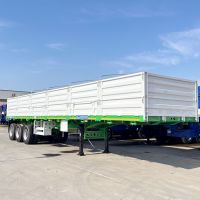
A dropside semi trailer uses foldable or detachable side walls. It can work as a cargo trailer for bulk goods and as a flatbed-style platform when side walls are removed.
This makes dropside trailers suitable for sand, grain, cement bags, steel materials, construction cargo, and container transport when twist locks are installed.
3. Flatbed Semi Trailer
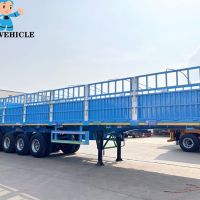
A flatbed semi trailer is designed with an open platform. It is widely used for 20ft and 40ft containers, machinery, steel structures, building materials, and oversized cargo.
Flatbed trailers are useful when cargo does not require side containment or when loading must be done from the side, top, or rear.
4. Super Link Bulk Cargo Trailer
A super link or B-double trailer connects two trailer units to increase total cargo volume and payload efficiency. This configuration is common in markets such as Southern Africa where long-distance bulk transport requires higher productivity.
Super link fence trailers and super link flatbed trailers can help reduce transportation cost per ton when road regulations allow their operation.
Bulk Cargo Trailer Type Comparison
Trailer Type Best Cargo Main Advantage Typical Market Fence Semi Trailer Livestock, agricultural goods, bagged cargo High side protection and flexible cargo containment Africa, Southeast Asia, South America Dropside Semi Trailer Cement bags, grain, sand, containers, general cargo Foldable side walls and dual-purpose transport Africa, Middle East, Global South markets Flatbed Semi Trailer Containers, steel, machinery, construction materials Open platform and easy loading from multiple directions Ports, construction, logistics corridors Super Link Trailer Large-volume bulk cargo and agricultural products Higher transport efficiency and larger combined capacity Southern Africa and long-distance logistics routes Why Bulk Cargo Semi Trailers Are Popular in Africa
African transport markets often require trailers that can handle many cargo types. A truck may carry agricultural products one day, cement bags the next day, and construction materials on another route.
This is why flexible trailer designs are so important. Transport companies do not always want highly specialized equipment that can only serve one industry.
Bulk cargo trailers are especially useful in:
Rural agricultural transport
Cross-border general cargo logistics
Mining supply transportation
Construction material delivery
Livestock and farm product movement
Port-to-inland cargo distribution
In countries such as Kenya, Tanzania, Zambia, Ghana, Nigeria, South Africa, Mozambique, and Uganda, trailer flexibility can directly affect fleet profitability.
How to Choose the Right Bulk Cargo Semi Trailer
Before purchasing a bulk cargo transport semi trailer, buyers should clearly define their cargo type, loading method, road condition, and expected payload.
1. Confirm Cargo Type
If your business focuses on livestock, agricultural products, or bagged cargo, a fence semi trailer may be more suitable. If you need container and bulk cargo flexibility, a dropside trailer may be better. If you mainly transport containers or machinery, a flatbed trailer is often the best choice.
2. Check Payload Requirement
Common bulk cargo semi trailers may be designed for 40 tons, 60 tons, 80 tons, or customized payload requirements. Buyers should avoid overloading smaller trailers because it increases tire wear, frame stress, and suspension damage.
3. Evaluate Road Conditions
Rough roads require stronger suspension, reinforced chassis, suitable tire configuration, and reliable axle systems. For rural and mining roads, mechanical suspension is still widely used because it is strong and easier to repair.
4. Consider Loading and Unloading Method
Forklift loading, crane loading, manual loading, and loader operation require different trailer structures. Side wall height, fence structure, platform height, and rear gate design should match the cargo handling method.
5. Confirm Local Transport Regulations
Axle load limits and trailer dimension regulations vary by market. Buyers should confirm local rules before selecting 3 axle, 4 axle, 5 axle, or super link trailer configurations.
Need a bulk cargo trailer recommendation?
Send your cargo type, payload requirement, road condition, and destination country. Our trailer team will recommend a suitable configuration.Related Products and Guides
Frequently Asked Questions
What is a bulk cargo transport semi trailer?
A bulk cargo transport semi trailer is a trailer used to carry agricultural products, bagged goods, construction materials, livestock, containers, and general cargo. Common types include fence trailers, dropside trailers, flatbed trailers, and super link trailers.
Which trailer is best for agricultural products?
Fence semi trailers and dropside semi trailers are commonly used for agricultural products because they provide side protection and flexible loading space.
What is the difference between a fence trailer and a dropside trailer?
A fence trailer uses high side fence structures for cargo containment, while a dropside trailer uses foldable or detachable side walls for more flexible loading and unloading.
Can a bulk cargo trailer carry containers?
Yes. Some dropside and flatbed semi trailers can carry 20ft or 40ft containers when equipped with container twist locks.
How do I choose the right bulk cargo trailer?
Buyers should confirm cargo type, payload requirement, loading method, road conditions, destination country regulations, and whether container transport is required.
Final Recommendation
A bulk cargo transport semi trailer is one of the most flexible trailer solutions for emerging markets. It can serve agriculture, construction, mining support, livestock transport, container logistics, and general cargo distribution.
For buyers who need cargo containment, a fence semi trailer is a strong choice. For customers who need both bulk cargo and container transport, a dropside semi trailer may offer better flexibility. For machinery, containers, and steel materials, a flatbed trailer is usually more suitable.
The best trailer is the one that matches the cargo type, road conditions, loading method, and long-term business model.
Request a Bulk Cargo Trailer Quote
Looking for a reliable bulk cargo transport semi trailer supplier?
Send Genron your cargo type, payload capacity, destination country, and road conditions. Our team will help recommend a suitable semi trailer solution for your transport business.
Company: Qingdao Genron International Trade Co., Ltd.
Website: https://www.genronvehicle.com/
Contact: https://www.genronvehicle.com/contact.html
Email: service@genronvehicle.com
WhatsApp: +86 188 6398 1951
Reviewed By
This article has been reviewed by the engineering and export team of Qingdao Genron International Trade Co., Ltd.
Written by Genron Trailer Team
Bulk Cargo and Semi Trailer Transport Specialist
How to Choose a 2 Axle Flatbed Semi Trailer for Container Transport
A Nigerian client's successful purchase of a custom 80-ton low bed trailer for mining equipment.
We’re Listening
Product Evaluation
Article Navigation

-
E-mail:
service@genronvehicle.com
-
phone
+86 188 6398 1660
-
WhatsApp
+86 188 6398 1951
address
Office:
Qingdao city, Shandong provinceFactory:
Heze city,Shandong province, China-
products
-
tool

