
 English
 Français
 Español
 Árabe
 Deutsch
 简体中文
 Português
 Русский
 日本語
 한국어
 हिंदी
 Prancis
 Türkçe
 Tiếng Việt
 Italiano
 ไทย

Trailer air brakes combine an air supply and control arrangement with the mechanical brakes at the wheels. Where ABS is fitted, sensors and electronic control add another layer. A brake chamber, a valve and an ABS controller perform different jobs; selecting one replacement does not identify the rest of the system.
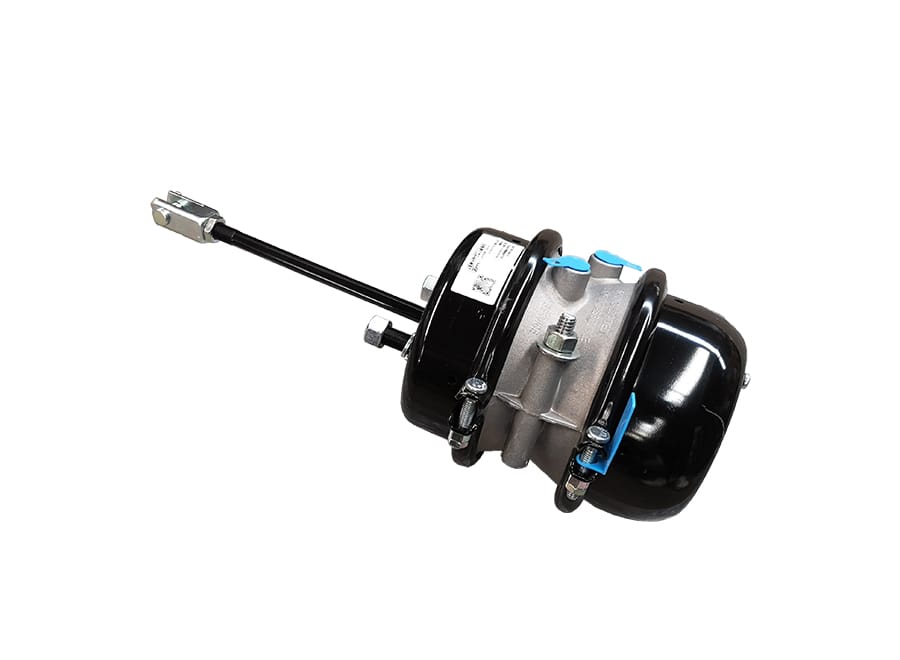
How the Main Component Groups Work Together
At a simplified level, stored compressed air is controlled through the pneumatic system and delivered to the brake actuators. Chambers turn air pressure into mechanical force, which acts through the fitted wheel-brake arrangement. The exact routing, valves and actuators depend on the installed design. For a parts enquiry, keep the system drawing with the component list rather than treating “air brake” as a complete specification.
Service and Spring Brake Functions
The service brake function is used during normal braking. Where a spring brake assembly is fitted, its spring-operated function is distinct from the service function. The model designation, actuator configuration and installation dimensions all matter for a replacement. Spring brake assemblies contain stored spring energy: use markings and existing documentation for identification, and leave assessment or dismantling to qualified service personnel following the applicable instructions.
Valves Must Be Identified by Their Function
A valve may control delivery, provide protection or serve another purpose in the pneumatic arrangement. The port appearance alone does not identify an approved substitute. Bendix’s trailer valve information separates relay, spring-brake and other applications, showing why a parts list needs an exact model and its system position. Record both before asking for an alternative, and identify any bracket or connector supplied with it.
What the ABS Description Means
ABS uses wheel-speed information and controlled brake-pressure modulation to limit wheel lock during braking. It does not replace correctly specified and maintained wheel brakes. A label such as 2S/1M describes two wheel-speed sensors and one modulator; it is not a full parts list or a recommendation for every trailer. Bendix documents several sensor/modulator arrangements for its own trailer systems. Identify the actual controller, sensor and modulator configuration instead of choosing replacements from the label alone.
Make Fault and Replacement Information Specific
If a service issue prompted the enquiry, attach the qualified workshop’s findings and the exact controller or component identification. A warning indication by itself does not prove which component should be replaced. Distinguish a like-for-like part request from a proposed system change, and retain the approved component designation with the trailer record. This keeps future orders tied to the installation that the workshop actually supports.
Component Roles and Identification
| Component group | Role and information to record |
|---|---|
| Air storage and pneumatic controls | Stored air and its controlled delivery; record the system drawing and valve identities. |
| Brake chambers | Convert pneumatic action to mechanical force; record model, function and mounting. |
| Wheel brakes | Provide braking at the wheel; identify the actual drum or disc equipment. |
| ABS equipment | Wheel-speed sensing and pressure modulation; identify controller, sensors and modulators. |
Build a Brake-System Parts Record
Trailer and axle identification, including the axle position.
Installed chamber, valve and controller model markings.
System drawing and relevant installation photographs.
Diagnostic findings and the exact replacement scope.
Two Purchasing Questions
Is 2S/1M enough to identify an ABS replacement?
No. It describes the sensor/modulator arrangement, but the equipment manufacturer and model still need identification.
Can a familiar-looking chamber or valve be substituted?
Appearance is not a compatibility check. The exact part and application need confirmation against the installed system.
Related Products and Reading
Sources and Application Notes
Bendix references describe Bendix equipment. They explain component groups, not approval to mix parts from different systems. This is a component-selection overview, not a repair procedure.
Send GENRON an identified brake-parts request. Include the component markings, system information and workshop findings so the requested part is tied to the existing installation.


